WARCOMMONS IS NOW ON ANDROID
Explore WWII history and stay connected with the community on the go. GET THE APP →
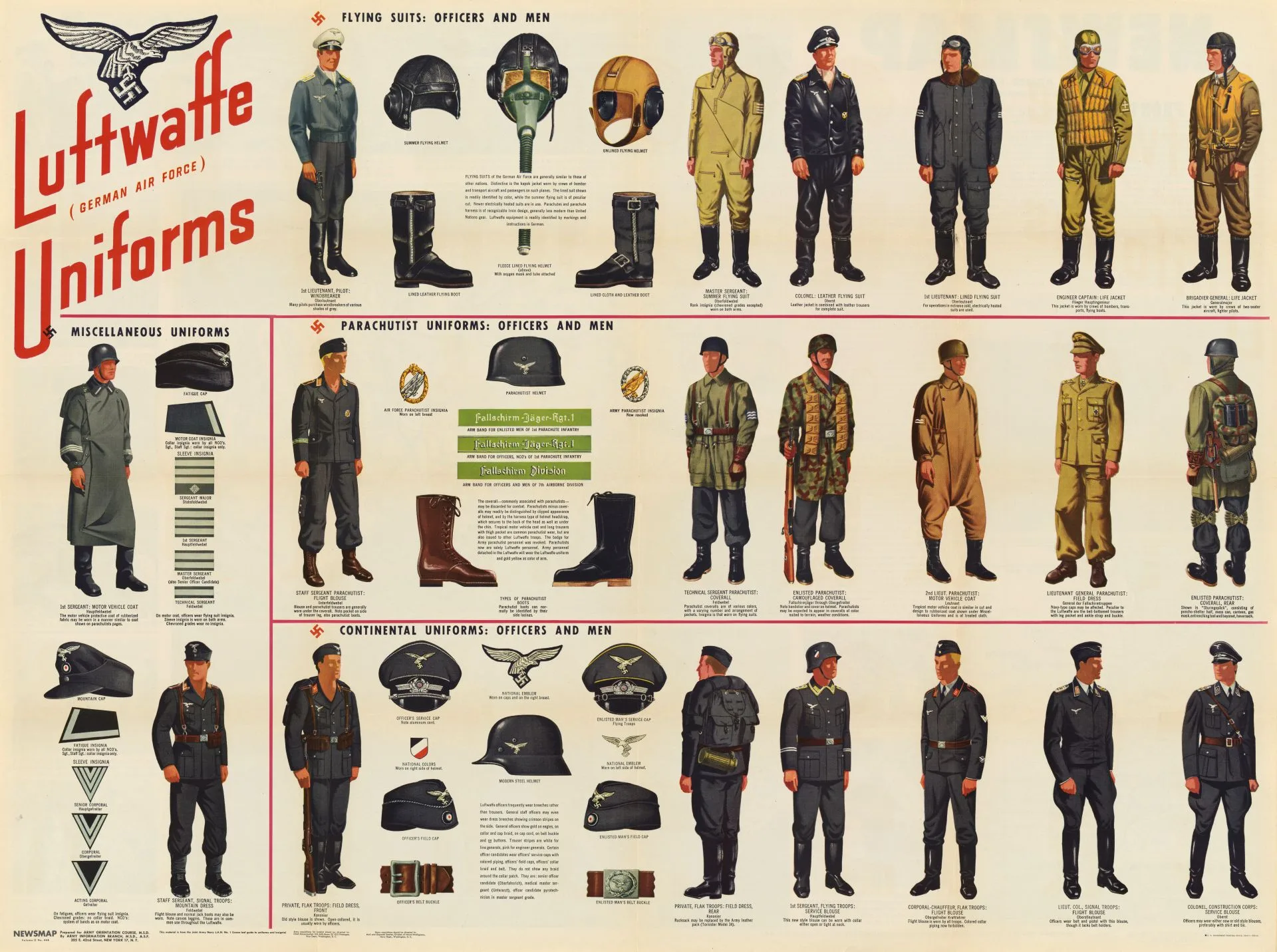

In April 1945, a 19-year-old Obergefreiter found a captain’s uniform in an abandoned car. Within weeks, more than a hundred prisoners were dead.
Sometimes it’s difficult to explain human behavior. We usually analyze it only after the fact. What drives a sudden change of behavior to an extreme extent? Do we maybe underestimate the power of the uniform? Don’t worry, it’s not turning into a psychology lesson. It’s just something to think about when discussing one man, who was maybe just still a kid, who went from leaving his Vaterland to becoming an absolutely horrifying monster.
Willi Herold
On September 11, 1925, Willi Herold was born in Lunzenau, Weimar Republic. When he was just ten years old, in 1935, he joined a section of the Hitlerjugend called Deutsches Jungvolk. That says little about Willi’s character, since children were often expected or pressured to join the Hitlerjugend. Whatever his motives were at that young age, he was already expelled from the Deutsches Jungvolk the following year. He was skipping service and trying to organize his own crew of boys, both violations of the organization’s regulations. It’s safe to say Willi didn’t care that much, since he joined the actual Hitlerjugend at age 14. He was reportedly attracted by the benefits offered to members, at least for a while.
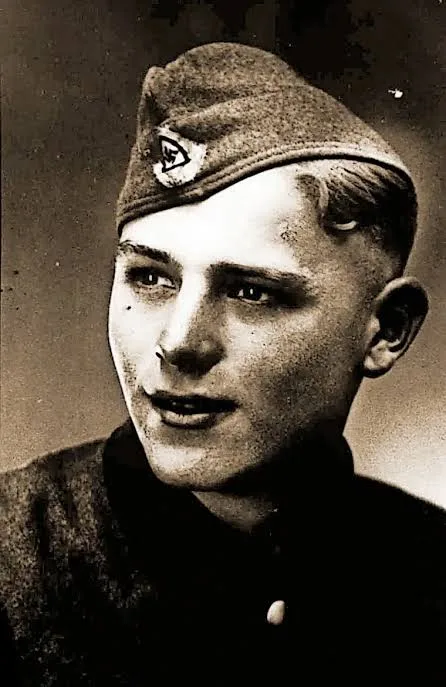
Willi’s next step was far less glamorous. When he was 15 years old, Willi started an apprenticeship as a chimney sweep. It didn’t take long before he ran away with a friend because he wanted to emigrate to the United States. It’s safe to say Willi didn’t feel all that enthusiastic about his apprenticeship. As far as the Gestapo was concerned, they didn’t care how Willi was feeling about his apprenticeship. Willi was arrested by the Gestapo and sent back to Lunzenau, where he completed his apprenticeship in 1943.
After his apprenticeship Willi served in the Reich Labour Service on the Atlantic Wall somewhere between June and September 1943. He worked on the Atlantic Wall in German-occupied France.
Military Service during World War II
On September 30, 1943, Willi started his military service. Because of his above-average fitness, he was trained as a Fallschirmjäger, a German paratrooper. Becoming a Fallschirmjäger wasn’t for everyone. You had to be athletic as these German paratroopers were considered an elite force.
Willi’s division was among the last to receive near-complete training: three months of infantry training and a sixteen-day parachute course. As the war progressed, most military training were shortened, which also affected the quality and capability of these troops.
Willi also participated in the Battle of Monte Cassino and the Battle of Nettuno in early 1944, which led to him getting promoted to the rank of Obergefreiter, roughly translated as a senior lance corporal. It turned out that he wasn’t just some senior lance corporal. He claimed to have received several German decorations, including the Iron Cross First and Second Class. However, no records confirming these awards have been identified, dispite his participation in both battles.
Perhaps he was some kind of a pathological liar? Some accounts consider it plausible that he received the Parachutist Badge and Wound Badge, given his service record and combat experience.
What we do know for a fact is that Willi’s unit retreated from the Netherlands to Nazi Germany in March 1945. In the almost apocalyptic chaos, Willi became separated from his unit. Now alone, he had to travel 13 kilometers / 8 miles between Gronau and Bad Bentheim. He came across a shot-up Wehrmacht military car. German accounts often refer to the vehicle as a zerschossener PKW or simply a Militärfahrzeug. It isn’t important what exact vehicle was lying in the ditch next to the road. What was inside the vehicle was of far greater importance.
Captain Willi
You just can’t make it up. Inside the vehicle, Willi found a complete Luftwaffe captain’s uniform with decorations. Willi wouldn’t be the first one to take something from the battlefield as a war trophy. But Willi had other plans, and he took it a step further. From this moment on, Obergefreiter Willi was no more. He had assumed the rank of Hauptmann (captain), claiming to be Captain Herold of the Sixth Parachute Division.
He continued his journey and stopped at the German checkpoint in Ochtrup, where he met a major. Captain Willi convinced this major that he was, in fact, a captain. The major allowed him to take four soldiers under his command. Reportedly, throughout Willi’s journey a core group of about 12 soldiers followed him, while approximately 60 of his other brothers-in-arms came and went as it suited them. During his bizarre journey, he always claimed that he was on a special mission from Adolf Hitler personally. Lie much? Even so, he was only asked to identify himself twice.
Captain Willi went on to engage in what I can only describe as a sort of live-action role-play. He led several scouting missions and even tried more than once to engage the enemy. After all, he was still a soldier fighting the war. Willi and his squad ended up close to Lathen, a village that was already occupied by the Allies. A German unit was stationed nearby to fight the advancing Allied troops. Unfortunately for Willi, his squad was nearly wiped out by enemy tank fire in the fighting around Lathen. When he lost too many of his men, he ordered a retreat. Little did his squad know, they were listening to an Obergefreiter with little command experience.
Following all the setbacks and losses, Willi needed to recruit more soldiers. He couldn’t truly impact the enemy with the limited number of troops he had. As he continued his journey, he ended up in Surwold, where he met a local garrison commander named Jann Budde. Budde informed Willi that there were hundreds of former Wehrmacht soldiers located at the Aschendorfermoor II penal camp. Willi saw this as his golden ticket to recruit the number of troops he actually needed.
Executioner of Emsland
On April 11, 1945, Willi and his group arrived at Aschendorfermoor II, part of the Emslandlager camp complex, where German inmates were housed. Karl Schütte was one of the camp’s supervisors, and Willi asked him to deal with 30 inmates who had tried to escape during a forced march to Collinghorst and had been recaptured. Willi didn’t give it a second thought as he ordered five of these men to be shot. Before his orders were executed, Friedrich Hansen, the judicial official, asked Willi to obtain permission from Dr. Richard Thiel, who was the head of the central administration of the Emslandlager camps. Willi failed.
After a lengthy meeting with Thiel, Willi didn’t get the permission he sought. But he was determined to have these five men shot. It’s unclear what Willi’s true motive was for having these five men killed. He went on to visit the Nazi district leader by the name of Gerhard Buscher. Unexpectedly, Buscher got the Gestapo involved. With the Gestapo now involved, Willi’s charade would surely come to an end swiftly. However, nothing could have been further from the truth.
Through Buscher’s intervention, the Gestapo granted Willi permission to execute all 30 escaped inmates, six times as many as the five he had initially selected. Over the following days, Willi ordered the execution of the 30 escaped inmates. It didn’t stop there as he also went on to order the execution of a large number of political prisoners from a list of 400 names that was compiled by Thiel. The killings continued through April 19, 1945. Allied air attacks on April 18 and 19 struck and largely destroyed the camp.
Herold also selected a number of inmates, equipped them with uniforms and weapons, and sent them to the German town of Leer to join the Wehrmacht. The ‘captain’s’ plan was no master plan and it quickly failed. Many of the troops surrendered to the advancing Polish troops.
Escalating Murderous Behavior
The few inmates that were still at Willi’s side, approximately 12 of them, were now assigned as his personal guards. Together they became Kampfgruppe Herold. They continued their journey north, into the region of East Frisia, moving ahead of the advancing Allied troops. Their route took them through the towns of Papenburg, Mitling-Mark, Leer, and ultimately Aurich.
In Leer, Willi removed five Dutchmen from the town hall, which was being used as a makeshift prison, and executed them on April 25, 1945, after a ten-minute sham trial. The five Dutchmen (Kornelis Fielstra, Johan Kok, Johannes Verbiest, Carolus Magermans, and Magermans’s 23-year-old son) from Groningen were accused of espionage. In reality, they were courageous Dutch resistance fighters who were sent by the Binnenlandse Strijdkrachten (BS) (Dutch Internal Forces) to collect compatriots who had been forced to work in Germany. Before he had them executed, Willi ordered them to dig their own graves. On his way to Leer, Herold also had a local farmer hanged for flying a white flag.
Just hours before Hitler committed suicide, Willi and his men were arrested by the German Feldgendarmerie in a hotel in Aurich. It was the end of Kampfgruppe Herold. However, the full extent of what Willi did only became known after the war ended.
The End of the Road
On May 3, 1945, Willi had to face the music as he was put on trial by the German authorities. Thanks to the collective effort of Admiral Kurt Weyher and the Kriegsmarine Chief Justice for the East Frisian region, the trial was interrupted and Willi was conditionally released. He was transferred to a special German unit, where he was, to no one’s surprise, welcomed warmly. The conman and mass murderer didn’t plan on sticking around. As soon as night fell, he left for Wilhelmshaven where he, under his true name, assembled a soldier’s paybook and discharge documents. He left and simply resumed his previous job, working as a chimney sweep.
Willi may have thought he was home free, but his past would catch up to him, and fast. On May 23, 1945, Willi was arrested by personnel of the Royal Navy after stealing a loaf of bread. He was sent to the Civil Internment Camp (CIC) Esterwegen, a post-war internment center that was managed by the British occupation forces. The British decided to dig a little deeper into Willi’s background and actions. During the summer of 1945, the British uncovered the true extent and horrific scale of his crimes.
In early 1946, Willi and approximately 50 other inmates from the CIC Esterwegen were forced to unearth the mass graves at Aschendorfermoor II. What they uncovered was absolutely shocking: a total of 195 bodies were excavated. This did not mean that Willi had personally murdered all 195 people; the recovered dead included victims of the Allied air attacks on the camp.
This time, no one would interrupt the trial. In August 1946, Captain Willi and twelve others were tried in Oldenburg, Germany, by the British. Colonel Herbert Bown oversaw the trial. Accounts of the trial indicate that Willi had a very relaxed demeanor. Maybe the more striking part was that he was noted to have a complete lack of remorse. On August 29, 1946, Willi was sentenced to death together with six co-defendants.
The court held Willi responsible for the murders of 111 people. The Executioner of Emsland now faced only his own executioner: Friedrich Hehr. On November 14, 1946, Willi was executed by guillotine in Wolfenbüttel prison.
Willi’s Hauptmann uniform did not give him real authority. It did give him an appearance of authority, something too many people accepted without demanding proof. It could very well have been the perfect storm for Willi, created by the chaos that was widespread in the last months of the war. It’s almost unfathomable that a stolen uniform and a fabricated story were enough to give a 19-year-old control over his fellow soldiers, and ultimately over the lives of hundreds of prisoners. But, that’s exactly what happened.
Continue the Discussion
Willi Herold had no authority except a stolen uniform, and almost no one questioned it. Why do you think so many people obeyed him: fear, habit, the uniform, or a system that wanted orders to be followed? And do we still defer to rank and appearance more than we should?
Join Field Reserve for free and make your case inside the WarCommons community at our Field Headquarters.
Take WarCommons with you on Android
WarCommons publishes long-form, source-driven World War II analysis without ads or sponsored content. If you found this article valuable, consider supporting independent research by joining Field Command.
By Nick Ravenshade — Founder & Editorial Director, WarCommons
Header image: WW2 Luftwaffe German Air Force Uniforms. March 6, 1944. Source: Wikimedia Commons. CC BY-SA 4.0.