WARCOMMONS IS NOW ON ANDROID
Explore WWII history and stay connected with the community on the go. GET THE APP →
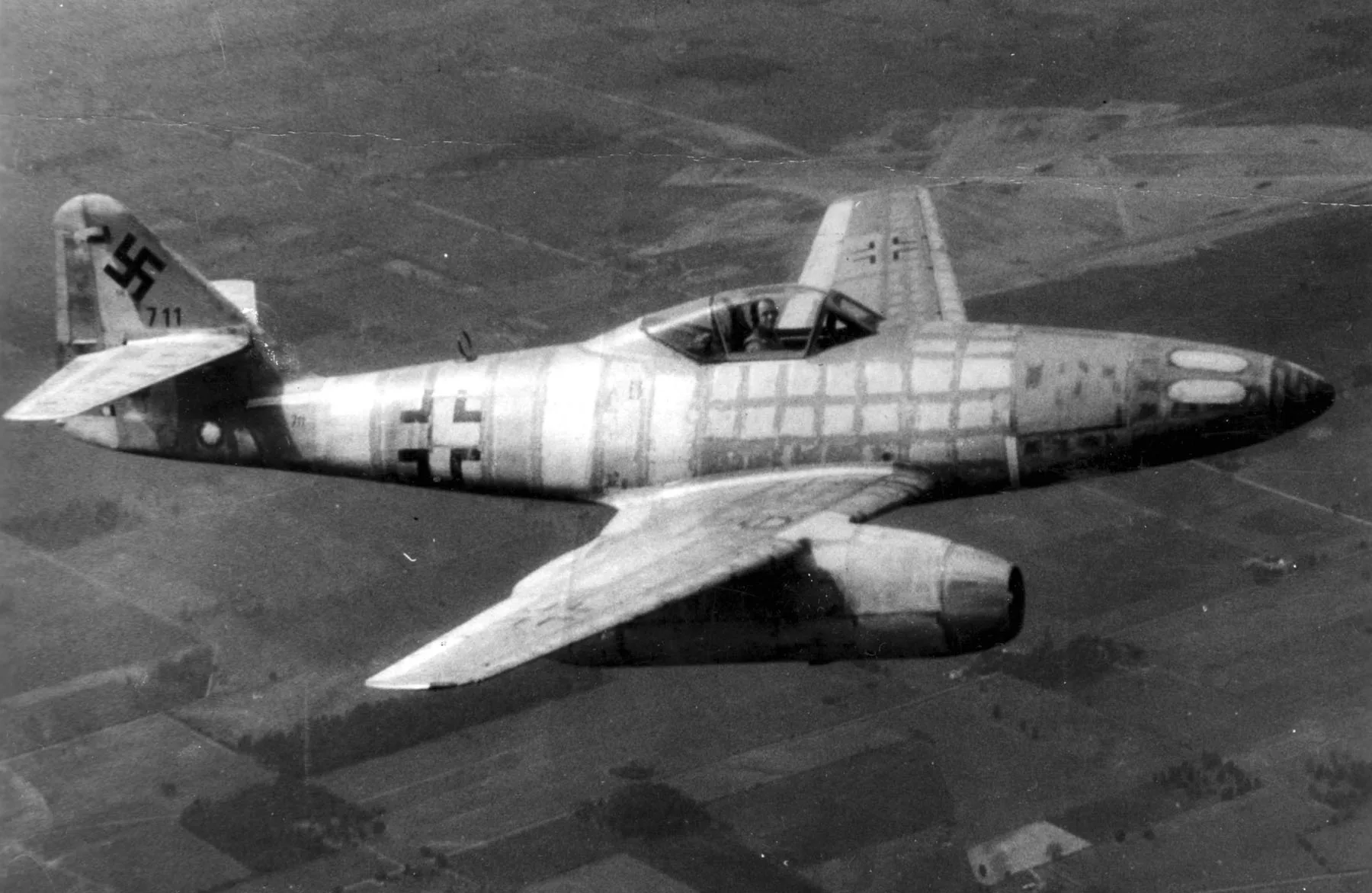

From a giant railway gun and an experimental combat drug to the Me 262, the Maus and the Goliath, these five projects reveal the limits of Hitler’s search for a battlefield miracle.
We have discussed it at WarCommons before, Hitler’s reason to believe. It wasn’t only his delusion; Hitler relied on his Wunderwaffe to win the war. Miracle weapons, such as the Dora and Schwerer Gustav, had to turn the tide for Nazi Germany. Several of the best-known Wunderwaffe projects were colossal in size. This could’ve been an advantage, but the size often proved to be their own downfall.
Schwerer Gustav
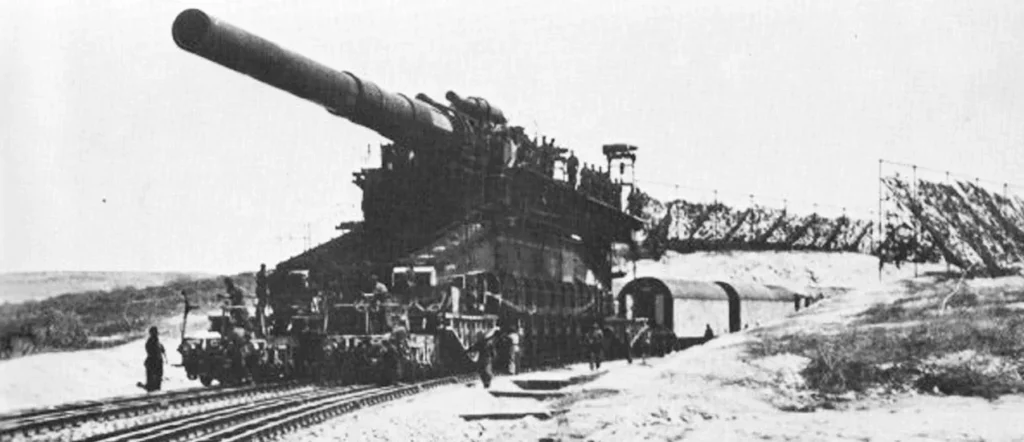
The name translates directly from German to ‘Heavy Gustav’, and there is not a word of a lie in it. This colossal weapon weighed 1,350,000 kilograms / 2,976,240 pounds. With a length of approximately 47 meters / 155 feet, it could only be moved on railroad tracks.
The railway gun was designed to bring down the Maginot Line. However, it was never used for that purpose. The Germans had their own ingenious offensive that bypassed the Maginot Line’s defenses completely. Still, the Schwerer Gustav was used eventually, and it was only then that it showed what a colossal failure it was. The only impressive part about the gun was probably its size.
The Nazis probably didn’t see this railway gun as a failure, because they ordered another one in 1943. Dora which was the original Schwerer Gustav would be joined by the new Schwerer Gustav II. Dora only managed to destroy one munition depot in Sevastopol. Schwerer Gustav II was never even used in a real combat situation. And Dora was fired 48 times before the barrel was already worn out after just those few shots. To make matters worse, only 11 of the 48 shots hit the designated target.
D-IX
Don’t worry, this sub header is not a typo. What it is, however, is still commonly unknown to many. The performance-enhancing drug Pervitin is commonly known, because it played a substantial role in the German military. It gave the soldiers the ability to sustain intense energy during multiple military campaigns. Pervitin was the miracle drug, but it wasn’t enough for the Germans.
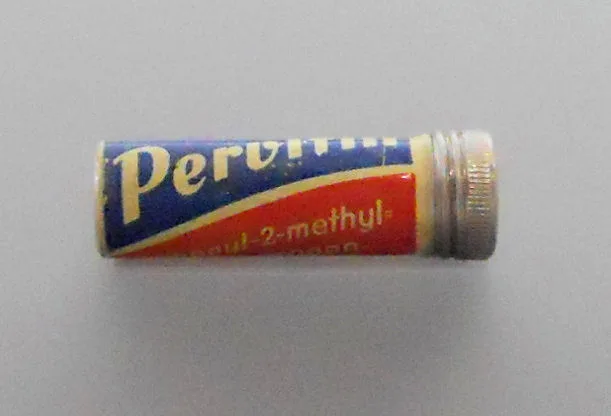
The success of Pervitin took them on the quest to find an even better miracle drug, one that could sustain alertness and endurance during demanding missions. In March 1944, Rear Admiral Hellmuth Heye requested a new chemical compound. Heye wanted a drug that could give specialized naval crews, such as the mini-submarine pilots, this superhuman strength. It had to massively boost the user’s self-esteem to handle the grueling, isolated combat missions.
A German pharmacologist named Gerhard Orzechowski was the primary scientist who engineered a new formula. He worked with a research group in Kiel, Germany, where he concocted a specific multi-drug cocktail. This new wonder drug was called D-IX, and it had to give the German soldiers extreme strength and energy. Let’s not glorify it, as it was essentially just a cocktail of multiple hard drugs. D-IX was a combination of cocaine, morphine, and methamphetamine. One single tablet of D-IX contained 5mg cocaine, 3mg pervitin / methamphetamine, and 5mg Eukodal / Oxycodone, which is a highly potent morphine-derived painkiller.
It wouldn’t be Nazi Germany without testing new inventions primarily on concentration camp inmates. High-dose stimulants, including pure cocaine and Pervitin, were tested on inmates at the Sachsenhausen concentration camp. The so-called test subjects, who were normal human beings just like you and I, were organized into what was called the ‘pill patrol’ or the ‘shoe-walking unit’. The prisoners were drugged with these substances, loaded with 20-kilogram / 44-pound packs, and forced to march in continuous circles to see how far they could go before ultimately collapsing.
Nazi researchers initially believed the drug would successfully redefine human endurance. During separate high-dose stimulant trials at the camp, some inmates were subjected to sleep deprivation and forced to cover total distances of up to 90 kilometers / 55 miles over consecutive days of marching. D-IX would never enter mass military production. The Allies’ advance and the collapse of the Nazi regime in 1945 stopped D-IX from ever entering mass military production.
The World’s First Operational Jet Fighter
Now this is a Wunderwaffe that is very well known: the Messerschmitt Me 262. Nazi Germany gets credited for being the first country in the world to develop and produce the first ever operational jet fighter. In September 1939, the Germans were already testing this technology with the Heinkel He 178, which was powered by a jet engine. Throughout the war Germany went on to develop new jet fighter models. However, they kept encountering the same issues over and over, namely issues with their engines, brakes, and wings.
It was an impressive and highly effective aircraft that essentially came too late for Nazi Germany to turn the tide. Production began in April 1944, while operational missions began in August 1944. It proved extremely effective against Allied bombers, and it was approximately 193 kilometers per hour / 120 miles per hour faster than the P-51 Mustang at the same altitude. The P-51 Mustang was considered to be the Allies’ most effective long-range fighter.
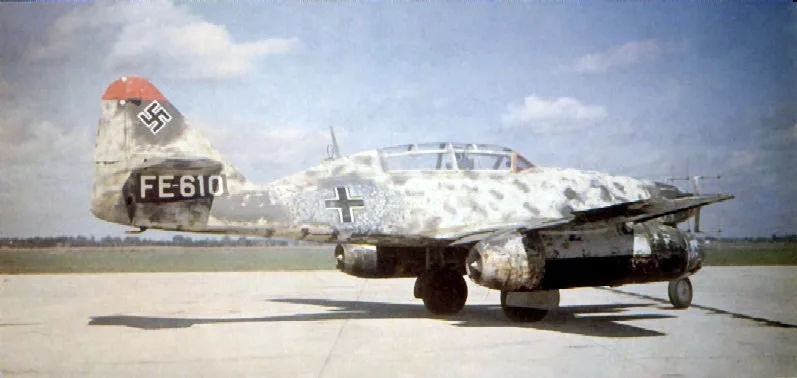
In the months leading up to D-Day, Germany had already lost control over the western European airspace. The Luftwaffe simply lacked an adequate number of pilots and aircraft to mount a meaningful air offensive. By this time, Germany also couldn’t keep up with the Allied war industry. In comparison to the Allies, a few German jet fighters would never be enough to oppose thousands of aircraft the Allies were producing every month during the peak years of World War II.
Mice and Rats
I should probably explain this one immediately before you start thinking Germany used mice and rats to turn the tide. The Tiger and Panther tanks are well-known German tanks. However, Hitler wanted even bigger, and more powerful, tanks. For Hitler, it was always all about colossal buildings, colossal guns, colossal tanks, and so on.
Even the King Tiger, or Tiger II tank, was not enough for Hitler. The King Tiger was the largest turreted tank to see combat during World War II, with 492 of these tanks being built. Then there was also the Jagdtiger, the heaviest turretless tank destroyer to see combat during World War II, with only about 85-88 of them being built, featuring a massive 128mm gun.
No, it was all too small for Hitler’s megalomania and gigantomania. And so, enter the Panzer VIII Maus and the Landkreuzer P. 1000 Ratte, with a caveat.
The caveat for the Ratte was that it never left the drawing board. This specific tank was approved by Hitler as early as 1942, but it was subsequently canceled by Albert Speer in early 1943. Its weight was projected to be 1,000 metric tonnes. Talk about colossal. It would’ve been 35 meters / 114 feet long (39 meters / 127 feet with its guns), 14 meters / 45 feet wide, and 11 meters / 36 feet high. It would have featured two 280mm naval guns that would be modified from warship turrets, a 128mm anti-tank gun, and multiple smaller anti-aircraft machine guns. It was almost like a building on tank tracks.
To ensure this mega tank would move, one proposed configuration stated it would’ve been powered by dual marine diesel engines, providing 16,000 – 17,000 horsepower with an estimated top speed of around 40 kilometers per hour / 24 miles per hour. Now just imagine your house driving off at this speed.
Needless to say, the Ratte was never built. It was absolutely too heavy for bridges; it would ruin roads, and it sat wide open to air attacks. Not to mention the actual cost of producing such a behemoth.
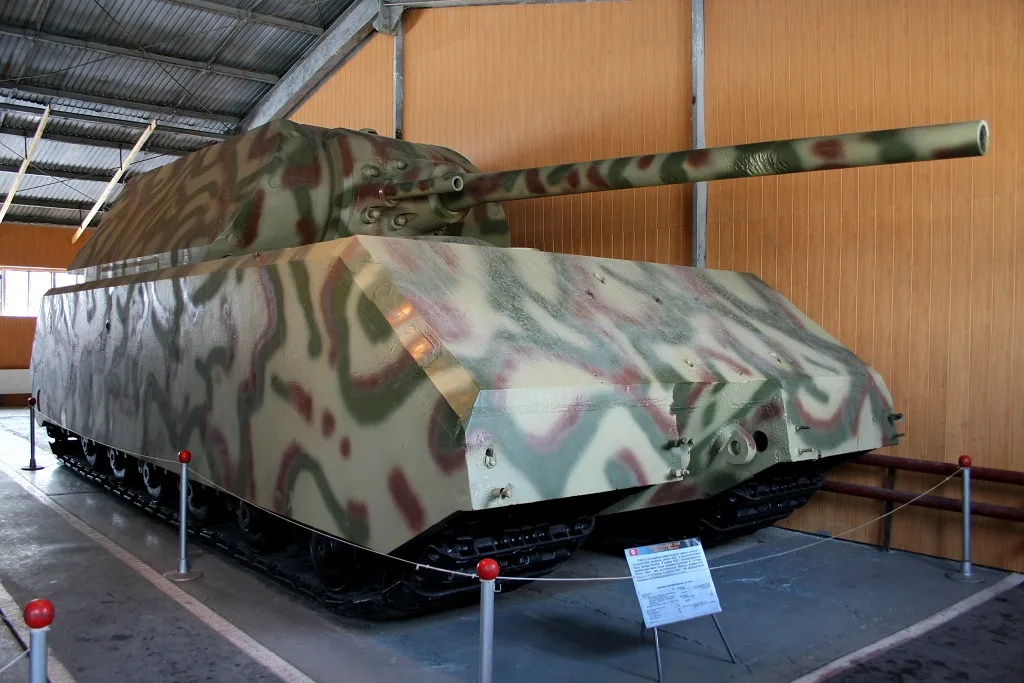
The Maus tank, however, was actually built as two completed prototypes. It would never see actual combat. With its weight of 188 metric tonnes, it was the heaviest enclosed tank ever built. A prototype featured a 128mm KwK 44 L/55 main gun and a coaxial 75mm gun. Massive armor up to 200mm on the hull and up to 220mm on the turret front had to protect the tank, and it was actually powered by a hybrid-electric system. The top speed of 13-20 km/h / 8-12 mph was the result of the extreme weight of the tank, among other factors. The Maus tank was ultimately canceled in late 1944. The two prototypes were blown up by retreating German forces before the advancing Soviet troops arrived. Soviet specialists later assembled the surviving vehicle from components of both prototypes. The vehicle is now on display at the Kubinka Tank Museum in Russia.
The Goliath
Last but not least, the remote-controlled robot bomb called the Goliath. It was made to blow up tanks from a ‘safe’ distance. At least a distance safer than firing at the tank with a Panzerfaust. Unsurprisingly, the Goliath was, of course, the nickname of this tracked mine. Its real name is commonly forgotten: Leichter Ladungsträger / Sonderkraftfahrzeug 302/303. It does make sense why it’s better known as the Goliath.
This tracked mine was approximately 1.5 meters / 4.9 feet long and 0.85 meters / 2.7 feet wide. It was propelled by two tracks with a cable spool attached to the rear. From the spool a 650-meter-long / 2132-foot-long cable was unwound, ensuring the Goliath could be remote controlled via a joystick. There is a parallel here with how drones are used on the battlefield nowadays, at least to some degree. It granted the German soldiers the ability to hide from an Allied tank, while being able to attack it at the same time. The only complicating factor here was that the operator had to maintain visual on the Goliath to steer it at the intended target.
Over 7,500 Goliaths were built. What they weren’t, however, was a true Wunderwaffe. The main issue was that it was really slow. The electric-powered Goliath was practically silent, but the later petrol-powered version was noisier. The long cable was also a weak point, as the Allies could just cut it, rendering the Goliath useless.
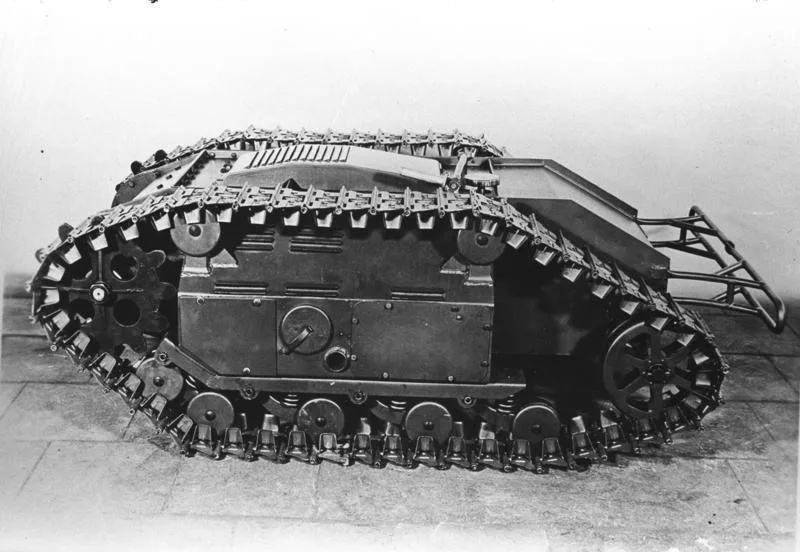
In the end, the Goliath’s operational effectiveness was limited.
Through just five Wunderwaffe we can see once more what exactly ensured the defeat of Nazi Germany. A mix of too little, too late, and Hitler’s megalomania and gigantomania demanding the impossible be built.
Give the Gift of WarCommons
Know someone who loves WWII history? Give them a year of WarCommons Field Command, with original articles, premium features, and a community dedicated to exploring World War II.
Continue the Discussion
World War II brought some of the most ingenious inventions. Do you think any of these miracle weapons had the potential to turn the tide for Nazi Germany?
Join Field Reserve for free and make your case inside the WarCommons community at our Field Headquarters.
Take WarCommons with you on Android
WarCommons publishes long-form, source-driven World War II analysis without ads or sponsored content. If you found this article valuable, consider supporting independent research by joining Field Command.
By Nick Ravenshade — Founder & Editorial Director, WarCommons
Header image: Messerschmitt Me 262 Werk-Nr. 111711, seen here post-war during a test flight in the USA. It was the first intact Me 262 to fall into Allied hands on March 31st 1945. Source: Wikimedia Commons. Public domain.