WARCOMMONS IS NOW ON ANDROID
Explore WWII history and stay connected with the community on the go.
GET THE APP →

Everyone knows Simo Häyhä, the Finnish sniper with over 500 kills. Almost nobody remembers the war that made him famous, or why Stalin started it.
If you’ve ever seen any World War II videos online, I’m pretty sure that it was just a matter of time before you saw anything about Simo Häyhä. Nicknamed the ‘White Death’, Häyhä was a Finnish sniper who recorded over 500 kills during the 1939-1940 Winter War against the Soviet Union. And that is exactly where we crossed from a well-known fact to an almost forgotten war. Because, why were Finland and the Soviet Union even at war? And what was and wasn’t actually also a part of Operation Barbarossa?
How the Soviet Union and Finland Clashed
Before Finland became its own state, it was an autonomous Grand Duchy as a part of the Russian Empire. During the Bolshevik revolution of 1917, Finland declared its independence. What followed was the 1918 Civil War which deeply divided Finland. The so-called White Guard fought against the Red Guards. The former was a group that represented the conservative Senate, while the latter was a group that represented the working class and socialists. The Red Guards received limited backing from the new Bolshevik government in Soviet Russia, while the White Guards went on to win this Civil War with the crucial help from Imperial Germany. This created a long legacy of tension and mistrust with the Soviet Union.
Leningrad was only 32 kilometers / 19 miles from the Finnish border. Stalin, paranoid as ever, had become increasingly worried about the security of his city. By the late 1930s, it was pretty clear that World War II was approaching, and the Soviet Union tried to secure its western borders against a resurgent Germany. It is said that Stalin said: ‘Since we cannot move Leningrad… then we must move the border.’
What also didn’t help the situation is that there was deep mutual mistrust between Finland and the Soviet Union. Finland was absolutely convinced that the Soviet Union would invade the country to expand into its territory. The Soviet Union also mistrusted, and maybe even feared Finland, as Stalin worried that Finland could be used as a base from which enemies could attack.
The Secret Protocol
Dividing Poland was not the only secret agreement within the Molotov-Ribbentrop pact. It secretly also placed Finland within the Soviet sphere of influence. Nazi Germany and the Soviet Union were the only two countries deciding this; with no input from the sovereign nations involved.
After both countries had invaded Poland, the Soviet Union set its sights on the Baltic states. Stalin pressured Estonia, Latvia, and Lithuania into signing the mutual assistance pacts with the Soviet Union. For Stalin, the only neighboring country left was Finland. In early October 1939 a Finnish delegation was invited to Moscow. The goal was to discuss the political issues between the two countries. Immediately after Finland received the invitation, it proceeded to mobilize 300,000 reservists under the pretext of an ‘additional refresher training.’
Still, the Finnish delegation went to Moscow to meet with the Soviet Union’s delegation. On October 16, 1939, the Finnish delegation arrived back home, and it reported that the Soviet Union demanded that Finland cede territory. Stalin’s primary demands were that he wanted Finland to cede parts of the Karelian Isthmus, several islands in the Gulf of Finland, and a 30-year lease on the Hanko Peninsula for a Soviet naval base. Again, Finland’s response was firm and decisive as it proceeded to declare an actual mobilization. The country also declared itself neutral at the outset of World War II. But for Stalin, it wasn’t enough.
The Mainila Incident
Stalin wasn’t satisfied, and he demanded more concessions from Finland. But Finland continued to delay, and in the meantime it was using the delay to continue its mobilization and seeking help from Sweden and the Western Allies. Especially France and Britain were the recipients of the Finnish request for help. It’s safe to say that no major Allied force came to Finland’s aid in time.
It set the stage for the Mainila Incident. It turned out that Hitler wasn’t the only one who could create a false flag operation. On November 26, 1939, the Red Army reported seven artillery explosions near the Soviet village of Mainila on the Karelian Isthmus. The Soviet Union claimed that Finnish shelling was responsible. In reality, this was a false flag operation that was staged by the Soviet Union. After staging this false flag, Stalin used it as justification to renounce the non-aggression pact with Finland. Just like the Gleiwitz Incident, Stalin used his fake border incident as a pretext to ultimately invade Finland.
The Winter War
Many people knew that a war was approaching. Contrary to higher orders, Finnish border officers began evacuating civilians from settlements near the border, as they were also anticipating a war. This decision was later credited with reducing civilian casualties in at least one Finnish district.
On November 30, 1939, the Red Army began its attacks on Finland. The Winter War had begun. Overhead the Soviet planes started bombing Helsinki, Viipuri, and other locations. They destroyed Finland’s infrastructure and killed its civilians. On December 14, 1939, Finland officially appealed to the League of Nations. True to its reputation for inadequate action, the League of Nations only expelled the Soviet Union and called on member states to assist Finland. Stalin probably never lost any sleep over this League of Nations reprimand.
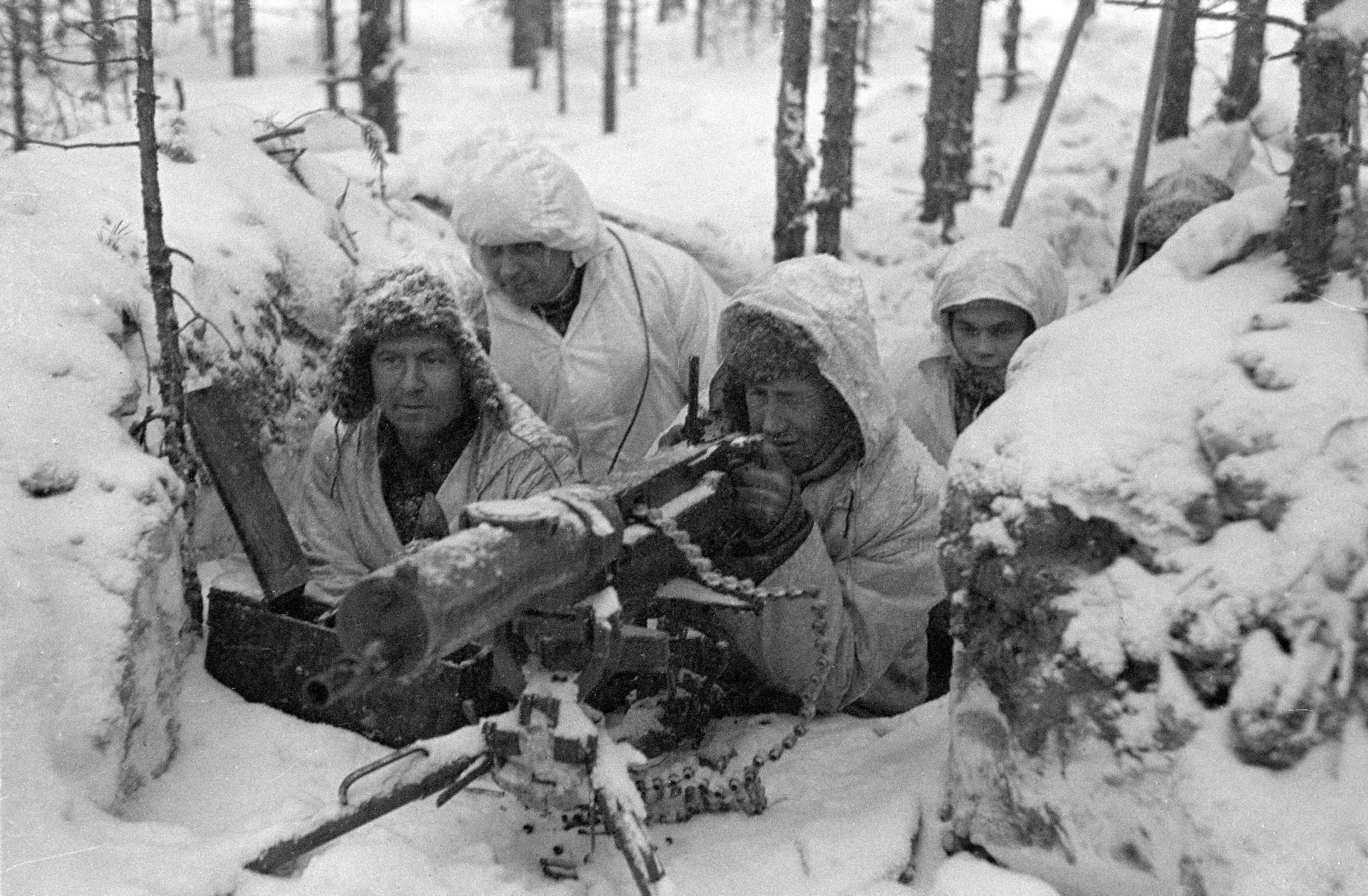
The Winter War ultimately lasted from November 30, 1939, to March 13, 1940. It was almost exclusively fought along Finland’s eastern border. Finland’s troops were vastly outnumbered; the Red Army was estimated to have deployed around 200,000 to 245,000 more troops than Finland had when the Winter War began. At the peak of the war, this difference rose to 420,000 to 650,000 in favor of the Red Army, let alone the vast difference in tanks and aircraft. To put it into perspective, Finland only had 32 tanks and 114 aircraft, while the Soviet Union had deployed approximately 2,514-6,541 tanks and approximately 3,880 aircraft. But the Finnish troops seemed to have something else in their favor: their resilience and fighting spirit. The winter conditions also proved to be brutal; conditions the Finns were far better prepared to endure than their attackers. They inflicted heavy casualties on the Red Army and managed to halt Soviet advances on multiple occasions.
Even if Finland was highly effective in its defense, it proved to be unsustainable in the long run. The Winter War therefore concluded with the Moscow Peace Treaty. Following the Treaty, Finland was forced to cede the Gulf of Finland islands, the Karelian Isthmus, Ladoga Karelia, Salla, the Rybachy Peninsula, and lease Hanko to the Soviet Union.
However, the cost that the Soviet Union had to pay for this ‘victory’ was absolutely staggering. The Soviet Union’s Foreign Minister Molotov later reported to the Supreme Soviet that the Red Army suffered an estimated 126,875 killed, died of wounds, or missing, along with 206,534 wounded during the conflict.
Finland may have lost a part of its territory, but the fight was far from over.
Part II – soon!
Continue the Discussion
Why do you think the Winter War lives in the shadow of World War II?
Join Field Reserve for free and make your case inside the WarCommons community at our Field Headquarters.
WarCommons publishes long-form, source-driven World War II analysis without ads or sponsored content. If you found this article valuable, consider supporting independent research by joining Field Command.
By Nick Ravenshade — Founder & Editorial Director, WarCommons
Header image: Maxim M-32 machine gun being manned by Finnish troops during the Winter War. February 21, 1940. Source: Wikimedia Commons / Military Museum of Finland. CC-BY 4.0.