
WARCOMMONS IS NOW ON ANDROID
Explore WWII history and stay connected with the community on the go. GET THE APP →

How Ordinary People Became an Extraordinary Resistance
Resistance movements were present throughout Europe during World War II. In some countries, these movements were more widespread than in others. In Germany, for example, there was virtually no widespread resistance movement, apart from nonviolent resistance groups such as Die Weisse Rose. Where resistance did exist, it was often scattered across the country. But that was not the case in all occupied countries. Take the Netherlands, for example. A country people often think of only in the context of Operation Market Garden, not the resistance.
The Netherlands will celebrate its freedom next week. On May 5, 1945, the Netherlands marks Liberation Day. It is therefore only fitting to also reflect on what contributed to the country’s liberation. The Netherlands is often overlooked in the global history of World War II. People focus on Arnhem and Operation Market Garden. That is often all that is mentioned. When people think of resistance during World War II, they often think of the Free French Forces (FFL) and La Résistance, with well-known names such as Charles de Gaulle and Jean Moulin. Unfairly, the Dutch resistance is often left out of the narrative of widespread, organized, and effective resistance movements. Until now. Whether a country’s resistance movement should take center stage in a narrative or in the history of World War II does not depend on sensationalism. Such as the number of explosions the movement caused or whether the movement rose up violently against the oppressor and occupier. It is about the impact the movement had and its actions, in which the goodness of humanity was central. This, then, is the story of the Dutch resistance movement during World War II.
The Netherlands also belongs among the ranks of truly organized resistance movements, alongside Yugoslavia, France, and Poland, to name a few of the most well-known and influential. The resistance, as they are simply called in the Netherlands, was organized and had a real impact. What is also very important in this context is that Nazi Germany did not entirely expect this.
Invasion of the Netherlands
On May 10, 1940, Nazi Germany invaded the Netherlands. Hitler had already demonstrated his expansionist ambitions in 1940, but the Netherlands did not quite fit into his plans. Hitler viewed the Netherlands and the Dutch people as the Germanic Brothers of Germany. The Nazis simply saw the Dutch as racially pure Aryans. The country was simply to be incorporated into the Third Reich in a natural manner, just as had happened with Austria, for example. But in May 1940, the Netherlands was attacked by Germany primarily for strategic reasons. After all, the Netherlands had declared its neutrality in the war, just as it had in World War I. But the Dutch west coast posed a risk to Hitler, who was already busy with the invasion of France at that time. To prevent the Allies from bringing in reinforcements via the Dutch west coast and ports to attack Germany’s western flank, the Netherlands also had to be taken out of the picture.
In the Netherlands, National Socialism also gained a foothold through the political party known as the NSB, the National Socialist Movement, led by Anton Mussert. As level-headed as the Dutch were, they did not have much regard for Mussert and his extremist NSB. In 1940, the NSB had only about 32,000 members nationwide. The Netherlands therefore had no intention of simply being incorporated into the Third Reich. It viewed that “Germanic brotherhood” quite differently.
But the fighting did not last long. After Rotterdam was bombed by Nazi Germany and Utrecht was next on the list to be flattened, the Netherlands surrendered. The surrender was handed over to General Henri Winkelman, as the entire Dutch government and the Queen had already fled to England. The fighting was intense and the resistance was brave, but the Netherlands officially fell into German hands on May 15, 1940.
The resistance
The early years of the Nazi German occupation of the Netherlands were relatively peaceful, in contrast to the occupation of other countries such as Poland and France. Germany’s approach in the Netherlands was different. The Dutch were considered the Germanic Brothers, the Brother Nation, so the occupation was carried out primarily with a soft hand, or, as it were, with a velvet glove. The Dutch were simply expected to support Nazi ideology, and then the Netherlands and Germany could coexist in peace. The Netherlands, however, saw things quite differently. The vast majority of Dutch people had no sympathy for Nazi ideology, the NSB, or the occupation. The Holocaust was, in fact, carried out with full force by the Germans in the Netherlands, and oppression and forced labor were also the order of the day, even for the Dutch. The Dutch found themselves in nothing more than a police state. That is why it did not take long before some form of resistance became visible. Perhaps not through open violence, but the resistance was certainly present from the very beginning of World War II.
From May 1940 until around February 1941, things remained relatively calm in the Netherlands. The Reich Commissioner for the Netherlands, Seyss-Inquart, employed a so-called “hearts and minds policy” in the Netherlands. The country was being prepared for National Socialist ideology so that it could be quietly incorporated into the Third Reich. But it wasn’t just the Dutch who weren’t so receptive to this. At the outbreak of World War II, when the Netherlands was still neutral, approximately 15,000 Jewish refugees had come to the Netherlands from Germany. They, too, had no interest in National Socialist ideology.
Early resistance groups
But as mentioned, the vast majority of the Dutch population had no sympathy for the Nazis or for the NSB, which had been founded as early as 1931. Yet there was certainly no violent resistance. The Communist Party of the Netherlands (CPN) did call on its members to engage in active resistance, but this party was banned by the Germans almost immediately. Newspapers, too, were forced to go underground. This was due to heavy censorship that Dutch newspapers sought to circumvent. A number of newspapers still exist today, such as Het Parool, Trouw, and Vrij Nederland. It was almost exclusively the communists who took action immediately after the occupation, the CPN and the Revolutionary Socialist Workers’ Party (RSAP). They initially organized the underground resistance as early as May 15, 1940. On that date, the party leadership held a meeting at the party headquarters, Parlando, where they discussed establishing an underground organization of 2,000 people. And these two parties had opposed the anti-Jewish measures from the very beginning.
However, it was not only the communists who rose up. Bernardus Ijzerdraat was also there, the first non-communist to join the active resistance. He founded the resistance group De Geuzen. And as early as May 18, 1940, their first call to resistance appeared in their newspaper, titled the Geuzenbericht. Primarily through chain letters and pamphlets, in addition to underground newspapers, the people were called upon not to recognize the German occupation and to resist it. Soldiers returning from captivity contacted one another and often joined the resistance together. Bernardus Ijzerdraat, however, was not able to witness for long what he had set in motion at the start of World War II. He was betrayed and arrested on November 25, 1940, by the German Sicherheitsdienst (SD), the state intelligence service. On March 13, 1941, Bernardus was executed by firing squad. He was posthumously awarded the Resistance Cross in 1955 and the Geuzenpenning in 1991.
Although the first resistance groups were organized locally, they were not organized nationally. And they were, above all, rudimentary, because no one in the Netherlands actually had any experience with resistance. Before May 15, 1940, the Netherlands was a country that had enjoyed at least 125 years of peace on its European territory, as it had remained neutral during World War I. Although the Netherlands did suffer the consequences of World War I, there had been no armed conflict or occupation of The Netherlands.
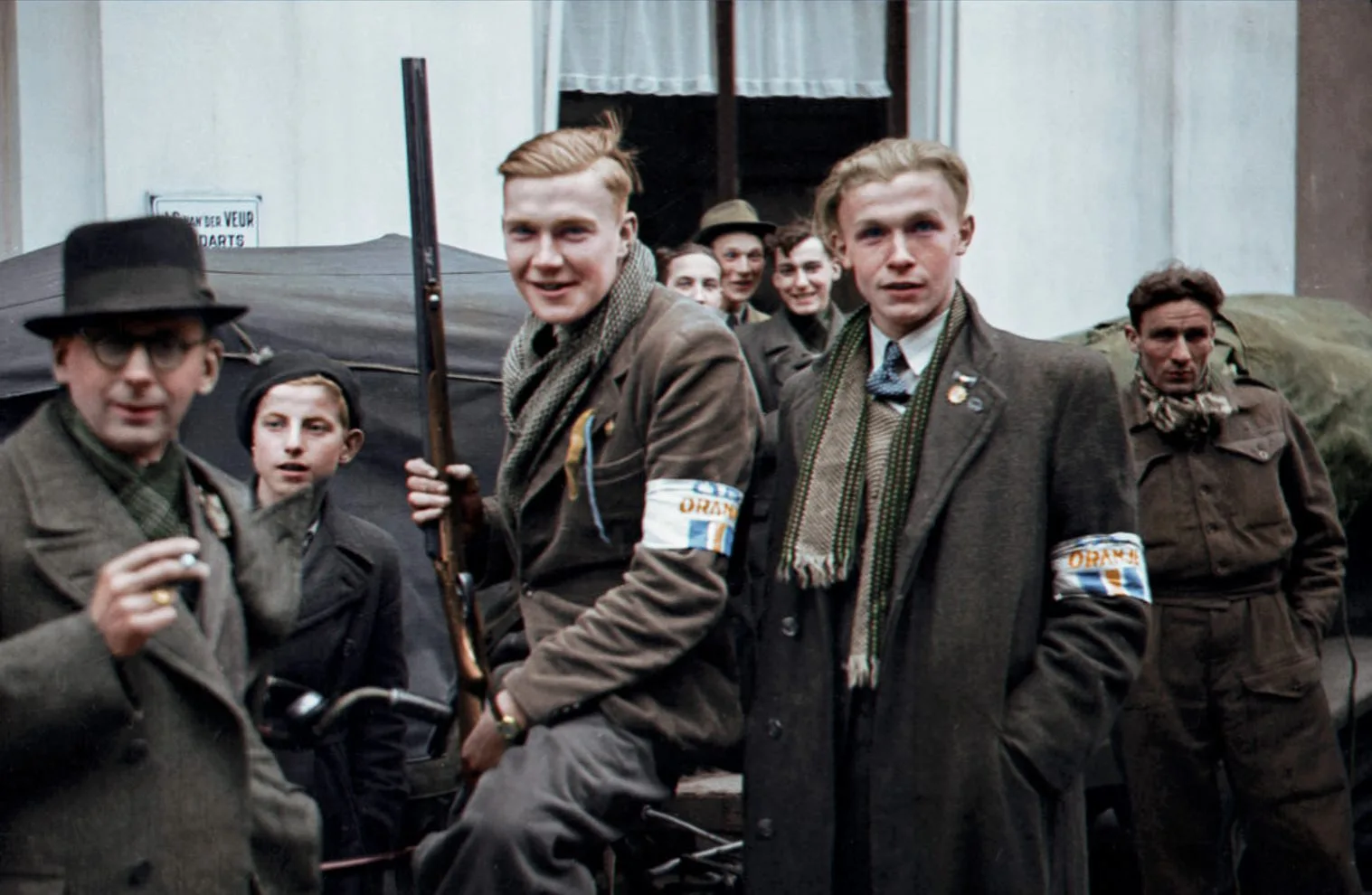
Resistance groups such as Bernardus Ijzerdraat’s Geuzen and the Oranjewacht were tracked down and rounded up by the Germans before they could mount any meaningful resistance. Many of the leaders of these early resistance groups, such as Bernardus, were executed by firing squad. It was particularly Bernardus’s execution in 1941 that sent shockwaves through Dutch society. The Geuzen’s resistance actions were mostly small-scale, and there had not even been any German casualties. Yet Germany cracked down so harshly that people who wanted to resist became more cautious and went underground. People became more cautious, but many also saw this as the moment when they too had to actively resist the German occupation.
Passive resistance
For the average citizen, it was clear. They did not want to live under the oppression of Nazi Germany, but they did not know how to resist it. Not to mention that for many citizens, engaging in resistance would mean certain death. The resistance of ordinary citizens therefore began on a small scale and in a passive manner, such as listening to Radio Oranje or the BBC. Radio Oranje, or “The Voice of the Fighting Netherlands,” aired its first broadcast on July 28, 1940, and was transmitted from the BBC in London. Queen Wilhelmina of the Netherlands also used Radio Oranje to address the Dutch people.
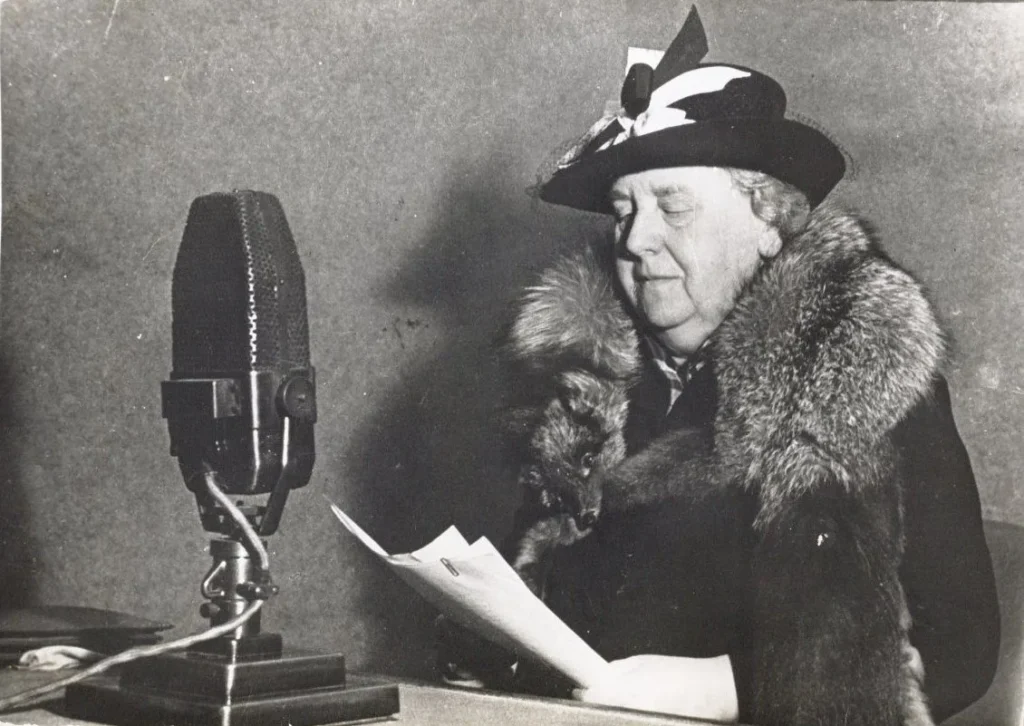
The content of Radio Oranje was thoroughly screened in advance. As a result, the broadcasts were primarily formal in nature, but also served as a means of coordinating the resistance. In fact, coded messages were also broadcast via Radio Oranje, which were referred to as “special messages.” Everyone could hear phrases such as: “Message from Bob to Jan: Stay where you are” and “The stove is almost never lit.” No one had any idea what this meant, not even the German occupiers, except for the resistance. It was also used to warn of impending Royal Air Force attacks, so that civilians could take shelter in time. It is therefore no coincidence that another act of passive resistance also occurred on a large scale: the refusal to hand in radios starting in 1943. People wanted to listen to Radio Oranje and the BBC to stay informed about the latest developments in the war. But reading illegal newspapers and distributing pamphlets was also widespread. Civil disobedience was more the rule than the exception. Ignoring German regulations was exactly that: civil disobedience. A signal from the Dutch people that they would never accept the occupation of the Netherlands.
And although it may seem trivial, there was also symbolic resistance. Such as wearing pro-Orange symbols, carnations, or flowers at times when they were banned, like on Queen’s Day. In a country where oppression is a daily reality. Where freedom is entirely absent and not a given, a small act like symbolic resistance was a tiny piece of freedom. Now we know exactly when the Netherlands was liberated and that the Dutch had to live under occupation and tyranny for five years. But at the time, the occupation and the situation were hopeless and paralyzing.
People in hiding (onderduikers)
While many aspects of the resistance in the Netherlands are not widely known around the world, the practice of going into hiding is. The Netherlands is known as the country with the best-organized system for hiding people. Around September 1944, the number of people in hiding peaked, with over 350,000 people in hiding in the Netherlands. And what is often forgotten is that it wasn’t just Jews who were in hiding in the Netherlands. There were also tens of thousands of men who wanted to avoid the Arbeitseinsatz, or forced labor in Germany.
Going into hiding sat right on the boundary between active and passive resistance. After all, people did not directly resist the occupation of the Netherlands, but they did help their fellow citizens in times of existential danger. Helping someone go into hiding involved active, physical actions. And it was an act that could cost you your life if the Germans found out.
It was therefore primarily between the end of 1942 and the beginning of 1943 that going into hiding and organizing hiding places became a nationally organized or coordinated effort. This timing was not entirely without reason. The war on the Eastern Front was going particularly badly for Germany. German repression in occupied territories became noticeably harsher and more violent, including in the Netherlands. Jews were increasingly targeted and subjected to growing oppression. Students were required to sign a loyalty oath, which led to more and more students going into hiding or joining the student resistance. As a result, students played an increasingly prominent role in helping people in hiding. But there was also a rise in armed resistance in the Netherlands, through the so-called “knokploegen” (fighting squads). Because going into hiding was becoming more common and more and more people or groups were forced to do so, the National Organization for Aid to People in Hiding, or in Dutch the LO, was formed. Prominent leaders of the LO were Aunt Riek, Helena Kuipers-Rietberg, and Frits de Zwerver, a pastor named Frits Slomp. The national organization grew rapidly in size, which was not surprising given the increasing number of people in hiding. The LO therefore quickly expanded into a large organization with local branches within cities and villages.
One of the most internationally known people to have gone into hiding is, of course, Anne Frank, who spent years in hiding from the German occupiers in the Secret Annex. Some hiding places were ingenious and very well concealed, as was the Secret Annex where Anne Frank stayed.
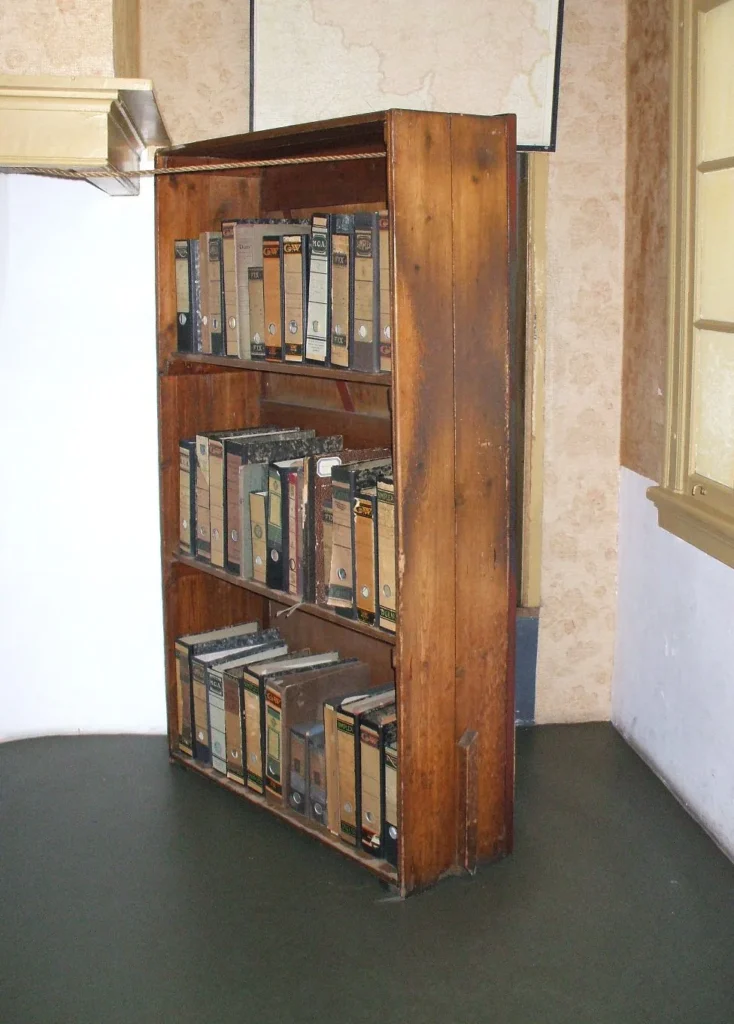
Basements, secret rooms, and farmhouses. It could have been your neighbor or even the entire street across from your house. Without your knowledge, your neighbor might have been hiding Jewish fellow citizens, members of the resistance, Allied pilots, or men of conscription age in his home. Going into hiding was widespread but, in most cases, successfully kept secret. There are several examples of neighbors who didn’t know that they both had people in hiding in their homes. This often only came to light after the war.
Strikes
Relatively speaking, the Netherlands was the country where the most strikes took place during the occupation. Strikes were primarily a tool of the communist resistance. However, it was not exclusively communists who participated in these strikes. The strikes actually became a platform that non-communists also used to join the resistance.
The student strikes of 1940
The student strikes of 1940 were the first open form of resistance in the Netherlands against the German occupiers. They were a reaction to the dismissal of Jewish professors and lecturers at the universities. On November 25–26, 1940, the Delft student strike took place. It was a direct consequence of the dismissal of Jewish instructors at the Delft University of Technology. Notable among these was the dismissal of Professor Meester A.C. Josephus Jitta. The president of the student association, Frans van Hasselt, delivered a public speech opposing the measures.
This early strike spread to Leiden on November 26, 1940. There, Professor Rudolph Pabus Cleveringa delivered a speech that is not widely known around the world, but is highly renowned among experts. This particular protest can be seen as a courageous act of defiance against the German occupiers. Cleveringa spoke out against the dismissal of Jewish professors and began his speech as follows: “I am standing here today at a time when you would expect to find a different person before you: your and my teacher, Professor Meijers. The reason for this is a letter that he received this morning directly from the Department of Education, Arts and Sciences, informing him of the following: ‘As directed by the State Commissioner for the occupied territory of the Netherlands, pertaining to non-Arian government staff and those of equal status, I inform you that with effect from today you are discharged from your position as professor at the State University of Leiden.”. By this, he was referring to the suspension of his Jewish mentor, Meijers. This suspension had taken place the day before. However, it was not merely a speech. The symbolism and impact behind it are noteworthy. The speech was, in fact, one of the first acts of open academic resistance in the Netherlands. Cleveringa openly expressed his disapproval of the unjust suspension of his colleagues. That this was not without risk was evident from the consequences of this strike. Cleveringa was arrested by the Nazis, and the university was closed by the Germans.
In 2015, Cleveringa’s speech was named the best speech in Dutch history by a public broadcaster. Read the speech in its entirety here, in Dutch and English.
The February Strike
The February Strike took place on February 25 and 26, 1941. It was a large-scale, spontaneous protest that occurred in Amsterdam and the surrounding area. The protest was directed against the persecution of Jews and German oppression, and it was the only mass protest against Jewish persecution organized by non-Jews in occupied Europe. Tens of thousands of workers, including many metalworkers, walked off the job after raids were carried out on Jewish men. 427 Jewish men were arrested and deported on February 22 and 23, 1941. NSB thugs also carried out acts of provocation. The strike began in Amsterdam at metalworking companies, shipyards, and among tram and port workers, among others. It is therefore often referred to as the metalworkers’ strike of February 1941. The communists were the main driving force behind these strikes, particularly from within the illegal CPN party. The strike quickly spread to the Zaan region, Haarlem, Velsen, Weesp, Hilversum, and Utrecht.
The Germans, however, were not pleased with the strikes. They cracked down harshly, resulting in at least 9 deaths and 24 people seriously injured. Numerous arrests were made, and the city of Amsterdam was fined 15 million guilders. It was a unique act of resistance against Nazi Germany’s anti-Jewish policies. Nowhere else in Europe did people rise up against oppression on this scale. Unfortunately, it had a fatal outcome for some of the strikers.
The April–May strikes of 1943
The February strike of 1941 had a fatal outcome for some. But it also showed that the Germans would crack down harshly on their Dutch “Germanic brothers” if necessary. The oppression and occupation grew more violent as more acts of resistance were detected. Yet this did not deter the Dutch people from resisting. It culminated in the largest wave of strikes the Netherlands has ever seen. Approximately 500,000 people left their workplaces with the sole purpose of making it clear to Nazi Germany that the Dutch people would no longer tolerate the occupation.
In 1943, the situation on the Eastern Front was extremely critical for Germany. Stalingrad was increasingly proving to be a disaster for Nazi Germany. Then there was Friedrich Christiansen, the commander of German forces in the Netherlands. A solution had to be found for the disaster on the Eastern Front. Friedrich Christiansen therefore issued an order requiring all Dutch former soldiers who had fought against Germany in 1940 to report for the Arbeitseinsatz. The German war industry had to be kept running, as many German soldiers were losing their lives in the Battle of Stalingrad. But the decision was twofold, because Germany also viewed the Dutch former soldiers as a major threat. They could, in fact, provide significant aid and support to the Allies on the Western Front if the Allies decided to attack Germany with ground forces.
The Dutch, however, wasted no time. The strike began that very same day, on Thursday, April 29, 1943. Machinefabriek Gebr. Stork & Co in Hengelo was the first. The strike leader was Jan Berend Vlam, who had spent eight months in the Sint-Michielsgestel camp just before the strike. But his spirit was not broken. Immediately upon leaving the camp, he continued his resistance, without fear or hesitation, as the leader of the strike. The strike had a snowball effect and spread across the entire country. At its peak, more than 500,000 people walked off the job. Strikes in factories and mines were particularly impactful, but the agricultural sector also joined in. Milk was thrown away or sold directly at the door, unlike before, when it was delivered to dairy plants.
Because the strike took place virtually across the entire country, it is regarded in history as the turning point of the occupation in the Netherlands. Not only for the Dutch themselves, but also for Nazi Germany. After three years of occupation and following the strikes, it was abundantly clear to the Germans that the Dutch would not bow to oppression and certainly would not voluntarily conform to National Socialist ideology. But it was also crystal clear to the Dutch. The terror of the German occupier was now more visible than ever, which also gave the resistance a massive boost in support. The manifesto that appeared in the newspaper Trouw tells us everything we need to know about this moment: “The enemy has now completely dropped the mask. The myth of the Führer’s magnanimity has come to an end. The Germans now recognize us for what we are: enemies, and not part of the Greater Germanic Community.”.
Railway strike
September 17, 1944, Radio Oranje. A message was broadcast over the radio; it is highly likely that Germany was listening in. The message read: “The Versteeg children must go to bed.” You might say, “So what?” But this single sentence resulted in approximately 30,000 employees of the Dutch National Railways (NS) walking off the job. The date was not chosen at random; the strike coincided with the start of Operation Market Garden. The strike was intended to disrupt German transport. But it also had a downside, as it directly contributed to the famine winter that would follow. The famine winter was not the result of a lack of food supplies, but primarily due to the transport problems caused by the railway strike.
The strike lasted until the complete liberation of the Netherlands on May 5, 1945.
Armed resistance
The growth of the resistance following the April-May strikes of 1943 also led to an increase in armed resistance. Collective opposition to the occupation continued to grow. However, the risks were high with such active, violent resistance. If you were betrayed or if the Germans caught on to you, you would almost always pay with your life. Resistance fighters were often executed or imprisoned in jails and concentration camps, where many died from exhaustion, starvation, and disease. Not to mention that many resistance fighters were tortured by the Gestapo or the SD using horrific methods, in order to track down and execute the rest of the resistance group.
The armed resistance was diverse. For example, there are many instances of attacks or raids on ration offices carried out by so-called “knokploegen” (strike squads). Countless raids were carried out to steal ration coupons and blank identity cards. These were essential documents for people in hiding and for creating false identification papers or documents. The population registers also fell victim to these attacks. Town halls were set on fire or raided with the aim of destroying residents’ data. This would ensure that the Germans could no longer carry out roundups and would also no longer have data on who was to be assigned to the Arbeitseinsatz. But it went even further. Later in the war, the resistance also carried out liquidations, primarily targeting Dutch Nazis, NSB members, traitors, collaborators, and members of the SD. There was also coordination by the Allies, particularly from London. Through weapons airdrops, the resistance gained increasing access to weapons and resources to carry out acts of sabotage, such as blowing up rail lines, bridges, and telephone lines. This severely hampered the Germans in their troop movements. The latter was particularly crucial around the time of the Allied invasion and Operation Market Garden.
Operation Market Garden relied heavily on the intelligence provided to the Allies by the Dutch resistance. Espionage and the provision of intelligence to the Allies also grew significantly in scope. The resistance gathered information on German troop movements, airfields, ammunition depots, and defensive fortifications. The Allies generally had a very clear picture of the German presence in the Netherlands, thanks in part to the work of the resistance.
There were not many resistance movements in Europe that also resorted to executing enemies. It was, after all, not a measure to be taken lightly. One might think that the armed resistance simply managed to pull it off. But the consequences were immense every time. Every time the resistance carried out an assassination of one of the enemies, Nazi Germany responded to these acts with unprecedented violence. The reprisals went so far that dozens of innocent civilians were executed by the Germans in response to the armed resistance.
However, it wasn’t just men in the resistance and the so-called “knokploegen” who were part of the armed resistance. Women were also involved in the armed resistance, because the Germans believed that women weren’t very active in the resistance. The prevailing view at the time was that women were completely unsuited to resistance activities, let alone armed resistance. Women therefore often blended into the resistance unnoticed, and this became one of the movement’s greatest advantages. Courier work was also entrusted to women, such as transporting illegal newspapers, information, weapons, and people in hiding. This was done, for example, using baby carriages with secret compartments where weapons and information could be transported. But women were also present in the armed resistance in the Netherlands. Truus Oversteegen, Hannie Schaft, and Reine Prinsen Geerligs are some of the most well-known women in the resistance.
In 1943, the red-haired student Hannie Schaft joined the resistance. The resistance group she joined was primarily focused on eliminating traitors. Hannie and Truus Oversteegen had no objections; in their view, it was necessary work. Truus Oversteegen put it best herself: “We had no prisons, so there was no other solution. I disguised myself as a man so that Hannie Schaft and I could pretend to be a couple in love. Then you stand there, supposedly making out, with the gun ready to fire. A guy like that comes out the door and you go after him, really nervous. Then you give each other a little nudge, like, ‘There he goes, that bastard,’ to support each other in that difficult moment of decision.”.
You’re probably wondering why I mentioned her hair color. The resistance activities of this particular group did not go unnoticed. At one point, the SD was searching for a red-haired girl suspected of being involved in the resistance. That girl was none other than Hannie. So she dyed her hair black. But it was too late. Just before the liberation of the Netherlands, Hannie was arrested in 1945. She was executed by firing squad in the woods near Bloemendaal. Hannie Schaft, the girl with the red hair, is arguably the most famous female resistance fighter in the Netherlands.
Dutch resistance, Lest we Forget
The resistance in Europe was always fighting against impossible odds. There were dangers everywhere: the Gestapo, the SD, betrayal, discovery, and so on. If you were caught by the Germans, it usually meant the end of your life. But despite all the risks, the resistance in the Netherlands eventually became widespread, with even ordinary citizens taking part. As the war progressed, there was also increasing coordination with and from the Allies, as well as among the resistance groups in the Netherlands themselves. It grew into an impressive and organized network that actually had an impact on the course of the war. It also paved the way for the liberation of the Netherlands; after all, the resistance provided crucial information to the Allies. But the Dutch people, too, would never resign themselves to German oppression.
It is therefore important that when discussing the resistance in Europe, the Dutch resistance features prominently in the narrative. The resistance may not have been exclusively or largely military in nature, as was the case with the Yugoslav partisans. But with their own methods and the actions they took, they were indispensable to the Allies, to the Netherlands, and above all to their fellow citizens. The resistance and the Dutch people sent a clear message to Nazi Germany. The Germanic brothers would not yield to the oppression of Nazi Germany and National Socialist ideology.
WarCommons publishes long-form, source-driven analysis without ads or click incentives. If you found this feature valuable, consider supporting our research by subscribing to help fund future investigations.
By Nick Ravenshade — Author
Header image: Dutch resistance fighters in Winterswijk after it’s liberation by British forces. 31 March 1945. Source: Wikimedia Commons. CC BY 2.0. Cropped.



.jpg)