
WARCOMMONS IS NOW ON ANDROID
Explore WWII history and stay connected with the community on the go. GET THE APP →

How the Tiger I Became Its Own Worst Enemy
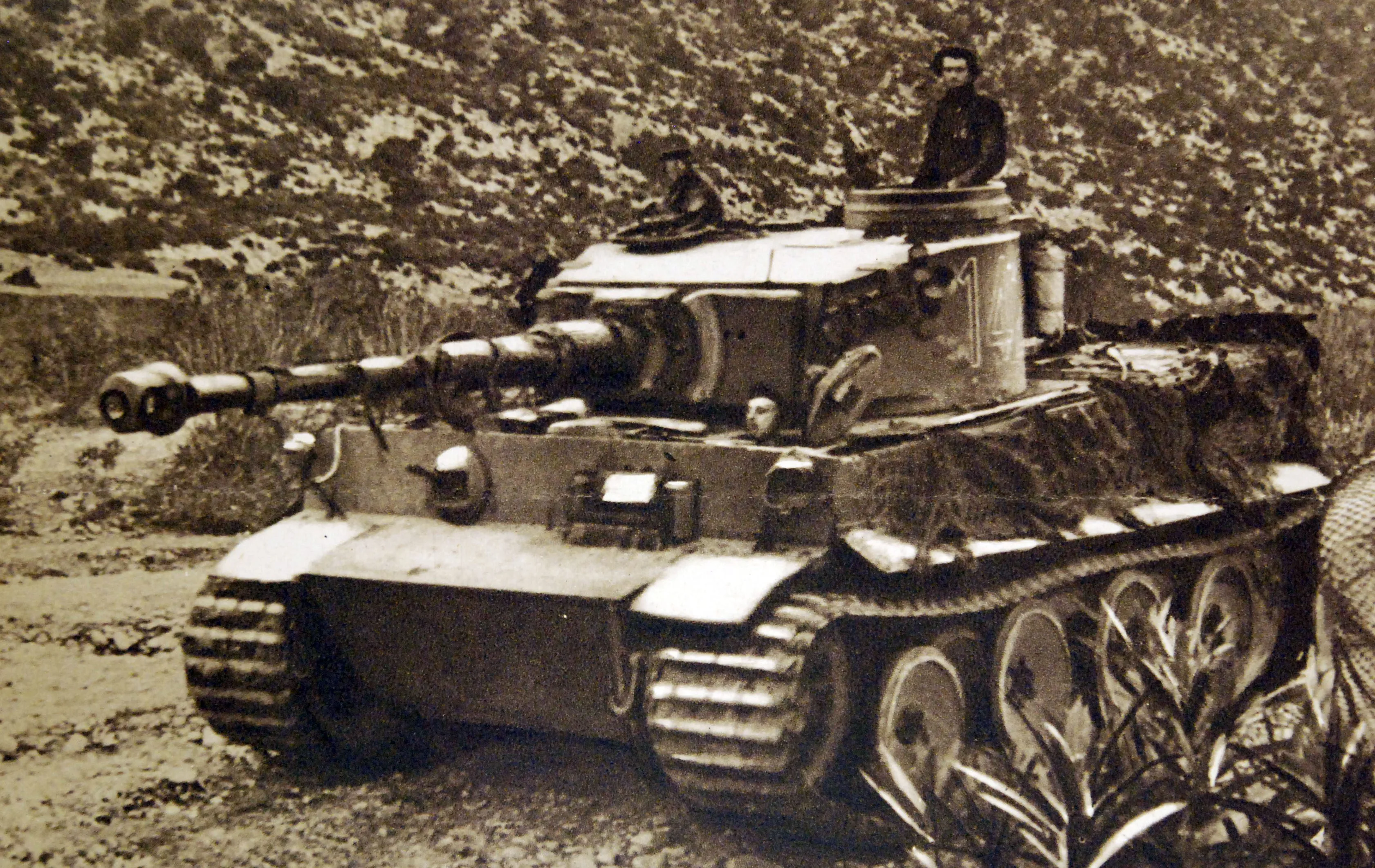
Anyone who has ever read anything about World War II has, at some point, also encountered the Tiger I tank, also known as the Panzerkampfwagen VI Ausführung E. The Tiger tank is the ever-iconic German tank that was introduced to the battlefield in 1942. The enemies of Nazi Germany feared this tank. When the tank was spotted on the battlefield, blind panic broke out. It’s hard to visualize, but the tank was actually enormous for its time. But the Tiger tank was not the salvation of Nazi Germany. On the contrary.
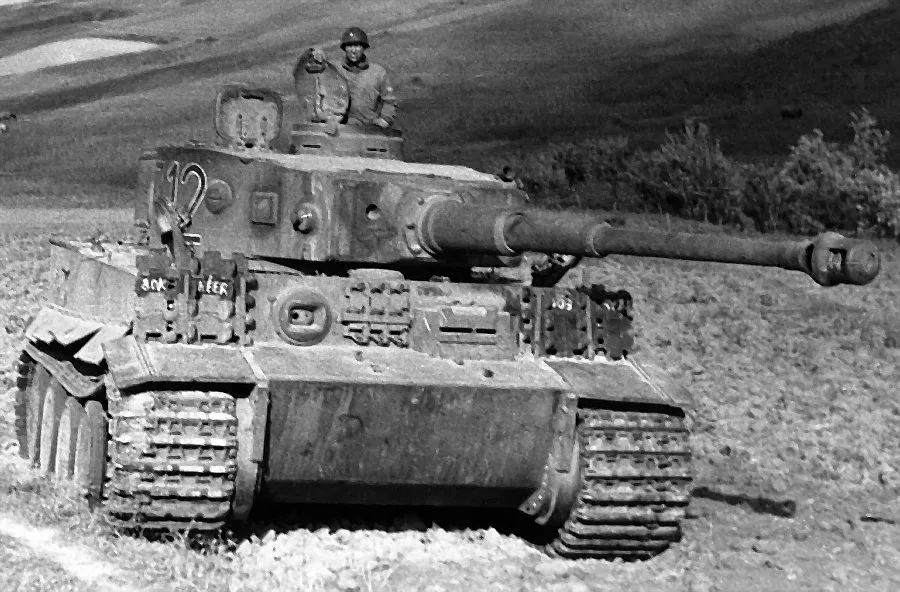
| PzKpfw. VI Ausf. E Tiger | Armor and armament | ||
| Number built | 1347 | Armor | 25-110 mm |
|---|---|---|---|
| Period | 1942-1944 | Main armament | 8,8 cm KwK 36 L/56 |
| Crew | 5 | Secondary armament | 1: coaxial 7.92 mm MG 34 machine gun 2: Hull-mounted 7.92 mm MG 34 machine gun |
| Length | 8.46 m | Engine | Maybach 12-cylinder gasoline engine, 522 kW |
| Width | 3.73 m | Speed (on roads) | 37-38 km/h |
| Height | 2.86 m | Range | 100 km |
| Weight | 55-57 ton combat weight |
Origin and production
Even before World War II began, there were several projects aimed at building a heavy tank. The tanks built by Germany up to that point were mostly light tanks, such as the Panzer I, or Panzerkampfwagen I, to name one example. These types of tanks had been developed in secret starting in 1932 and built starting in 1934, which was still prohibited under the Treaty of Versailles. It was Generaloberst (Colonel General) Heinz Guderian who highlighted the weakness of the tanks available at the time. His lobbying regarding the poor state of the German tank force reached Hitler directly. Hitler thus realized that the Third Reich would be no match for its opponents with the tanks they had. Hitler gave the order to proceed with the construction of heavy tanks as well, with Henschel being the first to receive the contract in January 1937 to develop and produce an initial heavy tank. That was the Durchbruchwagen. A heavy tank, or rather, a prototype, designed to break through enemy defensive positions. However, this tank never entered full-scale production and remained merely a prototype. It does, however, illustrate the beginnings of heavy tanks for Germany, a development that ultimately led to the Tiger I.
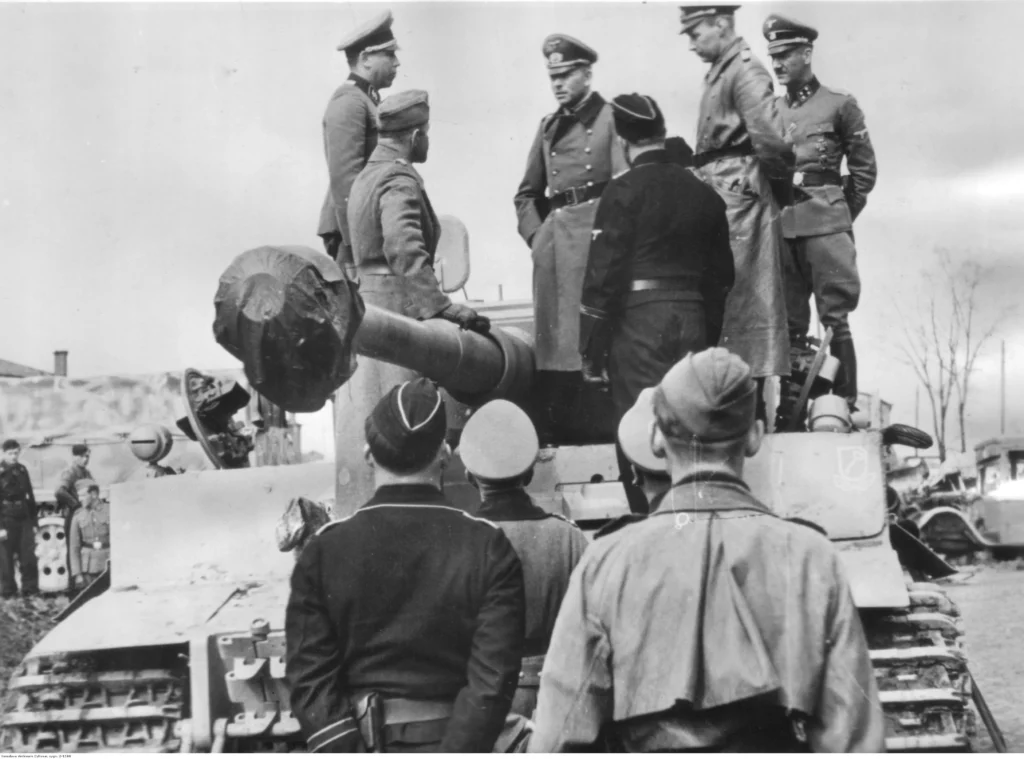
Henschel’s final prototype, and the direct predecessor of the Tiger I, was the VK 36.01 (H) tank. This heavy tank, too, remained at the prototype stage around March 1941. However, it was this tank that prompted Hitler himself to begin urging that the development of heavy tanks be expedited. After all, a heavy tank was needed to assist in the offensive against the Red Army. The summer of 1941 revealed something else besides the invasion of the Soviet Union. Germany advanced deep into the Soviet Union with its Panzer III and Panzer IV, or Panzerkampfwagen III & IV, tanks. What Germany did not yet know was that, in response, the Red Army had deployed the now-iconic T-34 and KV-1 (Kliment Voroshilov) tanks into battle. Both of these tanks were far superior to the Germans’ Panzerkampfwagens. Although the T-34 was also a medium tank, just like the Germans’ Panzer IV, the Panzer IV was no match for it. Furthermore, at the start of Operation Barbarossa, Germany completely lacked heavy tanks, a category to which the KV-1 certainly belonged.
The situation on the battlefield caused what could be described as panic among the Germans. Faced with this critical situation, Germany acted by combining the designs of the then-prototype heavy tanks. A single model of heavy tank had to be put into production as quickly as possible. The two lucky companies were Henschel and Porsche. The first German heavy tank became a combination of these two designs: the Henschel chassis and a turret designed by Krupp, with ninety turrets originally built for the Porsche Tiger being modified and repurposed. The turret was equipped with a modified version of the infamous 8.8 cm Flak 18/36/37/41 gun, the 88 mm KwK 36 L/56. It was the most effective gun available that could be mounted on the tank and was effective enough against the T-34 and KV-1 tanks.
Although the Tiger I tank has a long history, the most iconic tank of World War II wasn’t even the result of a well-thought-out and carefully developed production process. It was a tank born out of necessity, hastily assembled from the prototypes and blueprints that were available at the time. It’s therefore not surprising that the tank ultimately turned out to be its own worst enemy.
The demise of the Tiger I
When the Tiger I tank entered service, it was, on paper, virtually unbeatable. It was equipped with a superior main gun for its time: an 88 mm cannon. In contrast, the T-34 had a 76.2 mm (3.00 in) F-34 tank gun as its main armament, and the KV-1 was armed with a 76.2 mm M1941 ZiS-5 gun. Although the Tiger I could reach a speed of about 37–38 km/h on roads, its drawback was its weight of no less than 55–57 tons. The tank was equipped with thick armor plates that were up to 100 mm thick at the front. No enemy tank could penetrate the Tiger I. But the front plates were mounted vertically. A method that was still common at the time and also gave the tank its iconic angular shape. But it meant that thicker steel was needed than if the plate had been mounted at an angle. Like the T-34, which had sloped armor at the front at an angle of 45–60 degrees. This made it easier for enemy shells to ricochet off the tank, but it also resulted in a greater effective thickness of the armor. The actual thickness of the plate was only 45 mm. However, because it was mounted at an angle, the effective thickness was approximately 90 mm. The effective thickness could vary depending on the angle of the plate, but for a 60-degree angle, standard calculations assume a doubling of the thickness. So while the Tiger I required a 100 mm plate for an effective armor thickness of 100 mm, the T-34 needed only 45 mm of steel for an effective thickness of 90 mm, which resulted in a significant weight advantage.
You’re probably wondering why this is so important. A large part of the Tiger I tank’s problems can be traced back to its weight. The early models of the tank frequently experienced engine issues. The tank suffered from numerous engine failures, and the engines could even catch fire. The Maybach HL210 TRM P45 engine was actually designed for lighter tanks. The Tiger I, weighing 55–57 tons, proved to be too heavy in practice. The engine simply couldn’t handle that weight. Even when the tank was finally up and running, it was almost always too heavy for many bridges. It was often a logistical nightmare, which also meant the tanks were deployed more for defensive tasks rather than for offensive operations. This was not, in principle, what the tank was built for. If the tank then broke down, maintenance was extremely difficult. The construction of the tracks and inner road wheels was so complex that maintenance could only be performed after removing several outer wheels. The Tiger I tanks that broke down near or on the battlefield were often abandoned by their crews rather than repaired. To ensure the tank did not fall into enemy hands, the crew would blow it up. One remarkable fact actually tells us everything we need to know about the Tiger I tank. A significant portion of all Tiger I tanks on the battlefield were lost due to the actions of their own crews. Sicily is a prime example of this. Of the 17 Tiger I tanks that were in Sicily, 16 were abandoned and/or destroyed by their crews. In most cases, enemy tanks were no match for the Tiger I. But the tank’s ultimate enemy turned out to be the tank itself, and its crew.
The fact that only 1,347 Tiger I tanks were built between 1942 and 1944 is, in itself, something of a minor miracle. The Tiger I’s problems were not limited to operational situations and the battlefield. Production itself was a major challenge for the tank. The tank was complex to build and also very expensive. As a result, Germany could not achieve the same production levels as the Red Army with the T-34 and the Americans with their famous Sherman tanks. These tanks were more efficient in production and also lighter due to their armor design. By the time the Tiger I finally rolled off the production line, it was already at a disadvantage. Not to mention that the tank’s actual range was also woefully inadequate. The tank could travel about 100 kilometers on a full tank of fuel. During the years the tank was in service, fuel shortages in and around the front lines were already a reality. The tank didn’t get very far and was sometimes even abandoned by its crew while still fully functional, because they had nowhere else to go.
Just as the tank was hastily assembled out of panic, so too was it produced. It was a superior machine and ingeniously designed. It featured a large main gun, massive armor that almost no enemy tank could penetrate, and an imposing, formidable appearance. The enemy became desperate when they came face to face with this tank. Even the crews inside a KV-1, T-34, and Sherman tank were terrified. But in the end, the Allies hardly needed to lift a finger. The Tiger I ultimately brought about its own downfall. Although there are many success stories about this tank on the Western Front after the Allied invasion, the tank never managed to make the difference Hitler had so hoped for.
WarCommons publishes long-form, source-driven analysis without ads or click incentives. If you found this feature valuable, consider supporting our research by subscribing to help fund future investigations.
By Nick Ravenshade — Author
Header image: German “Tiger” Tank, WWII. Source: Wikimedia Commons. Public domain.



.jpg)