WARCOMMONS IS NOW ON ANDROID
Explore WWII history and stay connected with the community on the go. GET THE APP →

From Secret Shadow Force to the Spine of the Blitzkrieg
Unlike the terms Kriegsmarine and Wehrmacht, which disappeared after World War II, the German Air Force is still known as the Luftwaffe. After World War II, Germany was once again prohibited from maintaining an air force, just as it had been after World War I. The Luftwaffe of the Wehrmacht was disbanded in 1945, following the end of World War II. The modern Luftwaffe, part of the Bundeswehr, has existed since 1956. But what makes the Luftwaffe of the Wehrmacht during World War II so intriguing? This is the story of the Luftwaffe during World War II.
Precursor to the Luftwaffe
The predecessor of the Luftwaffe was the Deutsche Luftstreitkräfte, or the German Air Forces. However, prior to 1916, their name was Die Fliegertruppen des deutschen Kaiserreiches. The literal translation is “The Flying Troops of the German Empire,” but in primary sources, the term “Imperial German Air Services” is also frequently used, although this is not the literal translation. In addition to the Luftstreitkräfte, there was also the Marine-Fliegerabteilung, which was part of the Imperial German Navy. At that time, the air force primarily used aircraft, airships (Zeppelins), and observation balloons.
It is here that we first encounter one of the key figures of the Luftwaffe during World War II: a fighter ace named Hermann Göring. He was not only a fighter ace but also the last commander of the famous fighter wing, Jagdgeschwader 1. He was the ultimate successor to the ever-iconic Red Baron, Rittmeister Manfred von Richthofen. After Von Richthofen’s death, Hauptmann Wilhelm Reinhard took command for three months, after which Göring took over.
The Secret Luftwaffe and the Interwar Period
The mighty Luftwaffe, as it is known from the image primarily portrayed by German propaganda, did not just appear out of nowhere. The air force, in its previous form during World War I, was completely banned by the Treaty of Versailles. The Fliegertruppen des deutschen Kaiserreiches were no more. Yet it did not take long before Germany began a secret rearmament, as early as 1919, long before Hitler came to power. The Luftwaffe was not forgotten either. This paved the way for a short-lived Schwarze Luftwaffe, the shadow air force.
Schwarze Luftwaffe
The word “schwarze” in this context should not be mistaken for the color black. It is more a term denoting a secret or shadow organization, an organization whose existence is forbidden and which operates from the shadows.
It is therefore not surprising that the Luftwaffe’s reestablishment in 1933 is so often treated as the starting point. In the years prior, the development of a new Luftwaffe was still shrouded in strict secrecy. What we understand by the Schwarze Luftwaffe actually began as early as 1919. Aircraft manufacturer Anthony Fokker moved his aircraft factory from Germany to the Netherlands to circumvent the ban on a Luftwaffe imposed by the Treaty of Versailles. Not only was having an air force prohibited, but the production of military aircraft was also banned. In July 1919, Fokker therefore founded the N.V. (Naamloze Vennootschap) Nederlandse Vliegtuigfabriek. This name was later changed to Fokker. He even smuggled 180 aircraft out of Germany and large quantities of aircraft parts by train. This was the first indication that Germany would not accept the ban on an air force.
It paved the way for the 4th Squadron of the 40th Red Army Wing. You’re probably wondering: what did the Soviet Union have to do with the Schwarze Luftwaffe in the interwar period? This was, however, a proxy, but one that was indeed located in the Soviet Union. It was the official designation of the secret military facility in Lipetsk, Soviet Union, established specifically and exclusively for Germany. After all, it was not Red Army pilots who were trained there. It was a joint training school where the German Reichswehr trained pilots and technical personnel, in violation of the Treaty. The name “4th Squadron of the 40th Red Army Wing” was intended to conceal the fact that it was a facility for training German pilots and German air force personnel. It is likely that this method of secrecy worked well, especially since the facility was located in the central Soviet Union. Even then, the Soviet Union was not exactly the most open country. While the Allies likely knew a great deal about Germany’s covert rearmament, it is probable that they remained unaware of this secret training facility for a long time. One of the most notable figures active within the secret facility was Kurt Student. He later became the General of the Air Force and was also the founder of the Fallschirmjäger, the German paratrooper units. In Lipetsk, he worked as an instructor in the early stages and was one of the German commanders at the secret facility.
However, the training of Luftwaffe personnel wasn’t solely carried out in other countries to circumvent the Treaty. There was also the Deutsche Verkehrsfliegerschule (DVS). This was a German air transport school, entirely commercial and therefore not prohibited under the Treaty. Yet, in secret, this school was still used to train military personnel. This organization was founded in 1925. The pilots were trained in general flying skills, blind flying, and navigation. When this organization relocated within Germany to Broitzem in 1929, the training programs also became specialized. From then on, the training focused specifically on seaplane and sea aviation training.
While it was clearly ironic that, starting in 1924, the Soviet Union had helped its eventual arch-enemy develop a state-of-the-art air force, the collaboration ultimately lasted from 1924 to 1933. When Hitler came to power in 1933, cooperation with the Soviet Union was halted. However, it took only two years for the unofficial end of the Schwarze Luftwaffe to arrive.
When Hitler came to power in 1933, cooperation with the Soviet Union was thus terminated, but the Deutscher Luftsportverband (DLV) was simultaneously established.. However, it was a Nazi organization from the very beginning. The DLV functioned as an umbrella organization with multiple divisions. This was in contrast to the other facilities that had previously been used in secret. At the head of this organization was none other than Hermann Göring. The DLV was, in essence, a paramilitary training facility. The DLV was an umbrella organization that oversaw the creation of so-called gliding schools. Legally and technically, these were classified as a sport and not as a military entity. But the skills the pilots were taught within these so-called DLV schools were directly transferable to military flying skills. They learned powered-flight instruction and standardized curricula for navigation, blind flying, and formation work. The Fliegerstürme were integrated into the DLV. These were SA flying units tasked with ensuring uniform training across all DLV schools.
The entire infrastructure surrounding the Luftwaffe, from aircraft production to training, was professionalized and standardized. The hidden leadership and structure of what was to become the new Luftwaffe had already been in place for years. The Reichswehrministerium (Ministry of Defense) had a secret air force department that drew up plans for the future Luftwaffe and recruited personnel. All of this despite the fact that it was prohibited under the treaty. It was therefore in the year 1935 that the actual turning point took place.
Luftwaffe going public
It was February 26, 1935. Hitler signed a decree officially establishing the Luftwaffe as the third branch of the German armed forces, alongside the army and the navy. Hermann Göring was appointed Oberbefehlshaber der Luftwaffe (Commander-in-Chief of the Luftwaffe). Although the decree was signed on February 26, 1935, the date of march 1, 1935 is often recognized as the date on which the Luftwaffe became factually active under its new name. However, there was still a problem. According to the Treaty of Versailles, having an air force was still prohibited.
On March 10, 1935, the existence of the Luftwaffe was officially announced to the world. But contrary to popular belief, Hitler did not announce the Luftwaffe with great fanfare, as was often the case with his grandiose speeches. No, the announcement of the Luftwaffe was a modest affair. On March 10, 1935, Hermann Göring gave an interview in which he declared the existence of the Luftwaffe. One might think that it was Göring who outmaneuvered Hitler with the announcement of the Luftwaffe. However, this was a deliberate strategy. By announcing it in an interview, Nazi Germany was able to frame the announcement of the Luftwaffe to its advantage. This allowed them to emphasize that the Luftwaffe existed solely for the defense of Germany. Although this, too, was simply prohibited under the Treaty, it might have garnered more sympathy from neighboring countries. If Hitler had made the announcement in one of his grandiose speeches, emphasizing the power of Nazi Germany and using his usual rhetoric, the existence of the Luftwaffe would have been viewed much more in a context of aggression and domination. The timing was most likely not entirely without reason either. For as early as March 16, 1935, Germany had announced universal conscription and its open rearmament.
There is still a great deal of confusion surrounding these dates and the sequence of events regarding the establishment and announcement of the Luftwaffe. By clearly mapping out these dates, we hope to dispel this confusion. Accurate documentation of the events surrounding World War II is of great importance.
When the secret of the Luftwaffe was finally no longer a secret, it was not the case that the rearmament and restructuring of the Luftwaffe had yet to begin. On the contrary. When the Luftwaffe was made public in 1935, it already had 1,800 aircraft and 20,000 personnel. At that point, it was already an air force ready for deployment. Since the Luftwaffe was no longer a secret to the rest of the world, some covert facilities, such as aircraft manufacturing, were also shut down. Everything related to the Luftwaffe could now take place within Germany’s borders.
The Allies, though outraged, did not actually take much action after the Luftwaffe was unveiled. The diplomatic efforts of France and the United Kingdom (UK) in particular were focused on appeasement and de-escalating tensions. As a result, no sanctions were imposed. What they did, however, was to rearm and modernize their own air forces. Nevertheless, none of this would be ready in time for the outbreak of World War II.
First combat experience of the Luftwaffe
The 1930s in Europe were plagued by instability. This was true not only in Germany, but also in a number of other European countries, such as Spain. July 17, 1936 marked the start of the Spanish Civil War in Europe. It wasn’t long before Germany also became involved in this conflict. Officially, July 29, 1936, was considered the date on which Germany became actively involved in the Spanish Civil War. The Luftwaffe, in particular, was destined to play a prominent role. Now, at last, the ultra-modern Luftwaffe could be put to the test in real combat situations. It was also an excellent opportunity to test the doctrine the Luftwaffe had adopted for itself.
However, it did not immediately begin with offensive military actions. Germany’s support for the Spanish Nationalists was primarily logistical. The Luftwaffe facilitated the transport of the Army of Africa to Spain. This was, however, still done under a cover. For example, there was the Spanish-German company Spanish-Moroccan Transport Company (HISMA) and the entirely German company Raw Materials and Goods Purchasing Company (ROWAK). They transported approximately 2,500 troops from Spanish Morocco to Spain in the first weeks of German support. From July 1936 to October 1936, the Germans transported approximately 13,500 troops, 127 machine guns, 36 field guns, and other war materiel from Morocco to Spain. The airlift between Morocco and Spain was initially named Unternehmen Feuerzauber (Operation Magic Fire) by Germany. Later, the name of this operation was changed to Unternehmen Guido. Although the Luftwaffe was already well-known worldwide at that time, Germany initially kept its involvement in the Spanish Civil War secret.
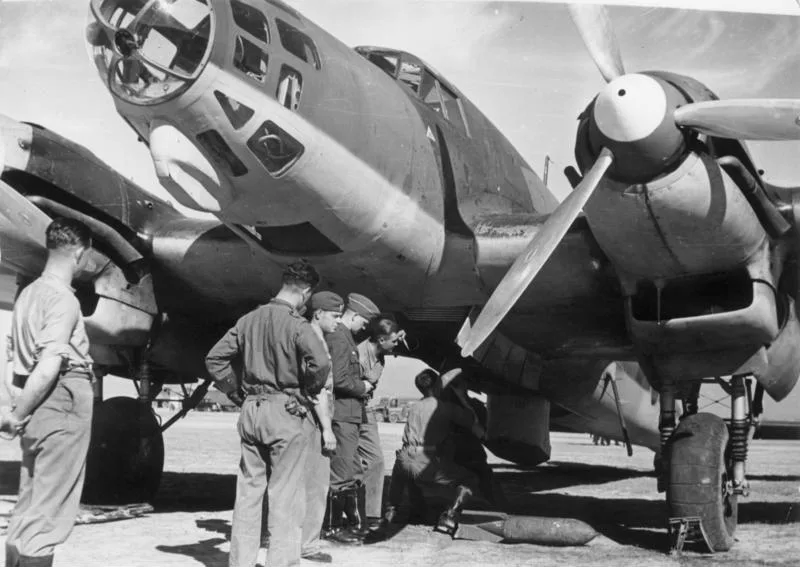
The Spanish Civil War unfolded, and so did German support. In the fall of 1936, Germany formed the so-called Condor Legion. This was the umbrella term for the German military units operating in Spain. The name was ultimately chosen by Hermann Göring. Although Germany eventually became actively involved in combat operations, its military intervention was not a foregone conclusion. In November 1936, the first German envoy to the Spanish Nationalists, General Wilhelm von Faupel, was ordered not to interfere in military affairs.
The Condor Legion was under the command of Hugo Sperrle; his chief of staff was Alexander Holle, although changes were later made to the command structure. Alexander Holle was succeeded by Wolfram von Richthofen as chief of staff. The Condor Legion thus comprised not only the Luftwaffe, but the most important units were as follows. Kampfgruppe 88 comprised three squadrons of Ju 52 bombers. Jagdgruppe 88 consisted of three squadrons of Heinkel He 51 fighters, and Aufklärungsgruppe 88, together with Aufklärungsgruppe See 88, were the reconnaissance groups for land and sea operations. The liaison units fell under Nachrichtenabteilung 88.
The entire command structure of the Condor Legion was in place, as were the units. They were ready for what was to come.
Luftwaffe central to Nazi strategy
To understand how the Luftwaffe came to play a central role in Nazi Germany’s offensive strategy during World War II, the Spanish Civil War serves as the perfect example. It was on this battlefield that the Luftwaffe was first able to test its new modern structure, along with its new aircraft and newly devised doctrines. It provides the foundation for how the German High Command ultimately deployed the Luftwaffe in its offensives during World War II and how the Luftwaffe thus came to play a central role in them.
The German Luftwaffe was deployed to support the Spanish Nationalists during their advance on Madrid and the relief of the Alcázar. The Legion no longer carried out only transport and supply missions. Between late 1936 and 1938, the Luftwaffe also conducted bombing raids and other air combat missions. This was the case during the Battle of Madrid and the Battle of Jarama, which took place in February 1937. The Luftwaffe demonstrated its commitment there as well, but it soon became apparent that some German aircraft were not always a match for the fighters supplied by the Soviet Union. In fact, the Battle of Jarama was a defeat for the Luftwaffe. During battles in northern Spain, the Luftwaffe supplied the Nationalists with military supplies and re-armed the frontline units. Since it turned out that not all Luftwaffe aircraft active in Spain at that time could compete with the fighters the Soviet Union had supplied to the enemy, Germany had to send new aircraft to Spain. The old aircraft were not even taken back, but left behind for the Spanish Nationalists.
It is estimated that approximately 5,000 members of the German Air Force, including pilots, ground crew, and aircrews, gained combat experience during the Spanish Civil War. This would give the Luftwaffe a significant advantage during World War II. One of the most famous German operations during the Spanish Civil War was the operation in the Basque Country. The bombing of Guernica brought the Luftwaffe’s so-called “terror doctrine” to light. The bombings resulted in many civilian casualties, and the international community reacted with revulsion. Although Germany claimed that the bombings of Guernica were carried out for military and tactical reasons, this explanation left much to be desired. This city was, in fact, not directly involved in any fighting at the time of the bombings.
However, this event is often cited as the moment when it became clear to Nazi Germany that bombing from high altitudes, whether during the day or at night, could be highly inaccurate. The lesson the Luftwaffe drew from this was that dive-bombing, on the other hand, was much more accurate. It is no wonder, then, that the Stuka, with its air-raid siren that sounded during a dive-bombing run, was eventually feared throughout Europe. Everyone knew that these attacks were precise and extremely deadly. But the Luftwaffe knew this first, as early as the Spanish Civil War.
The Luftwaffe’s effectiveness had been tested in actual combat and found to be adequate. Although not all aircraft were equally effective against the enemy, innovations were introduced rapidly. Air support for ground troops, precision bombing, and the rapid improvement of fighter aircraft, such as the Bf 109, were the direct lessons the Luftwaffe learned from its deployment during the Spanish Civil War. The Luftwaffe was able to support a rapid and decisive style of warfare. It is therefore no surprise that the Blitzkrieg would have been virtually pointless without the Luftwaffe.
De Blitzkrieg doctrine
The Spanish Civil War thus demonstrated above all how the Luftwaffe could be deployed effectively. It is no coincidence, then, that the Luftwaffe played a central role in one specific Nazi strategy: the blitzkrieg. After all, within this strategy, it was the Luftwaffe’s job to ensure that the rest of the force, the tanks, infantry, and artillery, could advance.
During the offensive, the Luftwaffe was responsible for neutralizing the enemy’s air force and air defenses. This allowed German troops to move more freely in the run-up to the offensive without being constantly attacked by the enemy’s air force. The Luftwaffe also took on the task of attacking logistical targets, thereby disrupting the enemy’s logistics. This made it more difficult for the enemy to regroup and rearm. The armored and infantry units were also protected by the Luftwaffe during such an offensive and supported in the attack with dive-bombing and low-altitude attacks, allowing the ground forces to advance more rapidly in their assault. This entire support factor was crucial to the speed and continuity of the offensive. Without the Luftwaffe, such an attack would have been much slower, and the element of surprise in the Blitzkrieg might well have been lost entirely.
Heavy bombers?
The Luftwaffe played a central role in a strategy centered on speed and the element of surprise. Thanks to its rapid deployment, the Luftwaffe was often instrumental in creating breakthroughs through defensive lines and protecting long armored columns. The Luftwaffe was central to the Blitzkrieg, offensive operations, and air support. But it was not a panacea for Nazi Germany. It played a vital role, but it also had one major shortcoming. It prioritized speed and precision with the Bf 109 fighters, the Ju 87 Stuka dive bombers, and the medium bombers Ju 88 and He 111. Heavy bombers with long range and heavy bomb loads were completely absent. In reality, the Luftwaffe had absolutely no means of attacking the industrial and logistical hinterland deep inland. The Americans and British, however, did have heavy bombers. Based on experiences during the Spanish Civil War, the Luftwaffe did not rely on such heavy bombers. After all, the conclusion drawn from that war was that high-altitude bombing, whether during the day or at night, was not precise enough. Consequently, the Luftwaffe relied solely on medium bombers and dive bombers.
Although it is often believed that it would have had a significant impact, the deployment of heavy bombers would not have turned the tide during Operation Barbarossa. But it could have had an impact. The German advance inland toward Moscow was primarily supported by tactical air support, aerial reconnaissance, and attacks on the Red Army’s air force. But the Luftwaffe also bombarded Red Army transports and troops located near the front. Advancing further inland was therefore not an option. But the German problems during this operation were not characterized by a lack of heavy bombers. After all, the problems were primarily related to German logistics, the vast distances and gaps between different units, fuel shortages, differences in track gauge, and above all, General Mud and General Winter. The latter, of course, refers to the weather conditions in the fall and during the winter, with heavy rainfall and mud at first, followed by freezing temperatures. A heavy bomber would not have changed anything here. At most, the Red Army’s advance could have been slowed by striking further behind enemy lines. But that would have been the extent of it. On the Western Front, however, the heavy bombers might well have had a greater impact.
Heavy bombers likely could have played a prominent role in the German bombing campaigns against the UK. During those campaigns, the Luftwaffe also deployed aircraft with limited range. After all, these were designed to strike just behind or along enemy lines. Furthermore, the bomb load of the lighter bombers was insufficient. Because the bombers the Luftwaffe did have lacked sufficient bomb load and range, Germany was unable to carry out sustained and heavy strategic bombing of the UK, as the UK and the United States later did over Germany.
Re-armament and shortcomings
It is often believed that the true starting point of rearmament was not until 1933, when Hitler came to absolute power. This means that the entire history from 1919 to 1933 is often overlooked. But it was actually immediately after World War I that Germany began rearmament, thereby laying the foundation for the military power the country would develop leading up to World War II. It was, however, Hitler who accelerated all aspects of rearmament, prompting rapid developments. This was also the case with the Luftwaffe. Much of the infrastructure was already in place, production was organized, personnel recruitment was underway, it had been professionalized and standardized in training and procedures, and the training facilities were also available. As Heinrich Brüning, Chancellor of Germany between 1930 and 1932, later claimed, “Hitler didn’t start the Luftwaffe—we did.”
Although the Luftwaffe went on to play a central role in Nazi strategy, and particularly within the Blitzkrieg doctrine, its shortcomings were immediately apparent. Yet one crucial aspect of aerial warfare is missing from this picture: heavy bombers. Heavy bombers were, in fact, one of the reasons Germany was severely weakened in the later stages of the war. The Americans had the B-17 and the British had the Lancaster. It is the heavy bomber that might have made the difference for Germany in some areas. In hindsight, the emphasis on light bombers and dive bombers with limited range meant Germany’s air power was doomed to fail from the start.
Would you like to read more about how Germany began secretly rearming the country even before Hitler came to power? Then be sure to check out this article!
WarCommons publishes long-form, source-driven analysis without ads or click incentives. If you found this feature valuable, consider supporting our research by subscribing to help fund future investigations.
By Nick Ravenshade — Author
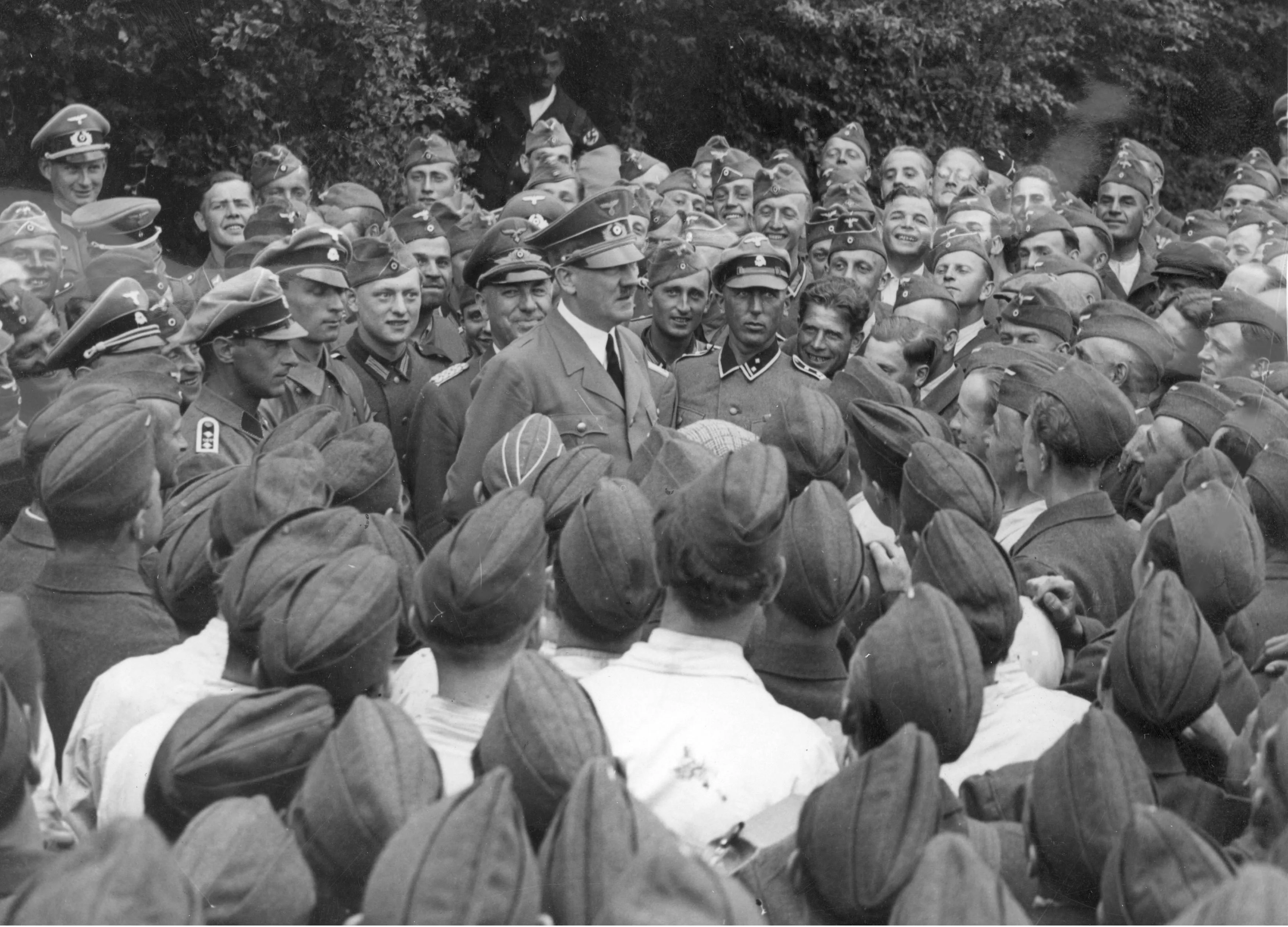
Header image: Adolf Hitler among Luftwaffe soldiers at a field airport on the Eastern Front. Behind him, on the left, Marshal Albert Kesselring. 30 January 1943. Source: Wikimedia Commons. CC0 1.0.