WARCOMMONS IS NOW ON ANDROID
Explore WWII history and stay connected with the community on the go. GET THE APP →

From Hidden Rearmament to Open Defiance, 1919–1938
The Treaty of Versailles, a thorn in Germany’s side after the end of World War I and in the years that followed. The treaty was also a symbol of defeat, shame, and oppression for the German people. A constant reminder of that single moment, in that single train car, of Germany’s total surrender. At least, that is how the Treaty was perceived. These feelings intensified as Hitler seized power more firmly and used this rhetoric to win the population over to his side. The Treaty has many aspects that can be discussed, such as reparations payments and territorial concessions. The focus here is on the demilitarization of Germany under the Treaty of Versailles and why it was a major turning point leading up to World War II.
Demilitarization and Limitation of German Armed Forces
After the end of World War I, France and the United Kingdom (UK) were the most vocal in their demands. Germany had to pay the price for World War I, no matter what. But above all, the goal was to prevent another war on the same global scale. The Treaty of Versailles served as the flagship of this effort. In addition to reparations, territorial concessions, and economic concessions, France, the UK, and the rest of the Entente agreed that Germany must be restricted to such an extent that it could never again launch a military offensive against its neighbors. A measure intended primarily to protect France from renewed aggression. That is why the Treaty also included provisions for the demilitarization and restriction of the German armed forces.
The demilitarization primarily involved demilitarizing the area directly bordering France, the Rhineland. A 50-kilometer-wide strip along the Rhine was to be completely free of any military personnel. No German troops were to be stationed there, no military fortifications were to be built, and no military exercises were to be held in this area. But the army itself, the Reichswehr, was also affected. The army was limited to a maximum of 100,000 troops for the entire country. These had to be volunteers. And, without a general staff, as that was also abolished. The troops were only to maintain domestic order. But the navy and air force were not spared either. The German navy was allowed to have only six battleships, no submarines at all, and only 15,000 personnel. The air force, on the other hand, bore the brunt of the cuts. It was completely abolished and banned. The construction and possession of aircraft or an air force, on the other hand, was prohibited in its entirety.
But the disarmament and demilitarization mandated by the Treaty were not directed solely at the armed forces. Industry was also severely restricted. Germany was prohibited from producing or importing heavy weapons, such as tanks, armored vehicles, and poison gas. And to prevent a rapid buildup of the military, officers were required to serve for 25 years and enlisted men for 12 years.
All of this was intended to make it impossible for Germany to prepare its army for offensive operations. But a breach of the Treaty of Versailles was not long in coming. What is often overlooked in the context of World War II is that rearmament had already begun secretly long before 1933. 1933 is often seen as a starting point because it was from that moment on that Hitler truly began rearming Germany openly and without hesitation. But before we get to that moment, let’s start in the year 1919.
Secret rearmament after the First World War
Given the extreme restrictions imposed on Germany’s military power, it can be argued that after World War I, Germany did not even consider itself capable of defending itself militarily. After all, this was the only thing still permitted: a military force so minimal that it could serve only for defense. The secret rearmament, therefore, did not take long to begin. It was not until July 1919 that the Truppenamt was established. The Treaty of Versailles was signed in June 1919. Within its leadership, four small and secret departments were created that functioned as a general staff. This was despite the fact that a general staff was prohibited by the Treaty. It was not rearmament in the sense of resuming arms production. But it is crucial in the context of the open violations of the Treaty of Versailles. For this fact demonstrates that Germany, from the very beginning, immediately after signing the Treaty, had no intention of adhering to key provisions of the Treaty. Long before Hitler came to power.
But this was not the only covert violation of the Treaty in 1919. Anthony Fokker also played a role. Anthony Fokker was an aircraft manufacturer who was partly responsible for relocating the German Air Force’s aircraft production from Germany to the Netherlands. The Allies could therefore do nothing about this action, since Germany was no longer allowed to have an air force of its own, and moreover, no aircraft for the air force were being built there anymore. At least, not in Germany. And in this context, fighter pilots were trained through civilian flight schools, since there was no air force to speak of. This ensured that, despite all the prohibitions, air force pilots were still being trained. However, it is hard to believe that the Allies knew nothing about this. In all likelihood, they were aware of it, but there was effectively nothing they could do about it, because Germany was adhering to the rules. There was no air force, no aircraft were being produced by Germany, and no pilots were being trained by an air force.
Freikorps
The so-called Freikorps were not initially conceived or established by the German government with the aim of building a secret army. The Freikorps emerged almost spontaneously after World War I, as early as late November 1918. By January 1919, there were already more than 100 Freikorps active in Germany. These units consisted of right-wing war veterans, unemployed young people, and nationalists. They were true paramilitary units. They played a crucial role in the early years of the Weimar Republic, the name of Germany after World War I. However, they often played a violent role, such as suppressing and quelling communist uprisings and guarding borders. It is therefore not without reason that many Freikorps are seen as the precursors of the SA.
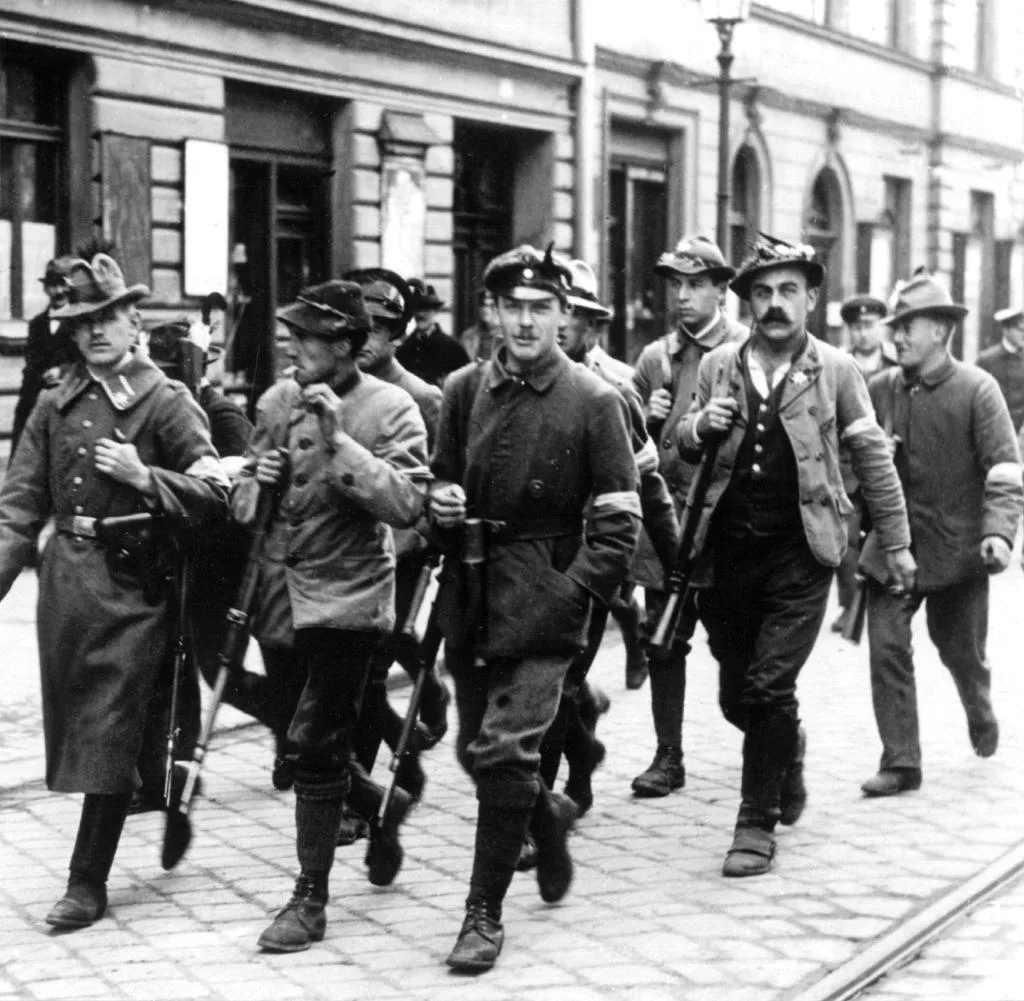
The German government was also well aware of the situation. As early as 1919, Germany, and in particular Defense Minister Gustav Noske, began supporting and deploying the Freikorps. But even then, they could have foreseen that the situation threatened to spiral out of control in the already unstable and volatile environment of the Weimar Republic immediately following World War I. It culminated in a full-fledged coup attempt.
The Freikorps grew in power and strength. The German government felt it had to take action against the expansion of the Freikorps in order to remain in compliance with the provisions of the Treaty of Versailles. Although the German government considered their actions noble and legally justified, it was primarily concerned with its own interests. They wanted to limit the loss of control over the armed paramilitary groups and, in doing so, curb their growing power. Orders were issued: the Ehrhardt Naval Brigade, a Freikorps, was to be disbanded. The commander of this brigade, Hermann Ehrhardt, refused to accept the disbandment of his Freikorps. He was supported in this by, among others, General Walther von Lüttwitz, the commander of the Reichswehr in Berlin. Lüttwitz was one of the founders of the Freikorps in 1918 and a monarchist. He called on Defense Minister Gustav Noske and President Friedrich Ebert to “halt the disbandment of the Freikorps units. The president refused this request. Lüttwitz therefore ordered the Ehrhardt Marine Brigade to advance on the German capital, Berlin. Although Lüttwitz was thus the true architect and leader behind the putsch, it bore the name of Wolfgang Kapp. It became known as the Kapp Putsch.
Noske planned to crush the putsch using the Reichswehr, Germany’s army. This brought him into conflict with Hans von Seeckt, who was still Chef der Truppenamt (Chief of the Troop Office) at the time. And he was clear in his response to Noske’s request: the Reichswehr does not fire on the Reichswehr. Now that nothing stood in the way of the Kapp Putsch, the German government was forced to leave Berlin. They fled to Stuttgart. But this was not the end. The government issued a proclamation calling on the people to go on strike. And so it happened; the country ground to a halt. The coup was over, because Kapp and Lüttwitz were no longer able to govern the country in any meaningful way. As early as March 17, 1920, the coup was abandoned. The main figures behind the Putsch fled on March 17, 1920, to Sweden.
On March 26, 1920, Hans von Seeckt became Chief of the German Army Command. After the Kapp Putsch, which he apparently did not oppose, he nevertheless came to view the Freikorps increasingly as a threat to Germany and its stability. He curtailed the support the Freikorps received from the German government. But now pressure was also mounting from France. The Freikorps were ultimately all banned in May 1921. It was primarily the Kapp Putsch that had led to this measure. After all, everyone in Germany stood to gain the most from the country finally achieving stability.
Black Reichswehr and Citizens’ Defense
In addition to the Freikorps, units of the Einwohnerwehr, or Citizens’ Defense, were also formed in 1919. They existed alongside the Freikorps and were supported by them, as well as by the Reichswehr. This group was established primarily to provide rapid support against left-wing revolutionary forces. The Einwohnerwehr mainly recruited small groups of civilians. However, the Einwohnerwehr was also banned on May 24, 1921.
Although it was in accordance with the Treaty of Versailles, Hans von Seeckt did recognize that banning the Einwohnerwehr and the Freikorps had a major drawback. In fact, there were no longer enough troops to properly guard Germany’s borders. He secretly formed the so-called Black Reichswehr, or Schwarze Reichswehr. It was a paramilitary unit that was illegal under the Treaty. But secretly, this Schwarze Reichswehr was part of the German army. In that sense, it was not a variant of the Freikorps, but a more centrally organized component of the armed forces. The unit grew to approximately 50,000 to 80,000 men. But this secret unit was not destined to last long. On October 1, 1923, it was time for another coup. This was inextricably linked to the unstable and volatile Weimar Republic. It was the Küstrin Putsch, led by Bruno Ernst Buchrucker. Many members of the Schwarze Reichswehr participated in this coup. To keep the situation under control, the Schwarze Reichswehr was disbanded after this coup. The Schwarze Reichswehr was never officially deployed anywhere in Germany during the rest of its short history.
Secret rearmament in the Soviet-Union
In addition to earlier measures, such as relocating aircraft production to the Netherlands, Germany also found a new partner in circumventing the Treaty.. A contradictory ally, though not at that time, was the Soviet Union. In 1921, the special Department R was established, with the approval of Seeckt and Joseph Wirth, the Chancellor. Initially, this department was created for weapons projects and training camps. These were set up in the Soviet Union, where German soldiers were subsequently trained in the use of weapons. These were primarily weapons that were prohibited under the Treaty. In 1922, aircraft were also jointly built in the Soviet Union for Germany, in collaboration with the Junkers Aircraft Company. Starting in 1924, German pilots were also trained in the Soviet Union, in secret, of course. At the fighter pilot school in Lipetsk, the pilots were trained to fly Junkers, Heinkel, and Dornier aircraft.
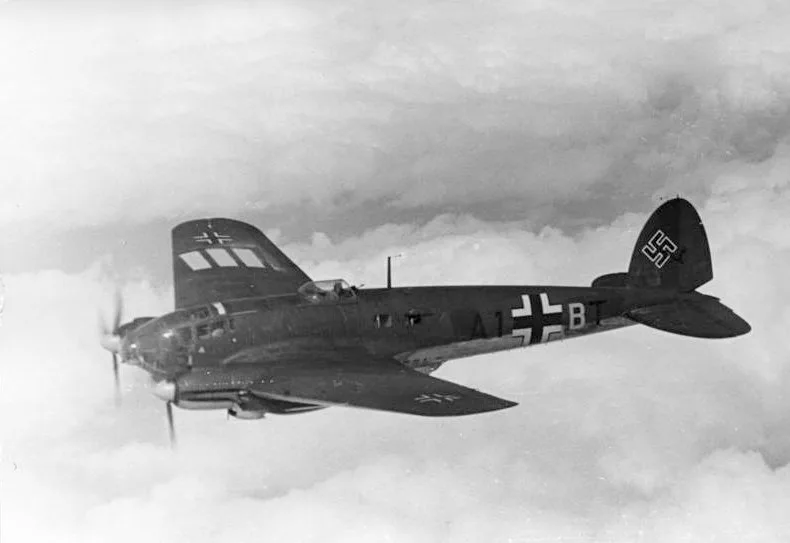
The collaboration apparently suited both parties very well. In 1926, the secret rearmament program was further expanded through the Soviet Union. Production of poison gas was launched, and a tank training school was established. However, the new projects never fully came into their own because German companies were too reluctant to invest. As a result, the program gradually faded into obscurity.
But the airline Deutsche Luft Hansa was also involved in the rearmament effort. Founded in 1926, the company primarily used aircraft at the time that were similar to military aircraft. As a result, Germany was no longer dependent on the Netherlands or the Soviet Union for its covert rearmament. With the arrival of Luft Hansa, Germany was able to establish a legitimate aircraft manufacturing sector within its borders for commercial flights. However, it was also used for pilot training; due to the type of aircraft used by Luft Hansa, these pilots could also be deployed for military purposes after completing their training.
In hindsight, the irony of this collaboration is quite clear. The Soviet Union actively contributed to the rearmament of the German army, which would ultimately drag them into a long and grueling war in 1941.
Formal rearmament after the First World War
In addition to the aforementioned covert rearmament projects, which, in some cases, were not actually all that covert, an official and formal rearmament program was launched in 1928. This formal program was intended to coordinate the covert rearmament efforts. Prior to the formal rearmament, General Heye, with the support of Colonel Kurt von Schleicher, proposed forming a commission with the German states and other relevant parties to coordinate the secret rearmament. Chancellor Marx agreed to the formation of such a commission and consequently assumed financial responsibility for it. When Marx was succeeded by Hermann Müller, this policy of formal rearmament remained in effect.
The first formal rearmament program was approved on September 29, 1928, by the army leadership. The Müller cabinet adopted this initial program on October 18, 1928. The program was a five-year plan aimed at the emergency rearmament of 16 army divisions, which at the time had limited weapon stocks. The first phase of rearmament was to be completed in 1932 and would cost 350 million Reichsmarks. The original plan focused on 21 army divisions, but for financial reasons, the number was ultimately reduced to 16. Although it was a formal plan of the German government, a large part of it still had to be carried out in secret. The financing therefore also had to remain hidden. The largest portion of the budget went to the army. The navy received 7 million Reichsmarks per year. The budget was included in the German budget via a secret fund. This fund was managed by a committee of State Secretaries that was outside the oversight of the Reichstag. Although it was a well-developed plan, its execution left much to be desired. In the spring of 1931, the German army had 10 tanks at its disposal. These tanks were not even operational yet, as they were still being tested. Furthermore, the tanks were not yet equipped with anti-tank guns or operational 2 cm onboard machine guns.
In the spring of 1932, the second rearmament program was therefore launched. This time, it did provide for 21 army divisions to be included in the rearmament. The focus was primarily on equipment and a stockpile of ammunition intended to last six weeks in the event of conflict. A budget of 484 million Reichsmarks was allocated for this purpose. But what is most remarkable is that the air force was now also included in the rearmament. An air force that Germany was not allowed to have at all under the Treaty of Versailles. The air force was to receive a budget of 110 million Reichsmarks. It was tasked with procuring 150 aircraft, including 78 reconnaissance planes, 54 fighter planes, and 18 bombers. However, an economic crisis was underway, so the funding and the plan were spread out over another five years, until March 1938. By spring, the German armed forces were to grow to 570,000 personnel. But Germany was plagued by a tight budget, price controls, and the fact that only a limited number of companies were permitted to produce weapons in Germany under the Treaty. Consequently, an additional one billion Reichsmarks was later requested for this second rearmament period.
Also worth noting is the assignment Walter Dornberger received in 1930. He was tasked with developing liquid-fuel rockets for military purposes. This type of weapon was not mentioned at all in the Treaty of Versailles, because it did not even exist at the time. It therefore could not, in fact, be banned. Through this pioneering work, Dornberger himself became involved in Nazi Germany’s V2 rocket program. This shows us that the key foundations of rearmament did not begin with Hitler and Nazi Germany at all, but much earlier. Hitler further gave it the momentum it needed by openly violating the Treaty, meaning Germany no longer rearmed in secret. With fewer detours and less secrecy, rearmament gained momentum.
Rearmament under Hitler and Nazi Germany
When Hitler came to absolute power in 1933, he had to fulfill his promise. He would, in particular, restore Germany’s lost prestige. The rearmament of Germany was, in fact, the top priority. It therefore became much more extensive and aggressive than it had been during the Weimar Republic. German industrial production had to be restored and expanded. The rearmament effort was to be led by Interior Minister Wilhelm Frick and Hjalmar Schacht. Schacht was the former president of the Reichsbank. The initial rearmament under Hitler was still carried out in secret. Or at least, that was the intention. To conceal the rearmament and its financing, shell companies and civilian fronts were established. A good example of this is MEFO and the Deutsche Verkehrsfliegerschule. Both officially had civilian functions, but in reality they were used to prepare and train the troops and equip them with weapons. The MEFO were commercial bills of exchange from a fictitious company named Metallurgische Forschungsgesellschaft. This was one of the most significant financial innovations. The so-called Mefo bills served as a disguised form of government money. They enabled the government of Nazi Germany to spend large sums of money on rearmament without these debts appearing directly in the official national budget or on the Reichsbank’s balance sheet. By around 1938, Mefo bills worth more than 12 billion Reichsmarks had been issued. The majority of this money went directly toward rearmament. The Allies, in particular, had difficulty detecting this financial arrangement. Nazi Germany was thus able to keep the covert financing of its rearmament a secret for a long time.
But it wasn’t just within Germany that financial maneuvers were being carried out that operated in a legal gray area, or were outright illegal. Schacht also employed strategies on the international capital markets. Schacht formally defaulted on Germany’s U.S. dollar bonds. He claimed that there was no foreign currency available in Germany to cover the interest and coupon payments. But what he was really planning was to try to free up foreign exchange for rearmament and foreign political support. Germany allowed the value of its debt to decline on the American market. As a result, German buyers could purchase these bonds at a fraction of their face value and then exchange them back for Reichsmarks. Germany came out ahead, as this allowed the country to build up dollar reserves. These reserves could then be used to import goods and cover foreign expenditures, such as parts and equipment for the armed forces.
This strategy therefore had exactly the effect that was expected. A large-scale rearmament effort could be set in motion. Naturally, this led directly to a strong upturn in industrial production. But that was not all. In the 1930s, this strategy also resulted in near-full employment, though with one caveat. Employment statistics at the time often excluded women or non-citizens, such as foreign workers. But for many companies, the effect was immediately noticeable. They were pulled out of the deep crisis into which the Great Depression had plunged them. Although the economy was picking up, the situation remained, in fact, unstable. The economic recovery relied primarily on hidden financing, government interventions, and price-fixing agreements. Consequently, the bulk of the economic prosperity depended largely on the (re)armament industry.
The open break
Although the early stages of Germany’s rearmament under Hitler were also largely conducted in secret, this came to an end in 1935. Hitler openly defied the Treaty of Versailles and the restrictions it had imposed on Germany.
It was March 16, 1935. Hitler announced the rearmament, and conscription was openly reinstated. Industrial companies that had focused primarily on traditional products until 1935 began to diversify. Production methods were also modernized. For example, shipyards established departments capable of designing and manufacturing aircraft. The open rearmament also paved the way for technological advancements. This was particularly evident in the field of aviation. Research showed that many German workers had developed a strong emotional bond with the weapons they produced. This was especially true of the workers who were involved in production in the 1930s after 1935. They were, in fact, accorded a high status of craftsmanship within the arms industry. Under Nazi Germany’s propaganda, the weapons were also used in such a way that they were seen as an expression of national strength and the collective property of the nation.
However, Nazi Germany did not have to wait long for a true test of its rearmament. The Spanish Civil War from 1936 to 1939 was an excellent opportunity to test the new weapons and tactics developed under the rearmament programs. For example, dive-bombing tactics were tested by units of the Condor Legion. But under what later became known as the “Blumenkrieg” strategy, Hitler continued to insist that his long-term plans were peaceful in nature. Despite the apparent success of the overt rearmament and the fact that the Allies took no action, it was still not entirely clear within Nazi Germany how Germany should prepare for a war situation. There were two camps advocating different strategies: defense in depth and defense in breadth. The champion of defense in depth was Georg Thomas. This strategy aimed to achieve autarky, or self-sufficiency. An ally of this strategy was I.G. Farben. But the big boss, Hitler, was actually in favor of defense in breadth. He did not fully support autarky, but rather preferred the simultaneous development of the armed forces across all fronts. This strategy also placed less emphasis on preparing a specific war economy. To this day, there is still debate about how these internal disagreements and differing priorities played out.
The open rearmament program was not solely about weapons and the expansion of production. The number of officers also grew exponentially. Until the start of World War II, the officers were tasked with adequately equipping the growing army. The intense pressure to fully equip 36 divisions left the officers little time to consider broader strategic issues.
And another key figure of World War II also gave us a glimpse into his thoughts. That was Hitler. On September 26, 1938, during his speech at the Berlin Sportpalast, he openly declared that he could now finally admit that Germany had rearmed to an extent the world had never seen before. In the speech, which actually centered on the Sudetenland crisis, Hitler stated, in broad terms, the following: “I have pursued a policy of partial peace during these years. I have established a new German army… The German Army, of which I am the supreme commander, is now a completely different army, and its quality is such that it is not comparable to the old army.”
Foreign involvement
It stands to reason that this extreme level of rearmament simply could not have gone unnoticed by the rest of the world. Historians therefore view rearmament under Hitler primarily as an open secret on the international stage. The reason why the Allies did not act sooner against Germany’s rearmament, which was prohibited under the Treaty of Versailles, is often attributed to the appeasement policy of the 1930s. This period is primarily viewed as the time when the Allies could have stopped Hitler before World War II broke out. But this is largely based on today’s knowledge and, above all, hindsight bias. Given what we know now, this may indeed have been the best opportunity to stop Hitler. But if we simply consider the spirit of the times and the relationships between the countries back then, the path they chose wasn’t so unreasonable after all. All the Allies wanted was peace, not another World War. They certainly did not want to be the ones remembered in history as the nations that unleashed World War II. No, the Allies wanted peace. But another factor played an even greater role, one that is often still overlooked. The countries that could have actually done something to prevent Nazi Germany’s rearmament, France and the United Kingdom, simply could not. They were completely unprepared. And they remained so right up until the start of World War II.
In the story of Germany’s rearmament, the irony lay not only in the assistance the Soviet Union had provided to Germany at the outset of the rearmament. In fact, it was also American companies that actively contributed to Germany’s rearmament. Exactly how many American companies were involved is not known. But it is not unrealistic to assume that it was a substantial number of companies. These American companies contributed to the rearmament primarily during the years when Hitler came to power. The American companies supplied raw materials, technologies, and patents to German companies. They did this through a collaboration based on a complex web of business interests, such as joint ventures, cooperation agreements, and cross-ownership between American and German companies and their subsidiaries.
Because Hitler openly violated the Treaty of Versailles, particularly with regard to rearmament, the resurgence of German military power became a reality. The fact that none of the Allies took action against this allowed Germany’s military power to grow unchecked. It paved the way for Hitler’s drive for expansion and the rapid Blitzkrieg victories over Poland and France. This was made possible in part by new technologies and rearmament. These, in turn, were made possible by assistance from the Soviet Union before 1930 and by American companies when Hitler came to power, however ironic that may seem. The Allies played a direct role in strengthening Germany’s military power. Their ultimate arch-enemy just a few years later.
WarCommons publishes long-form, source-driven analysis without ads or click incentives. If you found this feature valuable, consider supporting our research by subscribing to help fund future investigations.
By Nick Ravenshade — Author
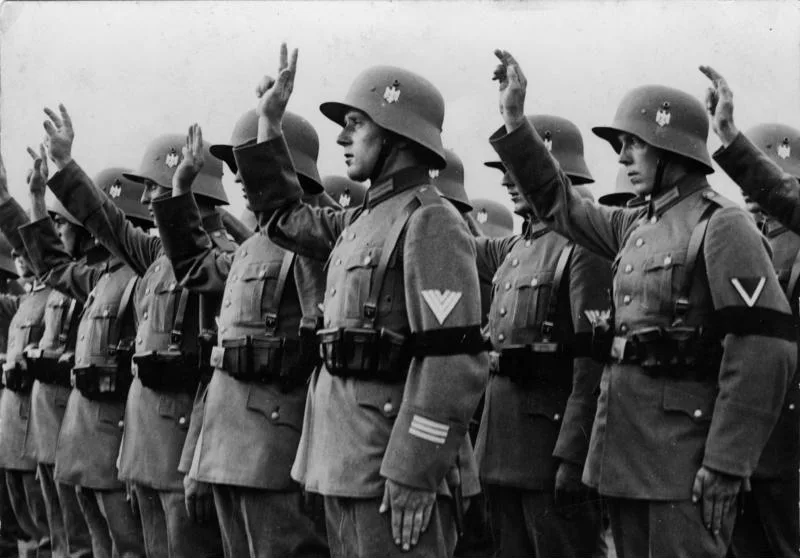
Header image: The ceremonial swearing-in of the Reichswehr to the new Reich President Adolf Hitler. The troops wearing black armbands as they take the oath to the new Reich President Adolf Hitler. August 1934. Source: Wikimedia Commons / Bundesarchiv, Bild 102-16108A. CC-BY-SA 3.0.