WARCOMMONS IS NOW ON ANDROID
Explore WWII history and stay connected with the community on the go. GET THE APP →

Hitler’s so-called “circle of evil” consisted of a number of individuals whose names are etched into the world’s collective memory. A small group of confidants, among them Hermann Göring, the Reich Marshal of the Third Reich. But standing in his shadow is a man whom history repeatedly tries to overlook, as if he had never existed and meant nothing. This is the story of Albert Göring.
Good or bad?
Whether someone is good or bad, as a person, is a weighty subject. Who are we to judge others on their goodness or badness? After all, are we ourselves actually good or bad? And what if a bad person also considers someone else to be bad? What is bad?
By putting it into context, we can answer this question a bit more easily. And in this case, that context is World War II. Even now, it’s still not black and white when it comes to what’s right and wrong. A soldier who deserts to ensure his family doesn’t perish during the war is a good man and a hero to his family, but is viewed as a bad man and a disgrace by his country.
But in no war other than World War II can we draw such a clear line. If you commit war crimes and participate in the extermination of Jewish people, then you are inherently a bad person. If you helped the Jewish community during World War II, you are often seen as good. Although even then, you can be forgotten by history and the group of people whose lives you protected. That was the fate of Albert Göring. An inherently good person, or not?
Who was Albert Göring
Albert Göring was the younger brother of Hermann Göring, who in his heyday served as Reich Marshal of the Third Reich and was a close confidant of Hitler. They both grew up in the Veldenstein and Mauterndorf castles, along with their aristocratic godfather of Jewish heritage, Hermann Epenstein Ritter von Mauternburg. The Ritter was believed to be Albert’s biological father because they bore a strong resemblance to one another.
Albert was born on March 9, 1895, in Friedenau. He was practically raised by his godfather. His father, Heinrich Ernst Göring, was often away from home. Heinrich Ernst Göring was a German lawyer and civil servant. Albert and his brother Hermann Göring got along well during their childhood. But even then, it was clear that they had completely different personalities, something that is, of course, often the case with brothers. Hermann was more daring and self-assured, while Albert was often gloomy and despondent.
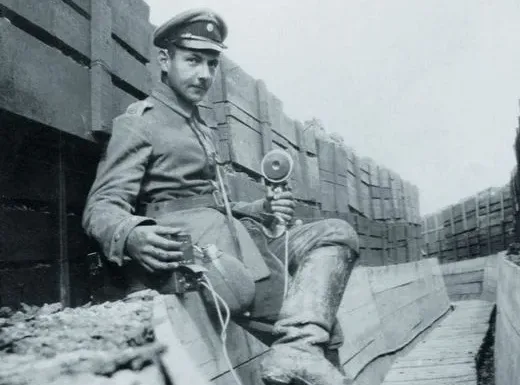
During World War I, Albert fought in the trenches on the front lines. He was a signal technician and, as such, responsible for maintaining vital communications equipment and cables. In August 1914, he arrived on the Western Front and fought with the 6th Bavarian Reserve Division. But he was also wounded. The first time was on November 14, 1914, during the First Battle of Ypres. Then, in July 1918, he sustained a gunshot wound to his abdomen. This last injury marked the end of his active military service during World War I. He attained the rank of Oberleutnant in the 103rd Bavarian Division.
Actions during the Second World War
It is remarkable that two brothers, raised in the same way, would turn out so dramatically different in their lives and actions. One was an inherently good person; the other was thoroughly evil.
Although the NSDAP came to total power in Germany in 1933, Hermann Göring had been a member of this Nazi party since 1922. As history has taught us, he would become one of the most important figures within Hitler’s regime. Reichsmarschall des Großdeutschen Reiches, Oberbefehlshaber der Luftwaffe, Reichstagspräsident, NSDAP-Führer, founder of the Gestapo, and long regarded as Hitler’s deputy. Yes, Hermann was at the very top of the NSDAP.
Albert, on the other hand, wanted nothing to do with the Nazi Party. He seemed more like a bon vivant than a person filled with hatred. Everything pointed to Albert leading a quiet life as a filmmaker. But while his brother couldn’t have been happier about Hitler’s rise to power in 1933, Albert immediately despised Nazism and the atrocities they had been committing since the early years.
Almost everyone in Albert’s immediate circle knew it: he hated Hitler, the NSDAP, the Nazi regime, and the atrocities they committed. After the Anschluss, Germany’s annexation of Austria, the open persecution and exclusion of Jews began there as well. Albert himself experienced this firsthand in Vienna, where he was living at the time. One of the most famous stories about him also took place there. In 1938 in Vienna, a group of Jewish women was forced by the SS to scrub the street on their hands and knees. This was a tactic used by the SS to ensure public humiliation. Albert saw this and did not stand on the sidelines. He chose to scrub the street alongside the women. The SS officer in charge decided to check his papers. After all, who would voluntarily participate in the public humiliation of Jewish women? When the officer checked Albert’s identification papers, he ordered the group to stop. He saw the last name, Göring. And of course, he didn’t want to be the one responsible for the public humiliation of the brother of the powerful Hermann Göring.
That somewhat gloomy and despondent boy from back then definitely had something special about him. Perhaps even more than Hitler and his circle of evil put together.
This well-documented incident shows that Albert was not afraid to stand up for his principles, even in public, and to help people in need and facing injustice. In fact, that same year, his former employer, Oskar Pilzer, was also arrested by the Gestapo. Pilzer was a Jewish film producer. Albert used his influence as Hermann’s brother to get Pilzer out of prison. Albert then arranged for travel and identity documents, money, and visas so that Pilzer and his family could leave the territory occupied by Nazi Germany. He personally escorted Pilzer to the Italian border. That, in itself, says enough.
He broadened his quiet resistance and efforts to help others while working as export director at the Skoda factories located in the Protectorate of Bohemia and Moravia. Over several years, he developed ties with the Czech resistance. He manipulated the factories’ production figures, allowed defective parts to be shipped to the German army, and passed on information about military orders from Germany. By forging his brother’s signature on transit documents, he also managed on several occasions to help dissidents escape via this route.
Perhaps one of the most memorable actions Albert personally orchestrated was the so-called “truck story.” Albert not only sent trucks to concentration camps, but often rode along in the truck himself. Risking his own life, he personally drove to these camps, including Theresienstadt. He pretended he needed forced laborers for the Skoda factories and asked for Jews and political prisoners from the camps. He succeeded in this on several occasions, again thanks to his last name. The camp guards dared not refuse Albert’s requests to take workers from the camp, for fear of incurring the wrath of the powerful Hermann Göring. After the prisoners were picked up by Albert, they were released in a remote forest area, where they could set out toward their freedom.
Arrests and the Postwar Period
The Gestapo’s actions made it clear that Albert’s resistance activities did indeed put his own life at risk. They were well aware of Albert’s activities, which Hermann Göring did not seem to pay much attention to. Albert was arrested by the Gestapo at least four times. The Gestapo had kept him on their radar all those years because of his sabotage operations in the arms industry (Skoda factories), his aid to Jews and political dissidents, and his open opposition to the Nazi regime. Every time he was arrested, the Gestapo contacted his brother, Hermann, after verifying Albert’s last name. But despite the fundamental differences between the two brothers, one on the side of evil and the other on the side of good, Hermann did not want to see his brother in handcuffs. Hermann protected his brother Albert, arrest after arrest. It is believed that this stemmed primarily from a sense of brotherly love.
But in 1944, things became quite dire. Albert Göring received a so-called execution order as a result of his actions against the Nazi regime. Since he was not present, he was sentenced to death in absentia. As the war progressed, criticism of the Nazi regime was met with increasingly harsh repression. This was the main reason Albert had been sentenced to death. But once again, Hermann was there to save him from death. As a result, Albert had to travel around with false papers for the rest of the war, but above all, he had to go into hiding.
Albert’s arrests during World War II were not his only experiences with imprisonment. After World War II, Albert was also arrested by the Allies. Not for war crimes or because he was part of Hitler’s “circle of evil,” but because of his last name. This happened in 1945, and he was questioned by the Allies during the Nuremberg trials. Documents do not indicate that there was actually an official trial against Albert. However, he did spend about two years in captivity. It was only when hundreds of testimonies were presented to the Allies, detailing how Albert had helped and saved Jewish people and political dissidents, that he was acquitted in 1947. Finally free. Or so it seemed. Shortly after these events, Albert was arrested once again by the Czechoslovak authorities as part of an investigation into collaborators with the occupation regime. But it soon became clear to the Czechoslovak authorities as well what an important role Albert had played for the Czechoslovak resistance, the Jewish people, and political dissidents. He was released again and was now allowed to continue his life in freedom for good.
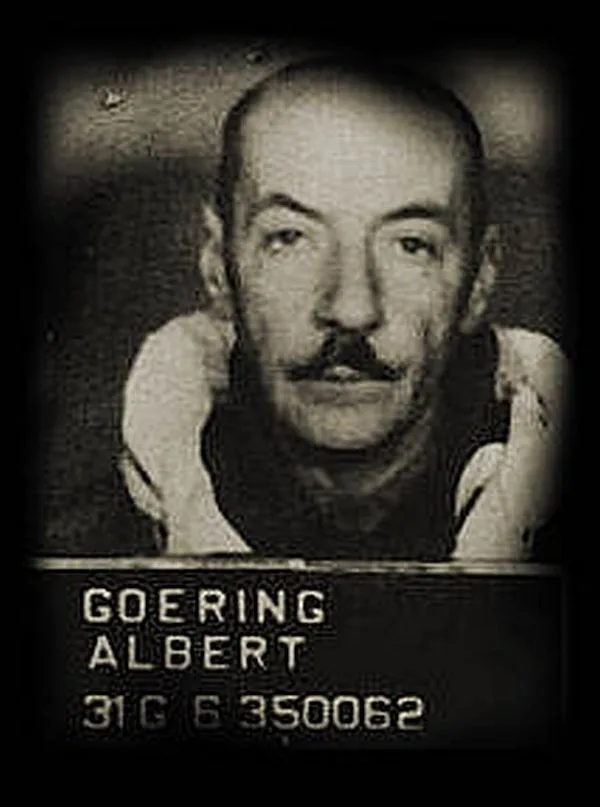
However, Albert never received much recognition. Not even at the Yad Vashem memorial center, nor from the people for whom he nearly gave his life to help and save them from certain death. It was only after the publicity surrounding Oskar Schindler that more attention was paid to Albert Göring’s role during World War II. From then on, he was also known as the anti-Nazi brother. Let us therefore never forget the anti-Nazi brother, a silent hero amidst the horrors of World War II.
So, was Hermann Göring perhaps actually a good man, but only to Albert?
WarCommons publishes long-form, source-driven analysis without ads or click incentives. If you found this feature valuable, consider supporting our research by subscribing to help fund future investigations.
By Nick Ravenshade — Author
Header image: Oberleutnant Albert Göring during World War I. Public domain.