
WARCOMMONS IS NOW ON ANDROID
Explore WWII history and stay connected with the community on the go. GET THE APP →
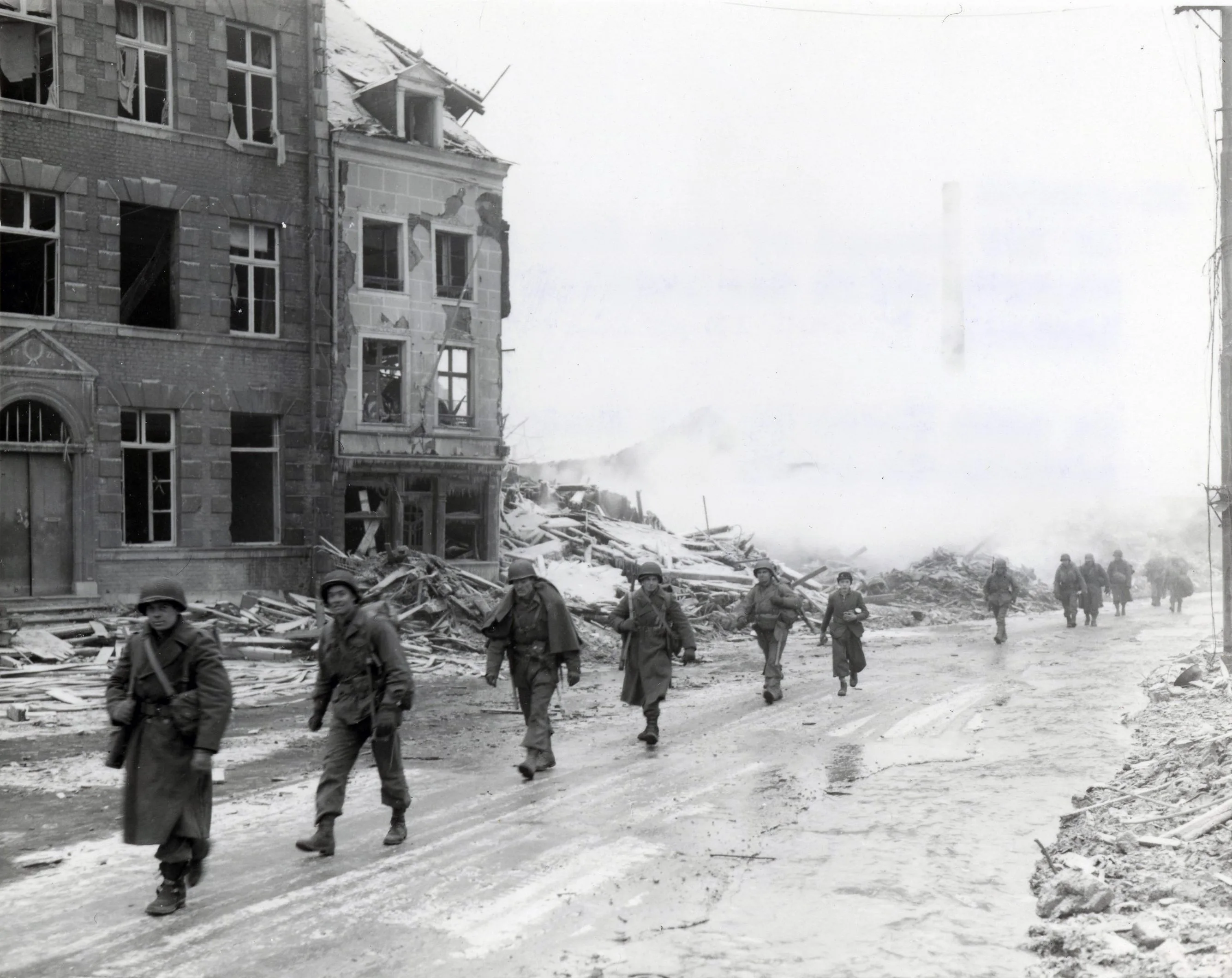

The Big Red One wasn’t the only unit during Operation Overlord and D-Day whose regiment was overshadowed by the so-called Band of Brothers. Easy Company, the Screaming Eagles, cast a long shadow over Operation Overlord. The 526th Armored Infantry Battalion (AIB) was also swallowed up by this shadow. But not anymore. This is the story of the 526th AIB.
526th Armored Infantry Battalion
During World War II, the 526th AIB was known as a specialized elite unit of the U.S. Army. Among other assignments, they were part of the 12th Army Group, also known as “T Force.” The unit gained fame for its defense of Stavelot during the Battle of the Bulge. Among other things, the battalion specialized in obtaining critical high-value intelligence.
Although the battalion was assigned to the 12th Army Group, among others, during World War II, it was de facto a separate armored infantry battalion. This unit was not a standard part of the regular organizational structure of a single armored division. The battalion was also associated with the secret project known as the Canal Defence Light (CDL). This was a British secret weapon, a carbon-arc searchlight designed to be mounted on a tank to enable nighttime offensive operations. The searchlight was intended to help locate enemy positions, but also to blind the enemy with the light and thereby disorient them. It was intended to ensure that the enemy would no longer be able to return fire, or at the very least, would fire inaccurately.
The battalion trained in strict secrecy at Fort Knox and at the Desert Training Center facilities in Arizona and California. Prior to Operation Overlord, the battalion’s headquarters was moved to England in April 1944. This move was kept secret so that they could continue their covert training in England in preparation for the upcoming invasion.
The Battalion on the European mainland
The battalion was not part of the landing forces that were the first to set foot on the European mainland as part of Operation Overlord. After their headquarters was moved to England, they did not arrive on the European mainland until around August 1944, mostly in Belgium. During this period, they were assigned to the 12th Army Group, “T Force”.
The so-called After Action Review (AAR) indicated that the 526th AIB was largely scattered during the early period. The battalion’s B Company was stationed in Comblain-La-Tour from October through December 17, 1944. C Company is also associated with guarding the Eagle Tactical Air Command Headquarters in Luxembourg, the Allied forward headquarters, where Generals Eisenhower, Bradley, Patton, and Simpson were also present.
Shortly before the Ardennes Offensive, the battalion, excluding C Company, trained in the Harzé area as part of T Force. T Force was regarded as an intelligence unit capable of rapidly entering occupied territories to secure documents, German personnel, or other intelligence. In principle, it is still impossible to determine what impact the battalion actually had on the Allied war effort. Given the secrecy of the battalion’s operations, it is quite possible that they managed to obtain important intelligence during one or more missions that had a major impact on subsequent events in the liberation of Europe.
Nevertheless, there were also documented cases of the 526th AIB’s deployment, specifically in connection with the Ardennes Offensive.
Malmedy and Stavelot
It was December 17, 1944, at 11:00 a.m. CET. The 526th AIB was alerted to an impending landing by German Fallschirmjäger near Eupen and Jalhay. On that same day, between 4:00 and 4:30 p.m. CET, the battalion received orders to proceed immediately to Malmedy via Spa, together with the 99th Infantry Battalion, without their Able Company. This marked the beginning of the 526th AIB’s first actual combat deployment. Now the war had truly begun for the battalion, right here in the Ardennes.
The advance toward Malmedy bore no resemblance to that of a well-trained elite unit. The advance was chaotic, marked by a combination of haste, disorganization, and traffic congestion on the way to the destination. This was evident, among other things, from the AAR of the 99th Infantry Battalion.
We even get a written glimpse into the chaos. The 99th’s AAR described how they departed from Tilff for Malmedy at 6:00 p.m., while the 526th AIB was waiting at 7:00 p.m. CET on the Aywaille-Remouchamps Road to launch an attack together with the 99th. They ended up waiting a long time. Since the 99th had failed to show up on time, the 526th AIB was ordered at 9:00 p.m. to proceed on its own and to pick up a platoon from the 825th Tank Destroyer Battalion along the way. The chaos was complete.
By the time the Malmedy group finally approached, 60 men from the 291st Engineer Combat Battalion were already there. By that point, they had already laid mines and set up roadblocks in the sector near Malmedy. They had also already carried out preparatory demolition work on bridges and trees. Contrary to what you might think, the 526th AIB did not end up in an undefended zone. They arrived in an increasingly dense American defensive stronghold.
Once in Malmedy, the 526th AIB was quickly split up. One group had to hurry to Stavelot. The rest remained in Malmedy to seal off the southern approaches to the sector. Captain Charles Mitchell’s report tells us everything we need to know. He wrote that A Company of the 526th AIB was ordered to defend the bridge at Stavelot. The troops were deployed in and around the Place du Marché in the dark; it was around 4:00 a.m. CET. December 17, 1944, turned into December 18, 1944. The anti-tank guns were positioned near the bridge further down the street as a defense. Later that evening, a roadblock was erected on the south side of the river. Communication in the pitch-black darkness and within an unfamiliar city became increasingly difficult.
What the Allied defenders at the bridges and the Stavelot River did not yet know was that the advance units of Kampfgruppe Peiper had already taken up positions in the houses on the other side of the river near Stavelot.
Kampfgruppe Peiper
The advance toward Stavelot as part of the Ardennes Offensive began for Kampfgruppe Peiper on December 16, 1944. Kampfgruppe Peiper was the lead unit within the 1. SS-Panzerdivision Leibstandarte SS Adolf Hitler, 1. SS-PzDiv LSSAH. Behind Kampfgruppe Peiper, the bulk of the LSSAH followed in a column, including an armored infantry battalion, a mobile engineer company, and a battery of self-propelled artillery. The rest were to join them shortly thereafter. But by noon on December 17, 1944, Kampfgruppe Peiper had already become separated from the column.
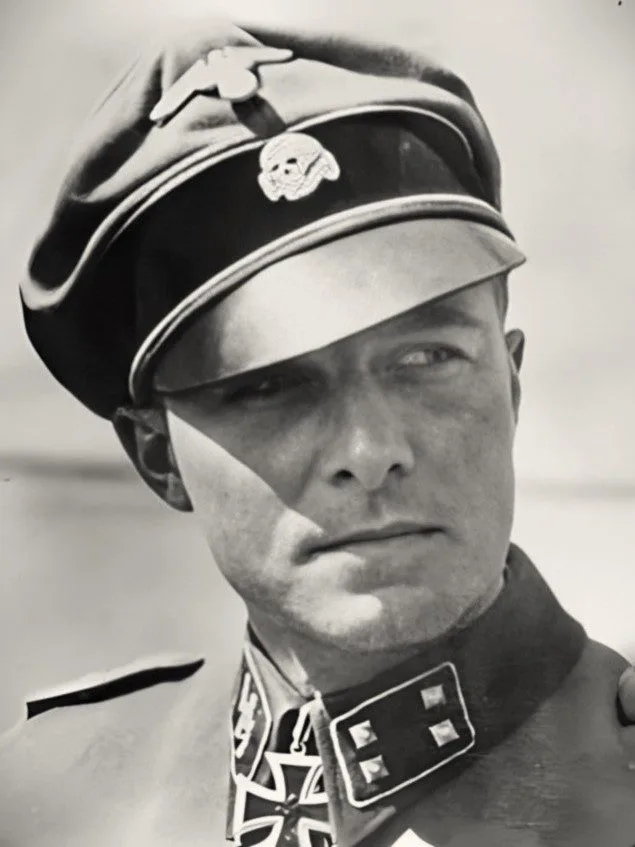
His advance was stalled by delays near Losheim, so he continued his route via Honsfeld and Büllingen. Along the way, he left a trail of destruction, looting fuel and ordering the killing of American prisoners. After Kampfgruppe Peiper encountered further delays at Ligneuville, they finally reached the outskirts of Stavelot at dusk, near the bridge over the Amblève River. Upon arrival, the only Allied presence in Stavelot was the 291st Engineer Combat Battalion, which was engaged in defensive works. The leading elements of Kampfgruppe Peiper therefore halted at the south bank of the river. Kampfgruppe Peiper and the LSSAH had not yet fully secured Stavelot, but they had already chosen a starting position from which they could bombard the river crossing and prepare an advance into the town. The bridges were crucial for access to the Meuse River. Peiper could not and would not risk prolonged fighting in Stavelot, because Stavelot was not a target for him, but a passageway.
The lead elements of Kampfgruppe Peiper witnessed the growing American defenses on the other side of the river. Where the 291st Engineer Combat Battalion had previously been alone, the 526th AIB joined the defense during the night of December 17–18, 1944. The 825th Tank Destroyer Battalion also arrived at Stavelot.
The Americans and Germans were literally facing each other head-on.
The battles in Stavelot
Kampfgruppe Peiper did not launch an immediate attack on the night of December 17–18, 1944. This was because Peiper was not yet certain of the exact extent of the American defenses. While the Americans reinforced their defenses, Kampfgruppe Peiper began bombarding Stavelot with mortar and artillery fire. Peiper also continued to search for a quick route via Stavelot and Trois-Ponts toward the Meuse River. The mortar and artillery fire marked the beginning of the actual fighting in Stavelot. The German infantry attempted to force the bridge and gain access to the town. But the American defense held firm and managed to repel this first German attack with rifle, mortar, and machine-gun fire.
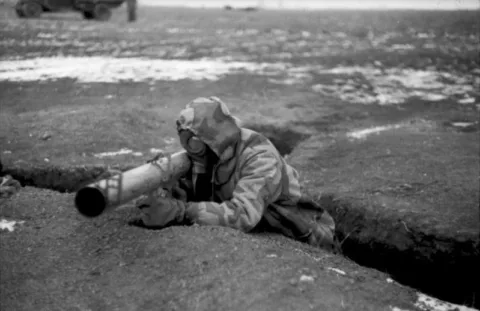
This was followed by a second German attempt, this time with tanks leading the way as they tried to force the crossing. The advancing tanks were stopped by American anti-tank artillery. But Private Lee Galloway was there too; he hit one of the advancing German tanks with a bazooka. At that point, the American defense already consisted of the 526th Armored Infantry Battalion, the 291st Engineers, the 825th Tank Destroyers, and was later supported by the 117th Infantry of the 30th Division. The American defense could hardly be called a tightly organized defensive stronghold. It was a defense consisting of a hastily improvised combination of infantry, anti-tank guns, half-tracks, and engineers. All of this was carried out under intense time pressure and in the confusing chaos of the situation.
The battle centered on the bridge over the river, the streets, and the access routes. As December 18, 1944, progressed, the American position began to grow stronger. It was the 30th Infantry Division that was gaining control of more and more territory and roads around Stavelot. By the evening of that same day, elements of the 117th Infantry Regiment had already set up more roadblocks and recaptured parts of Stavelot.
But the Allied defenders also believed that Peiper was heading for the large fuel depot located in Stavelot. The Americans decided to set the fuel depot on fire. Historians agree that the large fuel depot in Stavelot was not Peiper’s objective, but it may well have been a welcome bonus. After all, Stavelot was not Peiper’s objective, but merely a waypoint. It did, however, force Peiper to change course, away from Stavelot. The town was costing him too much time and resources, exactly what he was trying to avoid. His fuel supply was running low, and the Meuse River was still too far away via Stavelot. Peiper chose a different route.
For the time being, however, the German advance had not been halted; it continued. But Peiper was unable to capture Stavelot, and his supply lines remained vulnerable. The Americans mainly gained time here by blocking roads and slowing down German movements through defensive actions and counterattacks.
Kampfgruppe Peiper did not break through at Stavelot but moved westward toward Stoumont and La Gleize, with the Meuse River as its ultimate objective. The main objective was, in fact, to advance rapidly to the Meuse, not to capture or recapture towns. Peiper left parts of his Kampfgruppe behind, including sections of the infantry and support units. Their task was now to hold back the Americans, protect the route across the river, keep a corridor open, and ensure that supplies could continue to reach them.
Allied defense and the shift in battle
While the rear elements of Kampfgruppe Peiper remained in Stavelot from December 18, 1944, and the rest of the Kampfgruppe Peiper continued their advance, the Americans continued to reinforce their defenses. The lead elements of Kampfgruppe Peiper advanced toward Stoumont, while the rear elements were tasked with keeping the route open for Kampfgruppe Peiper and slowing down the American troops. This was intended to ensure that the connection to the eastern supply route for Kampfgruppe Peiper remained intact.
The rest of Kampfgruppe Peiper continued westward and arrived at Trois-Ponts. This was a key position, as it provided a direct link to the road leading to the Meuse. If Kampfgruppe Peiper could cross the bridges and push through Trois-Ponts along the main road, there would be no further obstacles on the way to the Meuse. It was solely the 51st Engineer Combat Battalion, led by Captain (later Major) Robert B. Yates, that was tasked with defending Trois-Ponts. They had already arrived there on December 17, 1944. Their mission was to prepare the bridge over the Amblève for demolition. But they were not entirely on their own. The 526th AIB also arrived in Trois-Ponts to assist with the defense. By noon on December 18, 1944, it was clear: Kampfgruppe Peiper had launched its attack on Trois-Ponts. The first German tank was stopped by the use of a so-called daisy chain, which was stretched out in front of the first tank. It was then the troops of the 526th AIB who opened fire on Kampfgruppe Peiper with a 57 mm anti-tank gun. Using a 57 mm anti-tank gun, the 526th AIB managed to destroy a German tank. It was therefore no longer possible for Kampfgruppe Peiper to push through Trois-Ponts, as they could not overcome the resistance. After successfully taking out a tank with the 57 mm anti-tank gun, the gun itself was hit. The entire crew of the 57 mm anti-tank gun was killed.
Peiper quickly decided to abandon the attack on Trois-Ponts and continue toward La Gleize. Near Monceau and Cheneux, the advance of Kampfgruppe Peiper was further hampered. A group of American aircraft spotted the column of Kampfgruppe Peiper. At that point, the column already stretched from Stavelot to the bridge at Cheneux. It is estimated that between 11 and 30 P-47 aircraft decided to open fire on Kampfgruppe Peiper. While Peiper himself took cover in a nearby bunker, the column was heavily hit by the aircraft. As a result of this attack, a tank was completely destroyed, right in the middle of the road. It partially blocked the road westward for part of the column. Consequently, part of the column had to divert toward Le Moulin, causing Kampfgruppe Peiper to become even more fragmented. To make matters worse for Kampfgruppe Peiper, several vehicles in the column were also hit on the road leading to the bridge over the Amblève.
The battles at Stoumont
Following Kampfgruppe Peiper’s advance from Stavelot toward Stoumont and the brief but intense fighting in Trois-Ponts, Monceau, and Cheneux, Kampfgruppe Peiper arrived at Stoumont. It was December 19, 1944.
Although Kampfgruppe Peiper was battered, the Americans were still fearful of Peiper’s advance. General Hodges’ First Army headquarters was located in Spa, 16 km away from Kampfgruppe Peiper’s position. But Peiper was not interested in Spa, something the Allies did not yet know. As a result, most of the First Army had already left Spa due to the advance of Kampfgruppe Peiper. But Peiper’s column was spotted again by American aircraft, this time near Stoumont. Once again, his column came under fire from American fighter-bombers. Although Peiper lost ten vehicles in this attack, he continued on toward Stoumont.
It was not entirely an act of desperation on Peiper’s part. His Kampfgruppe attacked the first line of defense at Stoumont, which was held by the 30th Infantry Division. The division was forced to retreat. Captain James D. Berry, who commanded the 740th Tank Battalion, heard about the retreat and learned from the 30th Infantry Division that numerous German tanks were breaking through the first line of defense. Captain James D. Berry gathered 14 hastily repaired tanks, consisting of Shermans and one M36 tank destroyer. He took up position at the Stoumont railway station. Not knowing if all his tanks had been repaired yet, he took charge of the defense. Lieutenant Powers, with 5 tanks, formed the vanguard of the 740th Tank Battalion’s defense. He spotted a German Panther tank and managed to destroy it. The danger had not passed, for the German attack also involved the vastly feared German Tiger tank. The sole M36 tank destroyer of the American defense was the only one even remotely capable of standing up to the Tiger tank. The M36 tank destroyer thus succeeded in destroying the Tiger. Peiper had seen enough and suffered enough losses. Through the fog, Kampfgruppe Peiper reversed course and headed back up the hill of Stoumont toward its rear. Peiper did not yet know, however, that the rest of his Kampfgruppe had already been cut off. It was, in fact, the American 30th Infantry Division that had driven the rear elements of Kampfgruppe Peiper out of Stavelot across the Amblève River. There was no longer a direct connection, meaning the front elements of Kampfgruppe Peiper could no longer be resupplied.
The End of Kampfgruppe Peiper
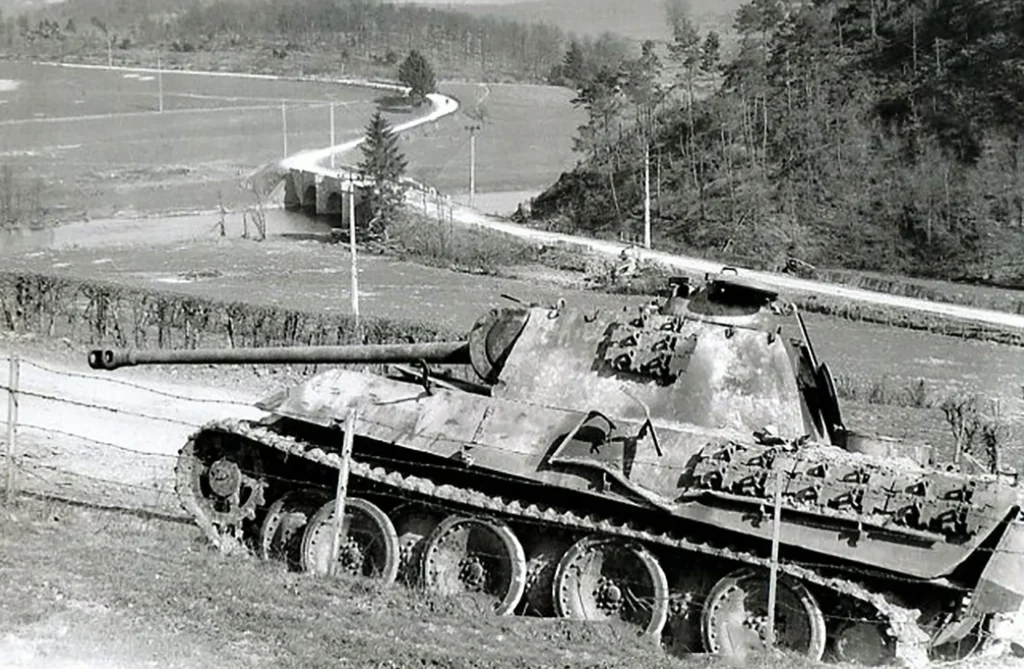
The attack on Stoumont stalled, and by December 22, 1944, the situation for Kampfgruppe Peiper was hopeless. But it was not until December 23, 1944, that Peiper received permission to withdraw. From Stoumont, Kampfgruppe Peiper withdrew to La Gleize. Kampfgruppe Peiper gathered in the village square, or what remained of the Kampfgruppe. Due to a severe shortage of ammunition and other supplies, many of Kampfgruppe Peiper’s vehicles were left behind in La Gleize. The number of vehicles left behind by Peiper remains a point of debate to this day. What is known is that several Panthers, Panzer IVs, Königstigers, and tracked vehicles were left behind.
While history has a tendency to single out one person or one group as the key player in a major historical event. That is not appropriate here. What we would end up doing is overshadowing the other important key players, just as Band of Brothers did with the Big Red One.
So was it really just the 526th AIB that single-handedly brought about the end of Kampfgruppe Peiper? Or were they the only ones who single-handedly halted Peiper’s advance? The answer to both questions is a resounding no. Because in history, credit goes to those who deserve it, not just to those with the most interesting story to tell. However, the 526th AIB can certainly be seen as an indispensable factor. After all, this elite unit was deployed as needed for defense during the Ardennes Offensive, serving as a flexible defensive and specialized force around every defensive position where they were required. But they were not the only ones who were indispensable in this story.
It was also the 51st Engineer Combat Battalion, led by Robert B. Yates, that defended and ultimately destroyed the bridge at Trois-Ponts, preventing Kampfgruppe Peiper from advancing further.
It was also the 291st Engineer Combat Battalion that reinforced the engineering defenses around Stavelot and destroyed the bridge over the Amblève, preventing Kampfgruppe Peiper from crossing this bridge and advancing toward the Meuse.
It was also the 30th Infantry Division, specifically the 117th and 119th Infantry Regiments. They defended and recaptured Stavelot. They kept the road between Stavelot and Stoumont under pressure and ensured the encirclement of Kampfgruppe Peiper around Stoumont and La Gleize. As a result, Kampfgruppe Peiper was cut off from its supply routes, leaving retreat as the only remaining option.
It was also the 740th and 704th Tank Battalions that, in support of the 119th Infantry Regiment, halted the advance of German tanks toward Stoumont by destroying a German Panther tank and a German Tiger tank.
It was also the 82nd Airborne Division, under the command of Major General James M. Gavin, that reinforced the area around Stoumont and La-Gleize as Kampfgruppe Peiper withdrew to La-Gleize. This sealed the definitive withdrawal of Kampfgruppe Peiper from the offensive operations to reach the Meuse.
Among all these troops was the 526th AIB, which played a vital supporting role. So let’s stop singling out heroes, like saying it was the 526th AIB that single-handedly halted the advance of Kampfgruppe Peiper. But let’s truly begin to give credit where credit is due. And that starts here.
Therefore, let us not allow the 526th AIB to overshadow the other Allied battalions that contributed just as much to stopping Kampfgruppe Peiper. This restores their honor and sets the record straight. It is human nature to seek out heroes in events as momentous as World War II. In principle, there is nothing wrong with that. But as historians, we must be careful not to ascribe a heroic role to one individual while allowing another, who was just as important, to remain in the shadow of the chosen hero.
For without the efforts and achievements of the 51st Engineer Combat Battalion, the 291st Engineer Combat Battalion, the 117th and 119th Infantry Regiments, the 740th and 704th Tank Battalions, and the 82nd Airborne Division, this story might well have ended very differently.
If you want to read more about the Big Red One, check out the article here.
If you want to read more about the forgotten heroes of WWII, check out our article on the Red Ball Express here.
WarCommons publishes long-form, source-driven analysis without ads or click incentives. If you found this feature valuable, consider supporting our research by subscribing to help fund future investigations.
By Nick Ravenshade — Author
Header image: U.S. Inf troops of the 30th Infantry Division on march through Malmedy which was leveled in error by U.S. bombers. 29 December 1945. Source: Wikimedia Commons. Public domain.


.jpg)

