WARCOMMONS IS NOW ON ANDROID
Explore WWII history and stay connected with the community on the go. GET THE APP →

The Second World War was the main stage for (military) espionage and deception. This is often forgotten, simply because so much happened during that period. But what is never forgotten is the ingenious Operation Mincemeat. A textbook example of how a single act of deception can seal one’s fate. This is the story of Operation Mincemeat.
The structure of tactical deception
Operation Mincemeat was part of the main operation known as Operation Barclay. The latter was a supporting operation for Operation Husky. Operation Husky was the name of the Allied invasion of Sicily in July 1943. Operation Barclay was the name of the deception campaign designed to mislead the Third Reich and Italy as to the location where the invasion under Operation Husky was to take place. The deception went to great lengths and was highly sophisticated. In the Eastern Mediterranean, the Allies had even established a completely fictitious dummy army under Operation Barclay, the Twelfth Army. This consisted of twelve divisions which also carried out fake troop movements. There was also fake radio traffic and the recruitment of Greek interpreters who, together with the acquisition of Greek maps, were to create a situation in which Hitler would believe that the Allies would launch the invasion via Greece. The entire Twelfth Army, and Operation Barclay, existed for a single purpose: to create a deception that would convince Hitler that the Allies would launch the invasion via the Balkans. And Operation Mincemeat was intended solely to reinforce this deception.
Glyndwr Michael
Glyndwr Michael was a homeless man who died after eating rat poison. It was two members of the British intelligence service who had a plan involving Glyndwr Michael’s body. They were given the body, and from that moment on, Glyndwr Michael became Captain William Martin, also an acting major. He was dressed by the British intelligence service as an officer of the Royal Marines, and they placed personal belongings on his person that were intended to identify him as William Martin.
It was not entirely without reason that British intelligence also ensured that Acting Major William Martin would have a number of other important documents in his possession. These were the correspondence between two British generals. Quite by chance, this correspondence revealed that the Allies would indeed begin and carry out the invasion via Greece and Sardinia. Sicily was nothing more than a feint.
The idea behind Operation Mincemeat
Operation Mincemeat was, of course, all well and good in theory, but everything had to go exactly to plan. Where was the body to be discovered, and by whom? How would the information reach Hitler, and would he even believe it?
The idea for Operation Mincemeat did not just spring up overnight. The foundations for this specific operation had already been laid on 29 September 1939 through the Trout Memo. A memo drafted by Rear Admiral John Godfrey, although it was most likely actually drafted by his assistant, Lieutenant Commander Ian Fleming. The Trout Memo compared deceiving an enemy in wartime to fly fishing. It focused primarily on luring U-boats and other German vessels into minefields. And there, at number 28 in the Trout memo, was the option to use a corpse that would be found by the enemy. And the corpse was to be carrying misleading documents.
The idea of placing deceptive documents somewhere for the enemy to find was not new at the time. It had already been used during the First World War and was sometimes better known as the Haversack Ruse. A textbook example of this can also be seen in North Africa in August 1942. Ahead of the Battle of Alam el Halfa, British reconnaissance vehicles were placed in a minefield; the vehicles had been blown up. From one of these vehicles, the Germans obtained a map showing the British minefields. It was so convincing that the Germans took it at face value and redirected their tanks onto a new route to bypass the ‘minefields’. The result was that the German tanks became bogged down in an area of soft sand.
This is a good example of how deception can be carried out in practice. However, it does not guarantee that if information is uncovered, in this case by the Wehrmacht, it will reach the highest levels of command. But with Operation Mincemeat, this obviously had to be the case; otherwise, the focus of the defence of Italy would have remained on Sicily rather than being shifted to Greece and Sardinia.
The Cádiz incident
September 1942 would provide the answer to the question of how the information was to be found and whether Hitler would even see it. It was during this month that a British aircraft crashed in Cádiz. All those on board were killed. But the most prominent figure in this context was Paymaster-Lieutenant James Hadden Turner. He was a courier carrying top-secret documents. The documents he was carrying at the time concerned Operation Torch. Among the documents was also a letter from General Mark Clark addressed to General Noel Mason-MacFarlane, the British Commander-in-Chief of Gibraltar. General Dwight D. Eisenhower was due to arrive in Gibraltar on the evening before the ‘target date’ of Operation Torch. The ‘target date’ was 4 November 1942.
The body of Paymaster-Lieutenant James Hadden Turner washed up a considerable distance further along, on the beach at Tarifa. The Spanish authorities took charge of securing the body. The body was returned to the British. It appeared that no one had seen the contents of the letter, as British technicians established that it had not been opened. Other Allied intelligence services believed that the notebook belonging to a French agent, who had also been on board the crashed aircraft, had been copied by the Germans. But this was dismissed as disinformation. However, it was sufficient information for the British planners. It demonstrated that some of the material obtained by Spain had been passed on to the Germans.
A month after this plane crash, a variation on the Trout memo was drawn up by the British intelligence officer Charles Cholmondeley. This memo was given the code name ‘Trojan Horse’. The plan was ‘simple’. A body was to be found in one of the hospitals in London. The lungs were to be filled with water and the documents placed in an inner pocket. The body was to be dropped from an aeroplane. In this way, the deception was to be created that the body had come from a shot-down or hit aeroplane.
On 4 February 1943, Montagu and Cholmondeley submitted their new plan to the Twenty Committee. A so-called revision of Cholmondeley’s initial Trojan Horse plan. It was named the Mincemeat Plan. This plan stipulated that documents would be placed on a corpse, which would then be dumped off the coast of Spain. The neutral Spanish government was known to be collaborating with the German military intelligence service, the Abwehr.
The Twenty Committee approved the plan. Montagu and Cholmondeley were authorised to continue with the preparations for the operation.
Final preparations
No expense was spared in the preparations immediately prior to the launch of Operation Mincemeat. Montagu approached the pathologist Sir Bernard Spilsbury to determine what sort of body was required and how a Spanish pathologist could be misled. He also pointed out that, as Roman Catholics, the Spanish were opposed to post-mortem examinations. They only carried out such examinations if the cause of death was of great importance. The pathologist’s advice was that a person could have many different causes of death, meaning that a genuine primary cause of death could be misinterpreted by a Spanish pathologist.
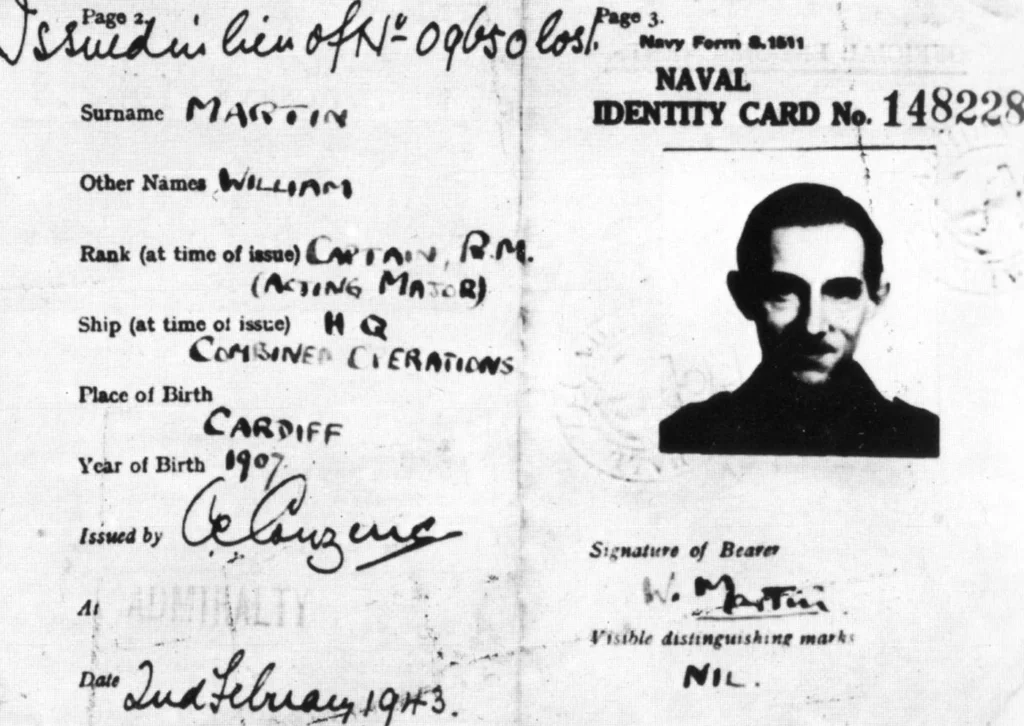
Glyndwr Michael was given a new identity and background. He became Captain and Acting Major William Martin of the Royal Marines, attached to Combined Operations Headquarters. Even the name had been chosen for tactical reasons, as Martin was the surname of several British officers holding the rank of captain within the Royal Marines. Striking the right balance was crucial. A rank that was too high would be so prominent that someone was bound to recognise him. But the rank also had to be high enough to justify carrying the type of sensitive documents he needed to carry. That is why they settled on the rank of Captain, acting as Major. It was not so prominent that only a few key figures held the rank, but nor was it too low to justify the type of documents he carried. With the rank of captain, acting as major, the rank was just senior enough to be permitted to handle the sensitive documents he was carrying.
And as a Royal Marine, he fell under the authority of the Admiralty, meaning that all official enquiries and reports regarding his death would be forwarded to the Naval Intelligence Division.
To ensure that Matin was regarded as a real person, use was made of what is known in espionage circles as ‘wallet or pocket litter’. These were corroborating details that he was required to carry with him. A photograph of a fictitious fiancée, named Pam, was placed on him. Along with two love letters from her and a receipt for a diamond ring, including the price and the specific location of the jeweler. There was also a letter from his fictional father, including a note from the family solicitor demanding payment. Other items in the pocket litter included the Silver Cross medal, a booklet of stamps, cigarettes, matches, a St Christopher’s medallion, a stub of a pencil, a new shirt, keys and a receipt from Gieves.
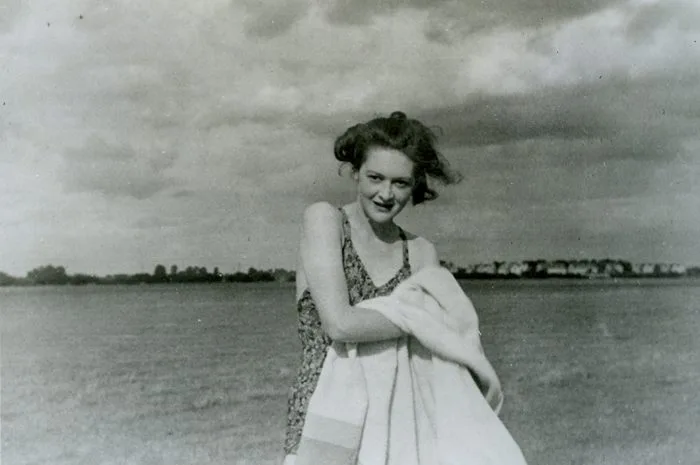
It was also necessary to establish the dates on which Martin had been in London. To this end, tickets from a London theatre were included, as well as a bill for four nights’ accommodation at the Naval and Military Club. Together with the other items attributed to Martin, a detailed timeline was compiled of his activities in London from 18 to 24 April.
The documents relating to the invasion had also been planned down to the last detail. Sicily and another location were to be mentioned only in passing as targets. And they were to be unofficial correspondence that would not be sent via a diplomatic courier or an encrypted signal. Why else would Captain Martin have the documents in his possession? A key part of the documents were the letters in which Sicily and the Dodecanese were designated as so-called cover targets for the invasion, together with an explanation and justification for these choices. An introductory letter was also included for Captain Martin, from his supposed commander, Vice-Admiral Sir Andrew Cunningham. In this introductory letter, Martin was described as an expert in amphibious warfare. It was also in this letter that the legendary reference to sardines was made, in the hope that the Germans would interpret it as the planned invasion via Sardinia. To check whether the Germans or Spaniards had opened the letter, a single black eyelash was placed inside it.
Even the location where the body was to be discovered was planned in detail, with the assistance of a naval hydrographer. Initially, the possibility of lowering the body into the water off the Portuguese and French coasts was considered. However, following the hydrographer’s advice, the choice fell on Huelva on the Spanish coast. The hydrographer had studied the tides and currents in that region to determine which spot was most suitable to ensure the body would arrive at the desired location.
Ultimately, the plan to drop the body from an aeroplane was deemed too risky. A submarine was eventually chosen to transport the body to the region.
Implementation and consequences
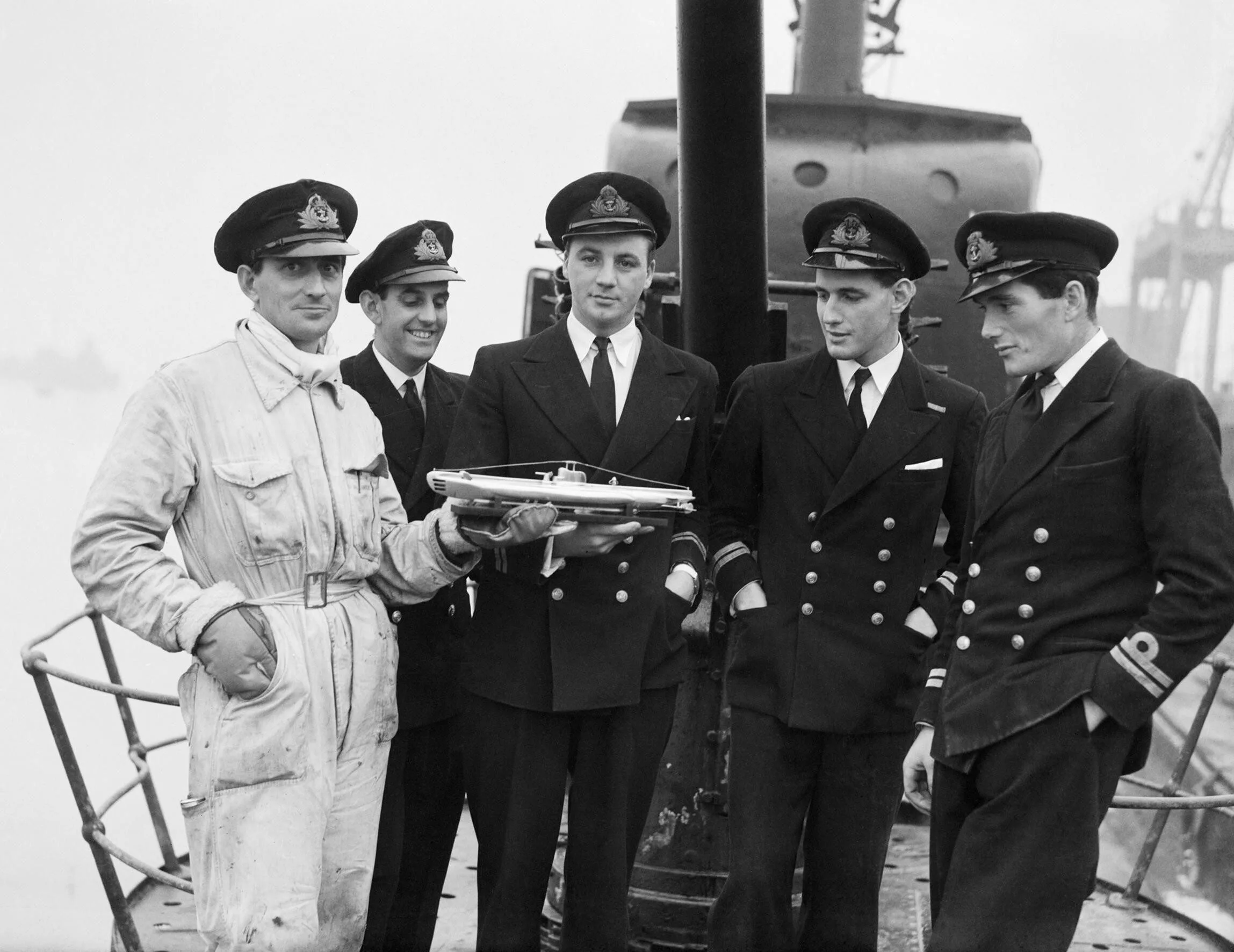
In the early morning of 17 April 1943, Glyndwr Michael’s body was dressed as Captain Martin. The stretcher was positioned and the briefcase was fastened to Martin. The body was placed in a container inside the submarine, which had been filled with 9.5 kilograms of dry ice. The container was then sealed airtight. The dry ice sublimated, filling the container with carbon dioxide and thereby displacing all the oxygen. This allowed the body to be preserved without refrigeration. The honour of the operation fell to HMS Seraph, the submarine that would transport the body to the Mediterranean. The crew, however, knew nothing of this. The submarine’s commander, Lieutenant Bill Jewell, told his crew that the container held a top-secret meteorological device that was to be deployed near Spain.
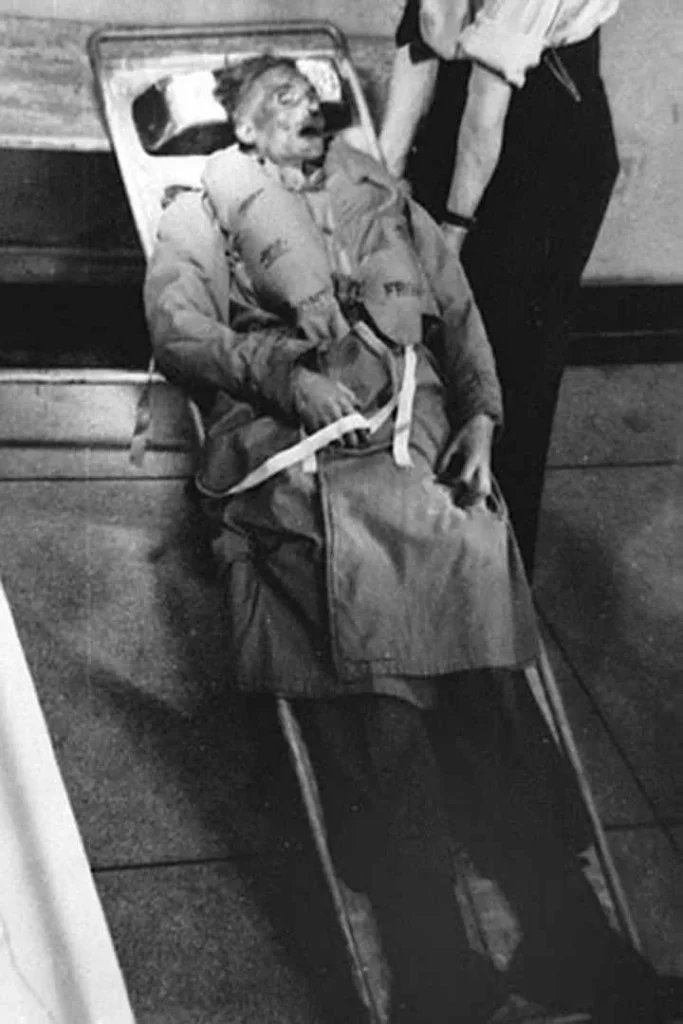
On 29 April 1943, the time had come. After the HMS Seraph had been bombed twice en route, the submarine arrived just off the coast of Huelva. They spent the whole day observing the coastline. In the early hours of 30 April 1943, at 4.15 am, the HMS Seraph surfaced. The container was brought on deck and the entire crew was ordered below deck again, except for the submarine’s officers. The container was opened and the body was lowered into the water. By running the submarine’s engines at full speed in reverse, the waves pushed the body towards the coast.
Mincemeat was complete and HMS Seraph continued its journey to Gibraltar.
The discovery of Captain Martin
On 30 April 1943, Martin’s body was found by a fisherman at around 9.30 am. Spanish soldiers took the body to Huelva and handed it over to a naval judge. Vice-Consul Haselden was officially informed of the discovery by the Spanish authorities. What was of crucial importance was that the British knew their diplomatic telegrams were being intercepted by Germany. Indeed, the Germans had cracked their code and were able to intercept and read encrypted messages. The discovery of the body triggered a prearranged exchange of correspondence. Haselden reported to the Admiralty that Captain Martin’s body had been found, along with the briefcase. This prearranged diplomatic correspondence via telegram was exchanged between Haselden and Alan Hillgarth. He was the naval attaché in Madrid. It was therefore deliberate that the telegrams emphasised the crucial importance of recovering the briefcase, as it was of great significance. It was a small detail with a major impact; attention was thus focused on the briefcase and its contents.
The autopsy took place on 1 May 1943 around midday. Haselden was present and attempted to influence the autopsy, with success. It was very hot that day and Haselden asked the two Spanish doctors to bring the autopsy to a close, citing the stench of the corpse and the heat of the day, and to go for lunch. In this way, he tried to prevent the Spanish doctors from discovering that the body was already three months old. Remarkably, the two doctors agreed to this. Major William Martin’s death certificate was signed. The cause of death? Asphyxiation due to submersion in the sea.
The Spanish authorities released the body, identifying him as Major Martin. He was given a funeral with full military honours on 2 May 1943. He was buried at the Nuestra Señora cemetery in Huelva.
The briefcase and documents
However, the operation was closer to failure than to success, even though the body had reached its intended destination. The briefcase was, in fact, in the possession of the Spanish navy. Yet the briefcase and its contents were not handed over to the Germans, despite pressure from Adolf Clauss and his Abwehr agents. On 5 May 1943, the briefcase containing the documents was handed over to the naval headquarters in San Fernando near Cádiz as a stopover before being forwarded to Madrid. However, the contents had already been photographed in San Fernando by German collaborators. The letters had not yet been opened at that point.
Once the briefcase had arrived in Madrid, it caught the attention of Karl-Erich Kügenthal. He was one of the highest-ranking Abwehr agents in Spain. He asked Admiral Canaris, head of the Abwehr, to intervene personally to persuade the Spanish to hand over the documents to them. The Spanish agreed, which immediately ensured that Operation Mincemeat could hardly fail. The letters were extracted, dried and processed. Photographs were taken of the contents of the letters. The letters were then soaked in salt water for 24 hours and returned to their envelopes. The information was forwarded to the Germans on 8 May 1943, but not just in any old way. The information was considered so important that Kügenthal personally took the documents to Germany.
The briefcase was returned to Hillgarth by the Spanish authorities on 11 May 1943, along with all the documents. The briefcase was then sent back to London. However, they had overlooked one detail: the eyelash. It had not been replaced in the letter and was probably never even noticed by the Spanish.
Once back in London, the documents underwent forensic examination, during which the absence of the eyelash was also discovered. The forensic investigators also succeeded in demonstrating through tests that the fibres in the paper had been damaged by the paper being folded more than once. This confirmed that the letters had been removed from the envelopes and read. Further tests were also carried out by drying the still-wet letters. Once the letters had dried, they rolled back into the shape they had been in when the Spanish had removed them from the envelopes, namely rolled up.
The British ingenuity did not end there. One final step was needed to seal the credibility of the entire operation and all the documents. They still had to reassure the Germans that their espionage activities and the reading of the documents had gone unnoticed. This was done by sending an encrypted telegram to Haselden. The British had long been aware that the Germans were capable of intercepting and reading these encrypted telegrams. The telegram stated that the documents and envelopes had been examined but not opened. Hillgarth then leaked the news to the Spanish, whom they knew to be sympathetic to the Germans.
If there was still any doubt after these events as to whether the Germans had actually seen the information, a final confirmation arrived on 14 May 1943. Bletchley Park decoded German communications which showed that the Germans had received the information contained in the documents. A message dated 12 May 1943 was intercepted, warning that the invasion would take place via the Balkans, with a feint attack on the Dodecanese. The confirmation was forwarded to Winston Churchill. The message to Churchill read: “Mincemeat swallowed rod, line and sinker by the right people and from the best information they look like acting on it”.
The confusion surrounding Major Martin’s actual existence was not yet over. Montagu had also included his name on a list of British casualties published in *The Times* on 4 June 1943. Coincidentally, two other names of British officers were published on the very same day. They had been killed when their aircraft went down at sea. Alongside this list, a report was also published regarding the death of the film star Leslie Howard, who was said to have been shot down by the Luftwaffe and killed in the Bay of Biscay. Both stories were the final two pieces of the puzzle that bolstered the story of Major Martin.
Germany on the wrong track
Grand Admiral, or Großadmiral, Karl Dönitz met with Hitler on 14 May 1943 to discuss Hitler’s recent visit to Italy and the progress of the war in general. Dönitz referred to the discovered documents as the ‘Anglo-Saxon mission’. He noted that Hitler did not agree with Mussolini on this matter. Mussolini, in fact, still believed that Sicily was likely to be the site of the main invasion. Hitler felt emboldened by the discovered documents, from which he surmised that the planned invasion would be directed primarily against the Peloponnese and Sardinia. The reference to the sardines had, therefore, done its job.
Hitler had the final say in this matter. He informed Mussolini that Sardinia, Greece and Corsica had to be defended at all costs and that German troops were best suited for the task. And so it came to pass: the experienced 1st Panzer Division was transferred from France to Thessaloniki in Greece. On 12 May 1943, Bletchley Park intercepted the message containing this order from Hitler. Germany’s troop strength in Sardinia doubled to 10,000 by the end of June 1943. The German navy was also moved from Sicily to the Greek islands. No fewer than seven German divisions were transferred to Greece, bringing the total there to eight divisions. The troop strength in the Balkans was increased to eighteen divisions, with ten German divisions being added. Based on Hitler’s conviction, the defence was organised and Sicily was reduced to a mere side issue.
However, it was soon 9 July 1943. The day on which Operation Husky officially began. The Allied invasion of Sicily was a fact. But even four hours after the invasion had begun, 21 aircraft from the Axis powers left Sicily. Their final destination was Sardinia, to reinforce the defences there. This was confirmed by messages intercepted by Bletchley Park. For quite some time after the invasion had begun, Hitler remained convinced that the attack on Sicily was a feint and that the major offensive in the Balkans was imminent. In late July 1943, General Erwin Rommel was sent to Thessaloniki to organise the defences there. Eventually, the German High Command realised they had been mistaken. But by the time that realisation finally dawned, it was already too late to change anything.
Sicily fell on 17 August 1943. The invasion proceeded smoothly and swiftly. The major factor contributing to this was Operation Mincemeat. After a German force of around 65,000 troops had held back over 400,000 British and American troops long enough to ensure that many Germans could reach the Italian mainland, the battle was decided in favour of the Allies.
Operation Mincemeat was not decisive, but it did have a significant impact. After all, Sicily was not entirely undefended, and the ground forces still had to fight to liberate the area. It is difficult to quantify the impact of a deception operation within a larger campaign. However, the facts speak for themselves, from which everyone can draw their own conclusions. The divisions in the Balkans, Greece and Sardinia were reinforced by German troops. The invasion of Sicily, which was expected to last 90 days, ultimately lasted only 38 days. The Allied navy expected to lose 300 vessels; they lost only 12. And the British had anticipated 10,000 Allied casualties. In reality, these amounted to only about one-seventh of the total estimated number of casualties.
The mastermind behind the operation described Glyndwr Michael in his 1953 memoir as something of a good-for-nothing, who only did the one worthwhile thing in his life after his death. He would continue to refuse to identify the individual and describe him as: “a bit of a ne’er-do-well, and that the only worthwhile thing that he ever did he did after his death”.
Be that as it may, Glyndwr Michael had rendered his final service to his country, a fact of which he himself will never be aware.
WarCommons publishes long-form, source-driven analysis without ads or click incentives. If you found this feature valuable, consider supporting our research by subscribing to help fund future investigations.
By Nick Ravenshade — Author
Header image: The officers of HM Submarine SERAPH on her return to Portsmouth. 24 December 1943. Source: Wikimedia Commons. Public domain.