
WARCOMMONS IS NOW ON ANDROID
Explore WWII history and stay connected with the community on the go. GET THE APP →
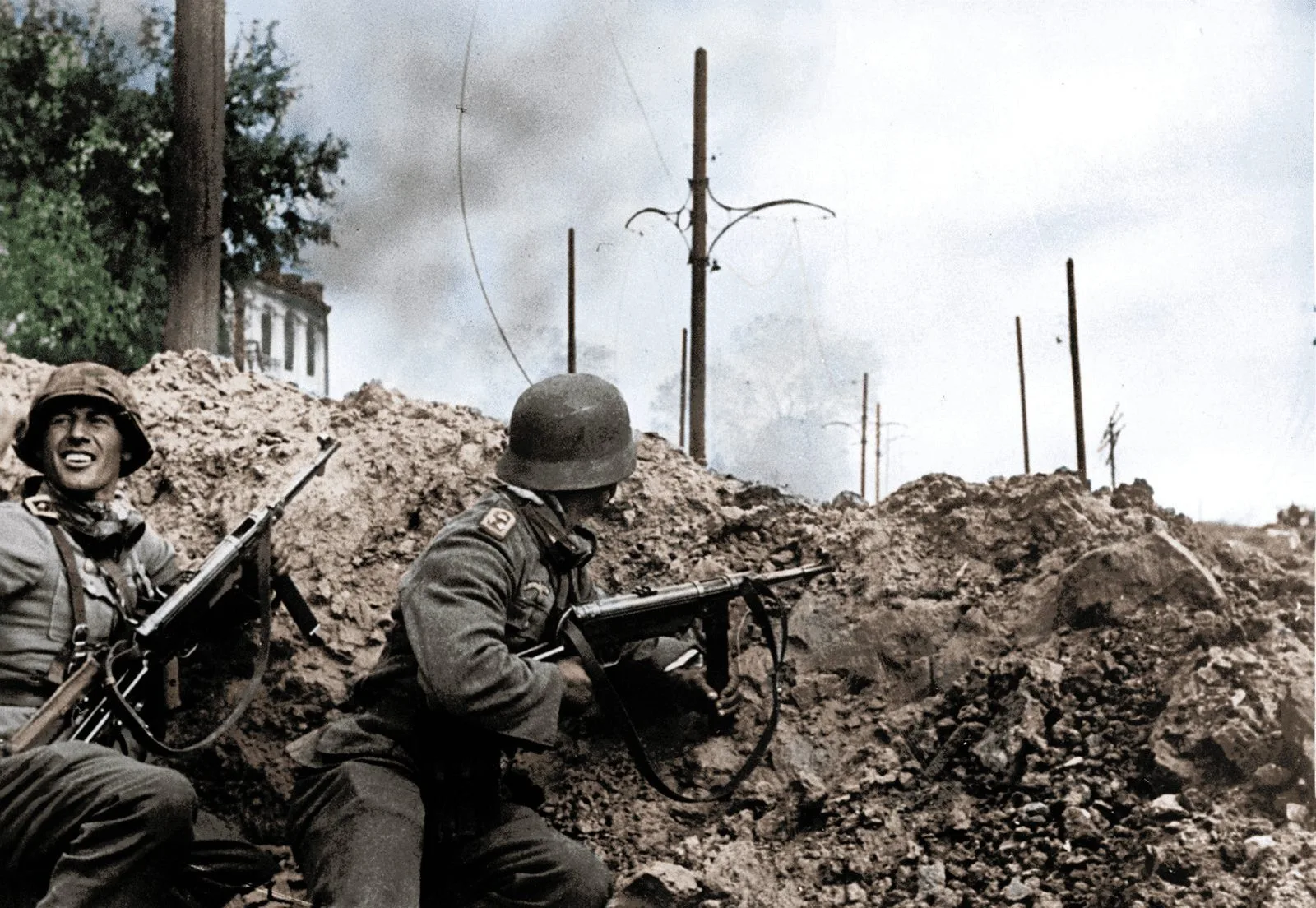

Everyone is familiar with the iconic battle that took place in Stalingrad during World War II. The German 6th Army. Field Marshal Friedrich Wilhelm Ernst Paulus, who owed his ultimate highest military rank solely to what was expected of him: never to give up and to take his own life with honor. And, the beginning of the end of World War II for Nazi Germany.
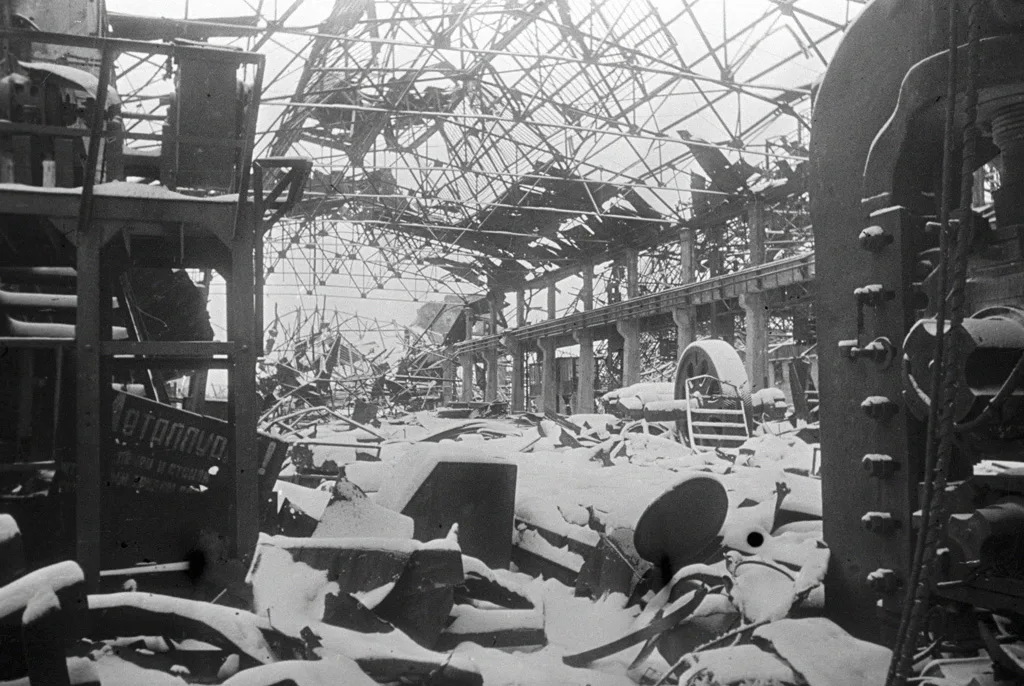
But within this iconic battle lies a story that is almost never told in detail. A story that exists in the shadow of the ever-popular Battle of Stalingrad. The scene of brutal close-quarters hand-to-hand combat. Around the Tractor Factory, the Barrikady Gun Factory, and the Red October Steel Plant. Germany wanted to destroy the 62nd Army of the Soviet Union. But what they encountered was fierce resistance from the Red Army. This is the story of the battle for the industrial district of Stalingrad.
Prelude to the fight for Stalingrad’s factory district
The Battle of Stalingrad was never primarily intended to recapture the city itself. It was part of a larger operation known as Unternehmen Fall Blau (Case Blue). This offensive was launched in the summer of 1942 and aimed to capture the oil fields in the Caucasus and to cut off the Volga River at Stalingrad.
It would eventually turn into an obsession for Hitler, driven primarily by the name of the city itself, Stalingrad. Driven by his sense of honor, prestige, and psychological factors, Hitler was determined to capture the city at any cost. He therefore ignored the warnings of his generals and prohibited any form of tactical withdrawal in and around the city. All of this would ultimately result in the complete defeat of Nazi Germany on the Eastern Front.
But before that could happen, another crucial battle was being fought within Stalingrad: the battle for the city’s industrial district.
The German advance toward the Volga River was precisely what led to Germany becoming embroiled in a battle for the city’s industrial district. In the summer of 1942, the German 6th Army of the Wehrmacht managed to advance rapidly toward Stalingrad. They attempted a swift advance to the river to disrupt the Red Army’s supply lines.
The Red Army’s response, specifically that of the 62nd Army, was to retreat into the city and fight building to building. These scenes could even result in both the Red Army and the Wehrmacht being present in a single building, leading to true hand-to-hand combat.
What was supposed to be a rapid advance into the city using the Blitzkrieg doctrine ended in a stalemate in the center of Stalingrad. The Wehrmacht was therefore forced to switch to a new strategy. Its sights were now set on the northern part of Stalingrad, the industrial zone.
The battle over the factories
It was September 27, 1942. The front line within Stalingrad was steadily shifting northward toward the city’s industrial zone. It took a ten-day advance against the Red Army’s fierce resistance. Yet the 51st Army Corps, Generalkommando LI. Armeekorps, of the German 6th Army, finally stood before Stalingrad’s three massive factories: the Tractor Factory, the Barrikady Gun Factory, and the Red October Steel Plant.
Around October 4, 1942, small German offensives broke out around the Tractor Factory. This factory was attacked by the German XIV Panzer Corps. Although it was not yet the full-scale assault, it did mark the beginning of a new front. The 6th Army, however, still had a few days to prepare for what would be the most relentless offensive of perhaps the entire Battle of Stalingrad. This offensive was launched on October 14, 1942. The worst day of the battle, according to “The Man of Iron Will,” Vasily Chuikov.
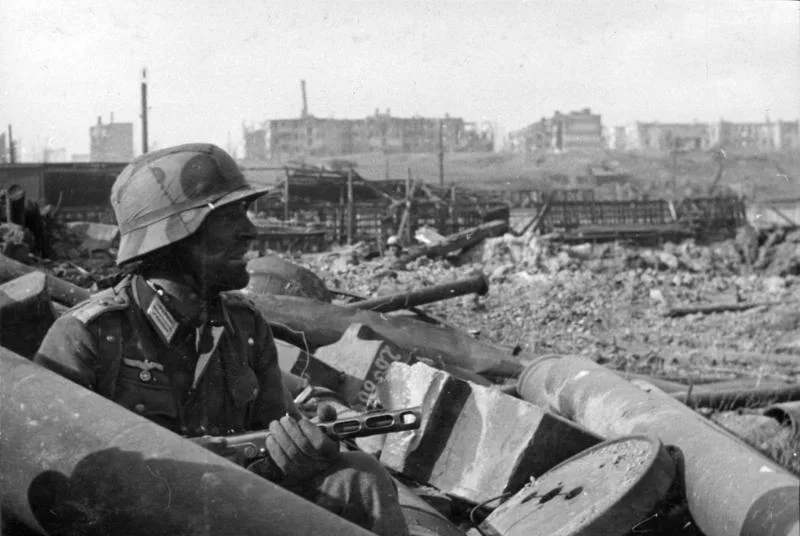
The 6th Army began with exceptionally intense shelling and bombing of the industrial district to clear the way for the first German assault troops. The main attack was directed at the Tractor Factory, led by the 14th Panzer Division and the 305th Infantry Division. Another attack was carried out simultaneously south of the massive factory, led by the 24th Panzer Division. British war correspondent Alexander Werth put it into perspective again in 1946. The Red Army’s Siberian Division faced enormous difficulties. Over the course of an entire month, the Wehrmacht carried out no fewer than 117 attacks on the regiments of the Siberian Division. And on a single day, as many as 23 attacks. Every trench, bunker, foxhole, and ruin in the factory district was converted into a fortified position with its own command and communication system. Chuikov described how the German Luftwaffe flew thousands of sorties and how the factory halls burned as the attack erupted. By noon on October 14, 1942, German tanks were already dangerously close to Chuikov’s command post.
Over the next two days, the German offensive intensified. The Luftwaffe continued to bomb and shell the industrial district. This resulted in the complete decimation of the staff of the Soviet 339th Regiment on October 16, 1942. The objective was clear. The Wehrmacht sought to weaken the Red Army’s defenses in the industrial district to such an extent that a repeat of the hand-to-hand combat, sometimes within the same building, would not occur. The battle increasingly shifted toward the Barrikady Gun Factory and the area leading to the Red October Steel Plant. German troops advanced along railroad tracks, streets, and through ruins caused by the bombings. That very afternoon, German troops even reached the Volga River through a narrow breach south of Derevenskaya Street. But the Red Army quickly regrouped there; through a counterattack, the situation along the river was restored in the Red Army’s favor. October 17 and 18, 1942, were two days that proved to be extremely costly for Germany. Losses amounted to nearly three infantry battalions and eighteen tanks in a single day.
Between October 19 and 22, 1942, however, the goal set by Germany seemed almost within reach. During these days, the Red Army primarily carried out diversionary attacks in other areas outside the factory district to give the defenses at the factories some breathing room. But at the same time, fresh German units also entered the fray, including the 79th Infantry Division. They advanced directly toward the Red October Steel Plant with tanks and aircraft. There is broad consensus that by October 22, 1942, the 6th Army already controlled most of the Red October Steel Plant and the Barrikady Gun Factory. However, this did not necessarily mean that the Red Army’s defenses had been decimated. Throughout the factory district, small defensive units were still entrenched in the ruins. Although the Red Army’s defenses in the factory district had indeed been weakened to a critical level, there was still no sign of a German breakthrough.
Friedrich Paulus, then still General der Panzertruppe, was tasked with forcing a breakthrough. A first attempt was made on October 24, 1942, but this initial attack was repelled by the Red Army. Nevertheless, the German second-line units broke through after that first attack. They captured the central and southwestern parts of the Barrikady Gun Factory. However, this was not the end. By evening, German troops had already reached a command post of a Red Army regiment. The situation there was so dire for the Red Army that field reports indicated a Red Army commander had even called in a Katyusha barrage on his own position to halt the German advance.
In the days that followed, fighting intensified across the entire factory district. New Soviet units, factory personnel, and marines continued to reinforce the sector’s defenses. Additional battalions from the Red Army’s 45th Rifle Division also arrived across the Volga. But the situation remained precarious. On October 26, 1942, the front line was in some places only 300 meters from the Volga. The Wehrmacht reached the Barrikady Gun Factory complexes the following day, resulting in the isolation of parts of the Red Army’s 138th Rifle Division. Chuikov was forced to hastily assemble an emergency force for a counterattack to restore the situation at the Barrikady Gun Factory.
By the end of October 1942, the Red Army was holding its ground along the river. German attacks on the Barrikady Gun Factory and the Red October Steel Plant continued. But the Red Army maintained the core of its defenses within the narrow strips along the Volga. Chuikov’s hastily assembled emergency force was ready for a counterattack even before the end of October 1942. This counterattack by the 45th Rifle Division was carried out between the Barrikady Gun Factory and the Red October Steel Plant. The result was a gain of around 100 meters of territory for the Red Army, during which, among other things, workshops and a storage area of the Red October Steel Plant were occupied. It may sound like a minor success, but in the Battle of Stalingrad and the Battle for the Factory District, the capture of a single building could mean the difference between defeat and victory.
The beginning of the end
Starting in November 1942, a clear turning point became apparent in the battle for the industrial district. After more than half a month of constant attacks by the Wehrmacht, the offensive came to an abrupt halt. This was the result of troop exhaustion and a shortage of ammunition. The last major attack on the Red October Steel Plant, which can be seen as a final act of desperation, was repelled by the Red Army. This marked the end of large-scale German offensives within the industrial district. What remained were small but fierce reconnaissance attacks aimed at finding weak spots in the defenses.
It seemed like the beginning of the end for the German offensive. But that turned out to be a false impression from November 5 through 9, 1942. The fighting remained deadly, even though the large-scale offensives had stopped. During this period, a command post of a Soviet regiment was destroyed, and a Soviet company, located just 200 meters from the river, was taken by surprise. However, at this location, nine survivors of the Soviet company managed to fight back and helped secure the northern river bridges. On November 9, 1942, other factors also came into play, namely the weather. Winter had set in, and the Volga became impassable for regular transport.
Mid-November 1942 thus marked the turning point. The Wehrmacht attempted to destroy the remaining Soviet bridgeheads. To this end, remnants of several infantry divisions, supported by engineers and Panther units, were assembled. The main attack was to take place between Lyudnikov and Gorishny, toward the Lazur chemical plant and the railway loop that the Soviets called “the tennis racket.” Across a front 300–600 meters wide, the Wehrmacht reached the Volga, but behind the Barrikady Gun Factory, the encircled 138th Rifle Division of the Red Army held its ground. November 12, 1942, was the day on which new artillery and infantry attacks were carried out by German troops. They fought near the oil drums on the riverbank, near the Red October Steel Plant, near the Barrikady Gun Factory, and on Mamayev Kurgan. As evening fell, so did the offensive. The attack had run its course, and the German battalions were spent.
In the final days of the battle for the factory district, around November 17, 1942, Germany attempted once again to break through at Spartakovka with its tanks. However, this effort was unsuccessful. The following day, Chuikov was informed that a major Red Army offensive was imminent. It was Operation Uranus. It marked the end of the battle for the factory district.
The battle for the industrial district was intended to bring about the Red Army’s defeat and, above all, to strike a personal blow against Stalin in the city that bore his name. The result, however, was the beginning of the end for the survival of the Third Reich.
Stalingrad, Hitler’s obsession. Stalingrad, Hitler’s beginning of the end.
WarCommons publishes long-form, source-driven analysis without ads or click incentives. If you found this feature valuable, consider supporting our research by subscribing to help fund future investigations.
By Nick Ravenshade — Author
Header image: German soldiers of the 24th Panzer Division in action during the fighting for the southern station of Stalingrad. September 15, 1942. Source: Wikimedia Commons. CC-BY-2.0.



.png)