WARCOMMONS IS NOW ON ANDROID
Explore WWII history and stay connected with the community on the go. GET THE APP →

In the final days of the war, Wehrmacht soldiers, American tankers, and French prisoners became allies to defend a Tyrolean castle against the SS.
By May 1945, the war was still fought fiercely. The Axis versus the Allies. What’s hard to imagine at that point is, for example, that the American soldiers could fight alongside the Wehrmacht or the Waffen-SS. Or even that other allied forces would do something like that. It’s a wild thought, but at WarCommons we don’t write about what-ifs. That means that this is exactly what happened. And it happened on May 5, 1945.
The Last Days of Itter Castle
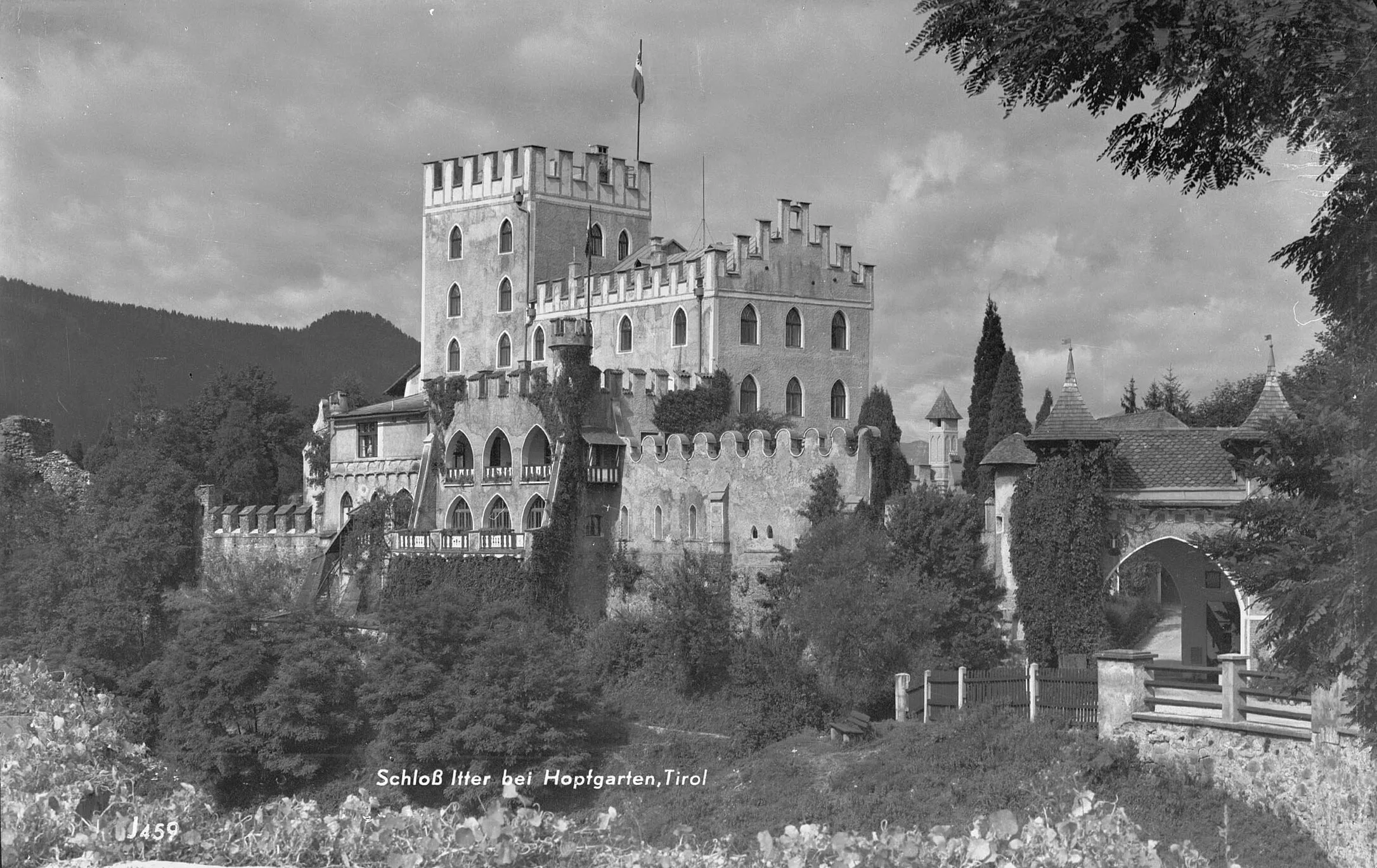
In Western Austria there is a village named Itter. In that village lay a castle with the name: Itter Castle. After the 1938 Anschluss was finalized, Nazi Germany’s government actually leased this castle in the late 1930s from its owner. The owner of Itter Castle was Franz Grüner. Nazi Germany’s government used this location initially for meetings and retreats. Later it was used as the headquarters for the German Association for Combating the Dangers of Tobacco.
It wasn’t until some years later, in 1943, that the SS de facto took over this castle. By the orders of Heinrich Himmler himself, SS Lieutenant General Oswald Pohl seized the castle from Grüner on February 7, 1943. This meant the SS bypassed the civilian lease agreement that Nazi Germany’s government had with Grüner. Apparently the SS didn’t want to pay him like the government had done. In practice, the German state already controlled the castle. But the SS, the state within a state, had other plans. By seizing the castle they didn’t pay a dime to Grüner and they started using the castle for their own intended purposes. The castle was no longer a location to hold meetings and retreats, from that moment on the castle was a prison. A high-security prison for mainly French VIPs, and the transformation from a simple retreat to a prison facility was completed by April 25, 1943. It was therefore also brought under the administration of the Dachau concentration camp.
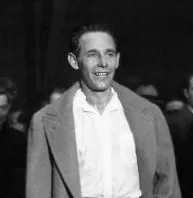
The people who were classified as French VIPs were high-profile prisoners who were of significant value to Nazi Germany. To give an example, this included prisoners like the former prime ministers Édouard Daladier and Paul Reynaud. But also people like Jean Borotra, a tennis player, alongside the likes of former commanders-in-chief and French resistance leaders like François de La Rocque. Besides imprisoning French VIPs, the castle also held a number of Eastern European prisoners detached from Dachau. They were mainly present to do maintenance and other menial work.
The Betrayal of the Prison Commander
One of the Eastern European prisoners who was brought to Itter Castle to work as a handyman was Zvonimir Čučković. He was an imprisoned Yugoslav communist and resistance member as part of the Yugoslav Partisans led by Josip Broz Tito. It was May 2, 1945 when SS-Obersturmbannführer Eduard Weiter, the commandant of Dachau, died in suspicious circumstances at the castle. To this day it cannot be factually stated how the commandant of Dachau died. Most of the historical sources state that the commandant shot himself. But other stories suggest that he was executed by an SS officer for defeatism.
When the prison’s commander Sebastian Wimmer learned of this suspicious death, he became very nervous. He too couldn’t factually establish the cause of death of the commandant. Maybe you could say that he became scared. And if he wasn’t scared at that exact time, he would be just a little later.
Wimmer stayed at his post at the prison. On the early morning of May 3, 1945 Čučković asked Wimmer for permission to leave the prison briefly. Čučković told him that he needed to run a local errand and would soon return to the prison. Wimmer granted Čučković permission to leave the prison. So he set off on his journey by bicycle, to run the local errand. Or was that really where he was going?
Naturally the hours passed. The errand wasn’t supposed to be all that far from the castle, but there was still no sign of Čučković. That afternoon Wimmer realized he had been tricked. It is very likely that Wimmer figured out that Čučković left the prison to find the advancing American troops to report the location of the VIP prison. With the suspicious death of the commandant of Dachau just a day earlier, Wimmer probably started fearing for his own life. Because as it turned out, his educated guess was correct. What followed was perhaps an unprecedented action: Wimmer decided to save himself and by doing so, he abandoned his post.
One Handyman and His Local Errand
In the meantime Čučković continued his journey towards Innsbruck. He was partly forced to do so because the town of Wörgl was still occupied by German troops. Wörgl lies 8 km / 5 mi down the mountains surrounding Itter Castle. Čučković therefore rode his bicycle along the relatively flat Inn River valley path to reach Innsbruck. You may think that Čučković was home free from that moment on. But nothing was further from the truth. We have to remember that he was still relatively deep inside Nazi Germany occupied territory. Naturally he would encounter German checkpoints, and he did. He actually had to talk his way through two German checkpoints along the road. But still he succeeded in his endeavor and continued his journey to Innsbruck by bicycle.
When nightfall came that same day the rest of the SS-Totenkopfverbände (the Death’s Head Guards) also abandoned the castle, because they realized their commander was gone. It didn’t take long before the French prisoners also realized that they were suddenly unsupervised. They started raiding the weapons rooms of the prison and started locking down the castle. They also didn’t immediately feel like they were scot-free, because they were starting to fear an attack by any of the roaming parties of Waffen-SS troops that were in fact still loyal to the Nazi regime.
In the late evening of May 3, 1945 Čučković finally reached Innsbruck, meaning he had completed a staggering 64 km / 39 mi bicycle trip. However, the more important thing was what Čučković brought with him on his journey. A distress letter to the American 103rd Infantry Division. The only remaining issue for Čučković was where to exactly locate the advancing American troops. It’s not like he could just walk right into a US forward base of operations.
At the northern outskirts of Innsbruck Čučković ran into advancing American troops from the 409th Infantry Regiment of the 103rd Infantry Division. Even if those were friendly troops to him, he had to be extremely careful. These American troops were on high alert advancing through Austria, combat ready. Čučković rolled up on a bicycle, exhausted from the 64 km / 39 mi journey, waving his hands frantically while holding a piece of paper. The American troops took the piece of paper from his hands, it was the distress letter meant for the American troops. It’s safe to say the American troops immediately realized how important this was. Because the letter also stated that the prison held the former Prime Ministers of France. The American troops passed this information up the chain of command, ultimately reaching the responsible generals.
Now the American troops were aware, and they set out to act on the information quickly.
The Panic Inside the Prison
It’s remarkable that Čučković actually made it to Innsbruck, 64 km/ 39 mi from the castle, just by bicycle. Saved at last, you might think. There was just one small issue. Nobody at the castle even knew if Čučković was successful in his endeavor. They didn’t know if the American troops were on their way, nor did they know if Čučković actually made it to any allied troops. He could’ve been caught or killed passing through one of the checkpoints. Even if the end of the war was very near, it was far from safe.
Hour after hour passed by with no sign of Čučković. The French prisoners were under extreme pressure, as they de facto took over the whole prison. They were sitting ducks for the German troops still willing and capable of recapturing the prison. It’s not a stretch to think that even paranoia began to set in amongst the French prisoners. They became more and more certain that Čučković had failed his plan.
The prison’s cook, Andreas Krobot, volunteered to take another bicycle and travel to Wörgl at midday on May 4, 1945. They hoped that Krobot could reach help there as well. He set off on his bicycle trip, with him he carried a note similar to the one that Čučković had. Krobot reached Wörgl and managed to contact the local Austrian resistance. Even though the town was just recently abandoned by the Wehrmacht, it wasn’t safe at all. The town had just been reoccupied by roaming Waffen-SS troops. After making contact with the local resistance, Krobot was taken to Major Josef Gangl, who indeed was a Wehrmacht officer. Gangl was the commander of the remaining Wehrmacht soldiers who had defied an order to retreat. Instead of retreating, Gangl and his remaining troops joined forces with the local resistance, which was led by Rupert Hagleitner. It’s safe to say that this was also a very unprecedented action.
The Final Moves
Gangl wanted to stay in the town of Wörgl with his remaining defecting Wehrmacht units to protect the local residents. The Waffen-SS troops were still a very large threat for the local residents as well. They would murder innocent people, there was no question about it. Gangl was holding his position in the town, because he hoped that the advancing American troops would reach the town soon. He wanted to surrender to the American troops once they reached Wörgl. But Krobot disturbed those plans. It seemed that there wasn’t much time left. At least not enough time to sit and wait for the American troops passively. Gangl now had to approach the advancing American troops himself, under a white flag, asking for their help. He was fully dependent on what the American troops would decide to do with him and his information.
Heroic as it might have been, Gangl set out to nothing short of a suicide mission. He took a Kübelwagen bearing a large white flag and set off to Kufstein, Austria. He knew the advancing American troops were in the vicinity of Kufstein.
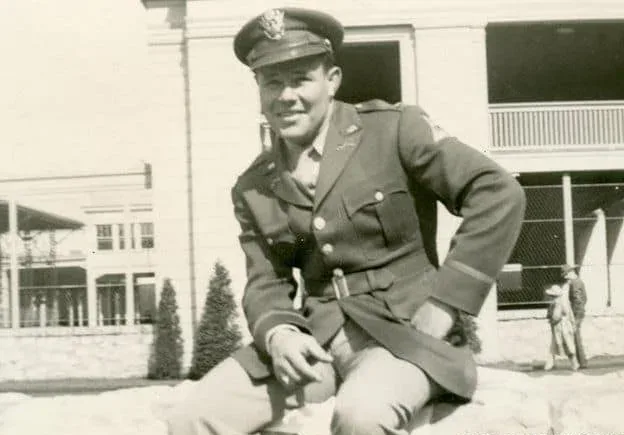
In the meantime a reconnaissance unit consisting of four Sherman tanks, from the 23rd Tank Battalion of the 12th Armored Division, under the command of First Lieutenant John C. “Jack” Lee Jr. had reached the town of Kufstein. In Kufstein’s town square the four Sherman tanks stood idling while waiting to be relieved by the 36th Infantry Division. It happened to be that Gangl arrived at the town square before the 36th Infantry Division. Gangl proceeded to surrender to the troops of First Lieutenant Lee. But he didn’t come empty-handed, he approached Lee hat in hand, proposing an alliance to defend Itter Castle.
The Road to Itter Castle
Gangl continued to explain what crisis was still taking place at Itter Castle. After hearing what Gangl had to say, Lee didn’t even give it a second thought. He climbed aboard his Sherman tank, the Besotten Jenny, and used the radio to contact his battalion commander at headquarters. It seemed that the battalion commander had the same attitude as Lee. There was no bureaucratic wait involved once Lee had passed on the shocking information to his commander. The permission to execute the rescue mission was given immediately and Lee volunteered to lead the rescue mission with his newly found Wehrmacht allies.
Lee and Gangl proceeded to travel near the castle, stopping a ways short to do a brief personal reconnaissance of the situation in Gangl’s Kübelwagen. Lee made sure to leave two of his tanks behind before requisitioning five more from the recently arrived 142nd Infantry Regiment of the 36th Infantry Division, together with the infantry regiment’s supporting infantry. But soon there seemed to be one issue that could’ve ruined the Allies’ plans. The Allied troops, including the reinforcements, had to cross a rickety wooden bridge over the Inn River, just outside the town of Wörgl. A few troops, including a few vehicles, managed to cross the bridge before the timber structures began to groan and fracture under the immense weight. Lee realized that the bridge would completely collapse if they all tried to cross this flimsy bridge.
The First Lieutenant made a quick decision and ordered the heavy infantry trucks and the additional tanks to turn back. Lee was left with only two Sherman tanks, his own Besotten Jenny and the Boche Buster. They pushed past Wörgl and approached the base of the mountain where the road lay leading up to Itter village. But then he encountered another bridge he had to cross. Where the flimsy bridge crossed a river, this second bridge crossed a deep ravine. And it also turned out that this bridge had already been wired with explosives by the Waffen-SS demolition squads. Their objective was to cut off the castle so that the newly found Allies couldn’t reach it.
Luckily Gangl’s Wehrmacht troops were successful in disarming these explosives. But the problem was that this didn’t mean that the danger had been averted, quite the opposite was true. The Waffen-SS forces were still not beaten and would surely make another effort in trying to blow up the bridge. Lee decided that he had to protect this bridge at all cost, as it was his only viable escape route. So Lee ordered the second Sherman tank, Boche Buster, to stay behind and guard the bridge with its life.
After First Lieutenant Lee finally crested the hill to the castle gates with Major Gangl, the rescue force was reduced to only a single Sherman tank (Besotten Jenny), 14 American soldiers, a truck driver, a truck carrying ten German Wehrmacht artillerymen, and Major Gangl. It was the final home stretch, with the prison in their sights. They just had to follow the winding mountain dirt road straight to the Itter Castle.
The First Encounter
All was going well for the German Major and the American First Lieutenant. It was just approximately 6 km / 4 mi before reaching the castle gates that they both figured out, or at least sensed, that they were driving straight into a hornet’s nest. The Besotten Jenny and the German cargo truck rounded a bend on the winding dirt road leading to the castle. Without warning they stumbled upon a roadblock. That would’ve been great if the obstructions were being set up by the French prisoners that had taken over the prison. Except for the fact that the reality was very different. The roadblock was being set up by a group of fanatical and heavily armed Waffen-SS troops, trying to cut off the access to the castle.
It may sound cliché, but Lee had just two options: fight or flight. But only one choice would be the correct one if he wanted the rescue mission to succeed. If he chose to stop and try to negotiate with the remaining Waffen-SS troops, his only tank would be a massive open target for the heavily armed enemy troops. Luckily, Lee was very decisive in his actions. That decisive action meant that the Besotten Jenny was ordered to push straight forward with the tank’s heavy .50-caliber machine gun opening fire on the roadblock. It set off the first battle that the Wehrmacht and the American army would fight together, side-by-side, as Allies.
The American troops riding on the back of the Sherman tank jumped off and were accompanied by the German artillerymen that jumped from their truck. They took cover and started laying down a fierce suppressive fire. The Waffen-SS was quickly overrun, because they were caught completely off guard by the Allied attack force. They probably even had no clue what was transpiring as they were surely also seeing actual Wehrmacht troops opening fire on them. Their own fellow countrymen, their own brothers in arms. It’s like a civil war on a miniature scale.
Because the Waffen-SS troops were caught that much off guard, they didn’t even try to fight back. They essentially panicked and abandoned the roadblock completely, before ultimately fleeing into the surrounding forest. Because of Lee’s decisive actions, the Allies could now continue, making their way to Itter Castle.
The Battle of Castle Itter
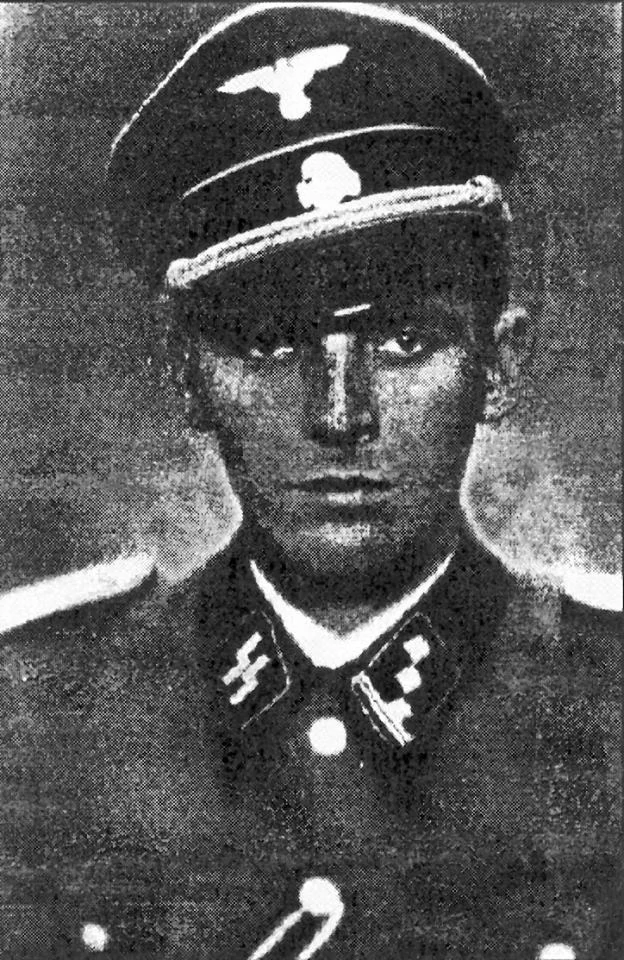
During this time within the chain of events, there was still a Waffen-SS officer present at the prison. His name was Kurt-Siegfried Schrader. The French prisoners became successful in befriending him while he was recovering from his wounds.
Schrader was a highly decorated Waffen-SS captain. He was heavily wounded during combat on the Normandy front and was subsequently sent to the village of Itter to recover from his injuries. He even became the recipient of the Verwundetenabzeichen in schwarz, or Wound Badge in Black, that could only be awarded for sustaining one or two wounds from hostile action. Whilst recovering in the village of Itter, he had frequently visited the castle over the previous months. During his visits some of the high-profile French prisoners befriended him.
Following his injuries, Schrader was already becoming disillusioned with the Nazi regime. The French prisoners knew this, and it didn’t take a lot of effort to befriend him. This proved to be a crucial aspect. When the regular SS prison guards panicked and abandoned the castle on the night of May 3, 1945, the French prisoners realized they were becoming sitting ducks. They decided to send a message down to the village of Itter to find Schrader, out of pure desperation. The befriended Schrader seemed to be the prisoner’s only hope left.
In their message to Schrader the French prisoners conveyed that the guards had fled and that they were sure the fanatical Waffen-SS troops would soon arrive at the castle to execute the prisoners. They pleaded with Schrader to come and help them, because they had no idea how to defend the castle. Luckily for the prisoners Schrader seemed to have absolutely no sympathy left for the Nazi regime, he almost immediately agreed. He packed his things, took his wife and two young daughters with him for their own safety, and made his way up to the castle.
Once he arrived, there was no better person to take charge of the defense. Schrader was a trained, battle-hardened officer, and the older French politicians immediately deferred to his command. There was no question about it, Schrader agreed.
The Arrival of the Anglo-German Allies
Lee finally arrived at the castle with his Wehrmacht allies. The scene inside the prison’s courtyard that followed seemed like something that could only be thought up in a movie.
The Besotten Jenny spearheaded the rescue force, and they halted at the prison’s courtyard. Greeting them were not terrified and desperate French prisoners. Instead Lee and Gangl were greeted by nothing short of a welcoming committee of elite French politicians, a handful of anti-Nazi Austrian resistance fighters, and a decorated Waffen-SS captain who had spent the afternoon mapping out the castle’s defense slits. Needless to say, Lee and his crew were welcomed warmly. But they also quickly realized that the rescue force was just one tank and less than 30 troops in total.
It was surely a disappointment to them. Still there was no other choice, nor time to be upset about the situation. First Lieutenant Lee placed all the men under his command and spread out the defenses throughout the castle. His only Sherman tank that he brought, Besotten Jenny, was placed at the main entrance.
The Attack on Itter Castle
It didn’t take long after the arrival of the Allied rescue force that a force of approximately 100 to 150 Waffen-SS soldiers, led by Oberführer Georg Bochmann, decided to attack the castle. They had been occupying some of the hills near the town of Itter. Meanwhile Lee had ordered the prisoners to hide inside the castle, but they refused. They, including the former French prime ministers and generals, also took up arms and wanted to assist in the castle’s defense.
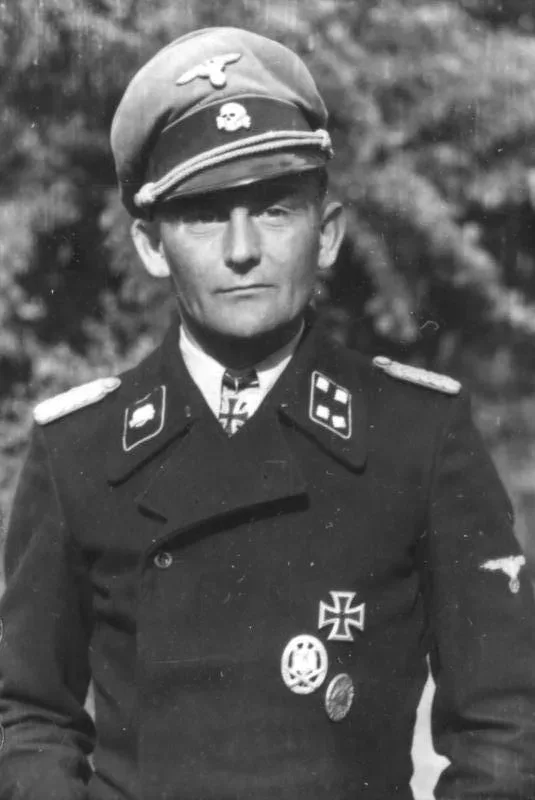
During the night of May 4, 1945, Bochmann’s Waffen-SS Soldiers surrounded the castle area and subsequently sent out a small reconnaissance team to probe the castle’s defenses and test its weaknesses. During the probing actions, the Waffen-SS soldiers fired upon the castle. They were met with an almost immediate response. The castle defenders that were positioned on the walls and at the main gate, including the Sherman tank, immediately started firing back. Still there was no full blown attack on the castle. The defenders kept getting harried through the night, by hit-and-run sniper fire and sporadic machine gun bursts to keep the defenders awake, to trigger panic responses, and to keep them revealing their defensive weapon positions.
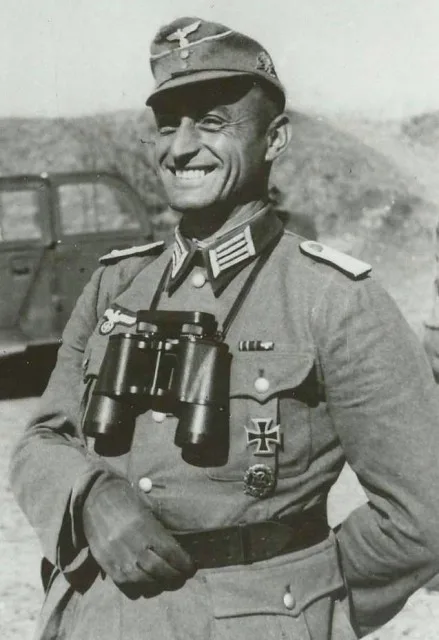
Lee, Gangl, and Schrader knew what was coming. They were battle-hardened and had combat experience. They knew the main assault would soon follow. They managed to send out one last call for help, right before the communications were completely cut off. Major Gangl managed to call Alois Mayr, an Austrian resistance leader in the nearby town of Wörgl. Gangl begged for backup as the defenders were seriously undermanned for a castle of its size. Luckily Mayr could spare some of his people. The bad news was, he could only spare three of his people. Two Wehrmacht soldiers and one teenage Austrian resistance member named Hans Waltl made up the three men backup team. They did manage to reach the castle by driving through enemy lines to reach it.
At the dawn of May 5, 1945, Bochmann decided to launch his main heavy assault at the castle. The castle was being pummeled by machine-gun fire and anti-aircraft artillery shells. The attack was absolutely intense. Lee and his defenders took cover and started laying defensive fire. The Sherman tank was vital at this point, as it provided vital machine-gun support against the attackers. The attack proved to be extremely vicious as the stones of the castle began to crumble. Bricks flew across the inside of the castle, even hitting and injuring Schrader’s wife.
But soon more desperation would set in. Lee managed to establish radio contact with the American US 142nd Infantry Regiment, sending out a distress signal to the approaching troops.
Lee yelled into the radio: “They’re shelling the bejabers out of us. Listen, better get some doughs [GIs] here right away.”
He managed to establish a radio communications line through the town’s civilian infrastructure. But right when he was talking to the 142nd Infantry Regiment, a Waffen-SS artillery shell hit the castle, knocking out the lines. The telephone inside the castle went completely dead.
The radio inside the Sherman tank was still not working and one American radioman was still trying to take the radio apparatus apart to try and fix it. During all of this time he remained inside the Besotten Jenny. The Sherman tank, which was undoubtedly vital in the defense, was all of a sudden struck by a Waffen-SS 88mm anti-tank gun from across the valley. The Besotten Jenny was no more. Inside of the tank was only that one American radioman who was trying to fix the faulty radio. By nothing short of a miracle, the radioman managed to escape the wreckage that was engulfed in flames, making it out uninjured.
Luckily the 142nd Infantry Regiment was already on their way following Lee’s distress call. Still there was a problem. Lee didn’t manage to give the 142nd Infantry Regiment any tactical data at all, for instance: how many Waffen-SS troops there were, where the anti-tank guns were hiding, or what roads leading up to the castle were blocked. The 142nd Infantry Regiment was essentially driving blindly into a massive Waffen-SS ambush.
The 142nd Infantry Regiment Relief Force
Out of desperation, a hero would rise. And that hero was the imprisoned tennis star Jean Borotra who volunteered to leap the castle’s 4.5 meter / 15 foot tall wall even after the tank was destroyed. He would set out to physically intercept the approaching 142nd Infantry Regiment to provide them with the map coordinates to survive the approach on the castle. Borotra disguised himself as an Austrian peasant and made his way to the approaching American troops. He still had to bypass the Waffen-SS position along his route. He managed to successfully do this by pretending to forage for mushrooms. The intense journey ended with him reaching the approaching 142nd Infantry Regiment. He delivered the tactical information to the troops and requested an American military uniform for himself. He joined the 2nd Battalion of the 142nd Infantry Regiment as they hastily continued their way to the prison, just before its defenders fired their last rounds of ammunition.
It was thanks to the tactical map coordinates that the 142nd Infantry Regiment could easily crush and bypass the roadside Waffen-SS checkpoints that were waiting to ambush them. It was looking more and more like the relief force would be successful. But inside the castle the situation turned critical. It was no longer just a battle against the Waffen-SS, it also became a battle against time. The Waffen-SS became aware of the approaching American relief force, so they put together one final offensive action, one final frantic push to storm the castle gates. Snipers took aim at the castle from the surrounding hills and began firing deadly and precise fire down onto the courtyard. It wasn’t long before real tragedy struck.
Inside the castle it was chaos that was induced by adrenalin soaring through the bodies of the men. It got the better of former French Prime Minister Paul Reynaud. He foolishly rushed out into the open courtyard to get a better shot at the enemy. The battle hardened Major Gangl immediately noticed that Reynaud was very close to being shot by a sniper. As the Waffen-SS sniper took aim at Reynaud, Gangl lunged forward and forcefully shoved Reynaud out of harm’s way. Not even a second later the sniper’s bullet struck Gangl directly in the head. Gangl died instantly. Collapsing lifelessly on the cold stones of the castle’s courtyard. Gangl made the ultimate sacrifice. Not for the Wehrmacht. Not for Germany. Not for his fellow citizens. But just for one brother in arms.
What makes it even more tragic is that just minutes later, the relief force arrived. The Waffen-SS was completely focused on storming the castle gates and breaching the lower walls. They were in fact becoming the sitting ducks, getting caught in the open on the slopes and hills surrounding the castle. They were totally blindsided as the 142nd Infantry Regiment relief force rolled up behind them, laying down heavy machine-gun fire and firing tank shells. Don’t forget that this Waffen-SS force consisted of highly trained, fanatical, and experienced tactical fighters. They knew they were now inside a total encirclement. The Waffen-SS forces started to split. Many of them realized that they were entirely outmatched and dropped their weapons on the spot to surrender. Others decided to break rank and stopped firing, before rapidly scattering into the surrounding woods to flee the advancing American 142nd Infantry Regiment.
At approximately 16:00 hours on May 5, 1945 the Battle of Castle Itter was officially over, with approximately 100 Waffen-SS soldiers becoming prisoners of war and one castle defender finding his ultimate fate. The relief force made its way to the castle, where they were greeted by Lee. The First Lieutenant was exhausted, covered in soot, and chewing calmly on a cigar stub. He looked at his rescuers and greeted them with his one famous sentence: “What took you so long?”
Free at Last
Out of all the castle’s defenders, Gangl was the only defender killed during the entire battle. Struck by a 7.92x57mm Mauser round, dying on impact. He made the ultimate sacrifice and lives on in spirit and collective memory as an Austrian national hero. A street in Wörgl was also named after him. Even though he was the only defender to be killed, four other defenders were wounded.
After the Battle of Castle Itter, First Lieutenant Lee was promoted to Captain and even received the Distinguished Service Cross. He survived the war and died in 1973.
Kurt-Siegfried Schrader assisted in the defense of the castle, also joining forces with the American troops and the French prisoners. In the end, his actions weren’t met with gratitude. Schrader was sentenced to two-years in prison after he was arrested and charged by the US forces for his former affiliation with the Nazi party. His sentence was shortened in the end, because of his efforts at Itter Castle. He died in 1993.
Still, the death of Gangl had a bittersweet taste to it, as the battle was fought only five days after Hitler had committed suicide. Just two days before Germany’s new temporary leadership signed its unconditional surrender.
By all means, this was a battle that could’ve been avoided, just days shy of the end of the war in Europe. Even if this may be true, in the end it became one of the most iconic and maybe even one of the most forgotten battles of World War II. The only battle where members of the Wehrmacht, Waffen-SS, United States Army, prisoners of war, and resistance members would join forces, become brothers in arms, and fight against the still ever so dangerous Waffen-SS.
Continue the discussion
If you had been one of the French prisoners inside that castle, would you have trusted a Waffen-SS officer to help defend you? And what do you think it took for Wehrmacht soldiers to turn their guns on their own side?
Join Field Reserve for free and make your case inside the WarCommons community at our Field Headquarters.
WarCommons publishes long-form, source-driven World War II analysis without ads or sponsored content. If you found this article valuable, consider supporting independent research by joining Field Command.
By Nick Ravenshade — Founder & Editorial Director, WarCommons
Header image: Itter Castle. Between 1971 and 1978. Source: Wikimedia Commons / Sammlung Risch-Lau, Vorarlberger Landesbibliothek. CC BY 4.0.