
WARCOMMONS IS NOW ON ANDROID
Explore WWII history and stay connected with the community on the go. GET THE APP →
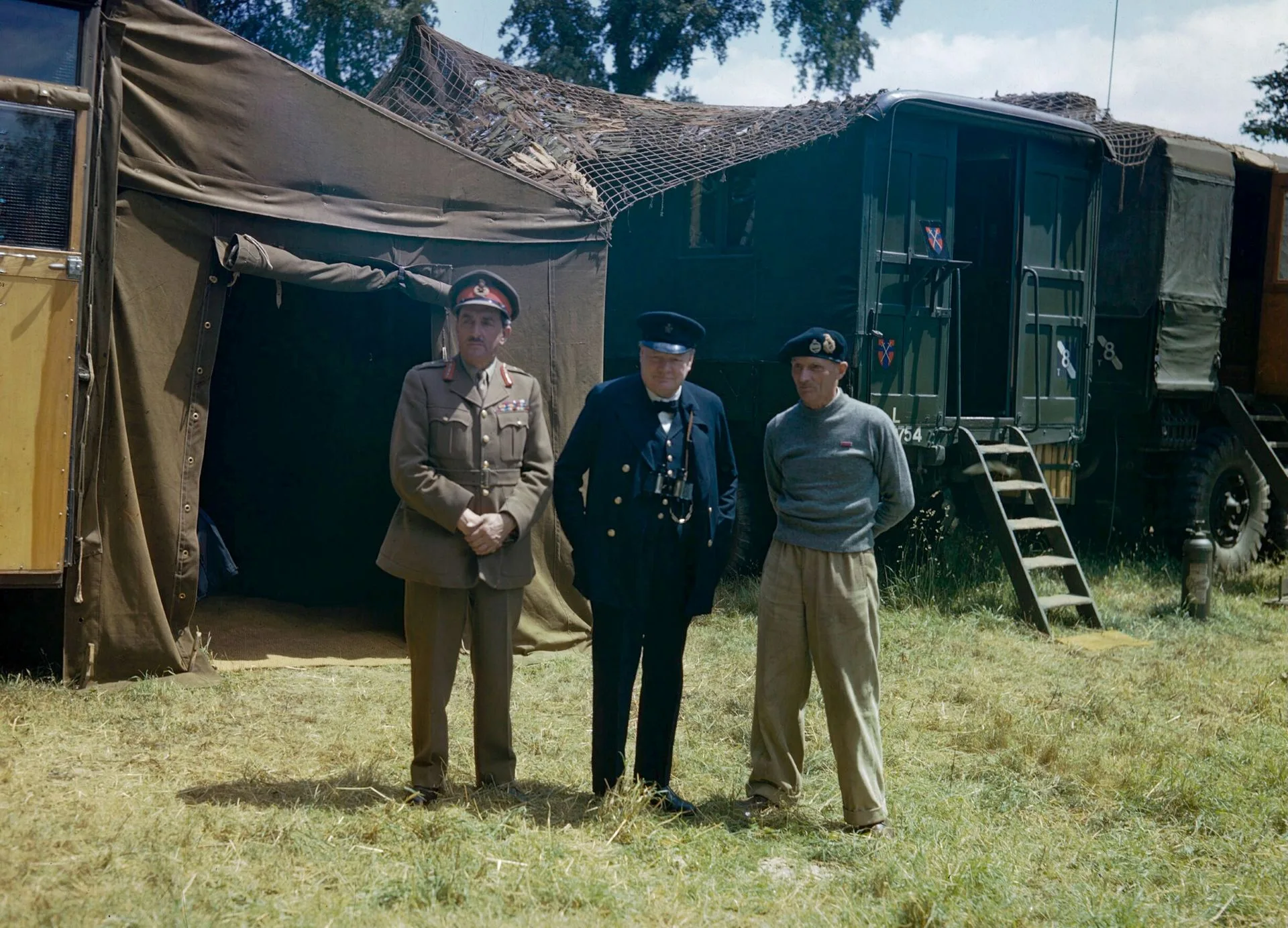

In 1944, a Zionist underground group planned to kill Britain’s wartime hero, and MI5 kept the file secret for nearly 70 years.
There are many controversial characters from World War II. Some are very evident while others are the center of intense debate. Many automatically view certain victors of the war as inherently good people, while the losers of the war are seen as inherently bad people. But how do we know that Churchill was an inherently good guy and that the Emperor Hirohito was an inherently bad guy? Is this even true? Maybe Churchill was also a bad guy. There was certainly at least one person that did think this was true.
An Enemy in the Shadow of World War II
Leaders of their respective countries are especially likely to become the target of a murder plot. With some World War II leaders it’s very clear why that was the case. The numerous plots against Hitler’s life need little explanation. Stalin certainly thought his whole army was plotting to murder him when he purged the top leadership, high-ranking generals, and tens of thousands of officers in the Red Army during the Great Purge from 1937 to 1938.
Sometimes you have to wait 70 years before receiving some new insights on the war. In this case it was 2011, when MI5 declassified some peculiar files. These files revealed that the radical pre-state Zionist underground group Lehi, also known as the Stern Gang, plotted to assassinate Churchill in 1944. This idea originated from Eliyahu Bet-Zuri in 1944. He was one of the most prominent members of the Lehi group. And let there be no mistake about it, this was not some small-time underground group. The Lehi group was already fighting a bloody terrorist war against the British armed forces in Palestine. Their ultimate goal was to establish a Jewish state. Lehi viewed the British leadership as one of the obstacles to a Jewish state.
Rest assured it’s not something that was entirely unknown before 2011. But at least it was not widely known to the general public. Of course, the British government had known.
In 1940 Lehi was founded by Avraham Stern. Lehi stood for Lohamei Herut Israel. It was an extremist splinter group from the mainstream Jewish paramilitary organization, the Irgun. But to the British it was better known as the so-called Stern Gang. Even in 1940 it was clear what the Stern Gang was after. They had openly stated that violence and political assassinations were necessary to force the British withdrawal from Palestine. This of course prompted certain reactions from the British.
These reactions culminated in the British police actually tracking Stern down in Tel Aviv. Once they had found him, they shot him. Stern died on February 12, 1942, and the leadership of the Stern Gang was passed on to a triumvirate. This triumvirate also included the future Israeli Prime Minister Yitzhak Shamir. Following the death of Stern the group’s terrorist and militant actions intensified. They set their sights on the highest ranking British official in the Middle East region.
High Profile Assassination
No, of course it wasn’t Churchill. It was November 6, 1944, in Cairo, Egypt. Two Lehi operatives named Eliyahu Bet-Zuri and Eliyahu Hakim made their way to Walter Guinness, better known as Lord Moyne. Walter Guinness was the British Minister Resident in the Middle East. He was also a close personal friend of Churchill. The Lehi operatives tracked down the highest ranking British official in the region and assassinated him. He died that same day.
Yitzhak Shamir later claimed that Lord Moyne was the target of the assassination because of his support for a Middle Eastern Arab Federation. He also said that Lord Moyne had supported anti-Semitic lectures in which Arabs were held to be racially superior to Jews. Of course Churchill was outraged and the assassination itself caused shockwaves through the British government. Luckily, the two assassins were captured and arrested not long after the assassination. When they stood trial, they both used it as a platform to spread their political message. Since neither man contested his guilt, and even proudly confessed to the assassination, both were found guilty in a court of law. Their sentence was clear: death. They were both subsequently executed by hanging on March 22, 1945.
It wasn’t until 1975 that their bodies were returned to Israel through Egypt. Egypt had exchanged the bodies of the two assassins for 20 Arab prisoners. Even after all of those years, Eliyahu Bet-Zuri and Eliyahu Hakim were ultimately given a state funeral in Israel. The country didn’t even stop honoring them after this. In 1982, a commemorative stamp sheet was issued honoring the Olei Hagardom and other fallen underground fighters. It included Eliyahu Bet-Zuri and Eliyahu Hakim in a souvenir sheet named “Martyrs of the struggle for Israel’s independence.”
The Final Moves
After the assassination, in April 1945, the British authorities managed to arrest another important Lehi member: Rafael Sawovsky. During the interrogation, Sawovsky started confessing details regarding Bet-Zuri’s proposed mission against Churchill. Major James Robertson of MI5 was also present, and he formally documented the warning. It turned out that Eliyahu Bet-Zuri had proposed a plan to assassinate high-ranking British political figures, including Churchill, and suggested sending emissaries to London for that purpose. From the declassified MI5 documents, it was clear that Eliyahu Bet-Zuri had stated this before he left for Cairo to assassinate Lord Moyne. Following Robertson’s memo, MI5 promptly proceeded to raise the security levels around Churchill.
This chain of events never unfolded. After Eliyahu Bet-Zuri and Eliyahu Hakim murdered Lord Moyne, they almost instantly found themselves being chased by an Egyptian police officer on a motorcycle. The police officer managed to slightly wound Eliyahu Bet-Zuri before arresting both men on the spot.
Just a month later, in May 1945, Germany surrendered. The war in Europe officially ended with Victory in Europe Day. However, the same couldn’t yet be said for the security threat around Churchill. It was still assumed that Lehi was continuing to plan the assassination. But it seemed like the threat would start to resolve itself.
In July 1945 it wasn’t the assassination plot that unraveled, it was Churchill’s political career. While the ballot box ended his high-profile political career, it probably also ended the assassination threat against him. In a shocking landslide election, the British public voted Churchill and his Conservative Party out of office. Clement Attlee became the new Prime Minister. Churchill turned from World War II victor to a mere private citizen. Now that he was no longer dictating British policy in Palestine, Lehi saw no reason to continue its assassination plot against him
Even though Lehi eventually managed to smuggle terror cells into London just a year later, their bombs had different names written on them.
Continue the discussion
Do you think Lehi’s targeting of Lord Moyne, and the plan to go after Churchill next, was a justified act of resistance against colonial rule, or plain terrorism? Does the answer change depending on who’s telling the story?
Join Field Reserve for free and make your case inside the WarCommons community at our Field Headquarters.
WarCommons publishes long-form, source-driven World War II analysis without ads or sponsored content. If you found this article valuable, consider supporting independent research by joining Field Command.
By Nick Ravenshade — Founder & Editorial Director, WarCommons
Header image: Winston Churchill flanked by the Chief of the Imperial General Staff, Field Marshal Sir Alan Brooke and General Sir Bernard Montgomery, commanding 21st Army Group, at Monty’s mobile headquarters in Normandy. June 12, 1944. Source: Wikimedia Commons / Horton (Capt), War Office official photographer. Public domain.


.jpg)