WARCOMMONS IS NOW ON ANDROID
Explore WWII history and stay connected with the community on the go. GET THE APP →

It’s something that has practically never happened again in recent history. Just imagine. As an antique dealer, you’re in the process of purchasing a number of vintage watches. But suddenly, you stumble upon a stack of glass negatives with their original press sleeves. So what, you might think. They’re just old photos, meaningless. But then you take a closer look. It turns out they’re actually very rare glass negatives.
And not just any rare ones. Glass negatives that were thought to have been lost during the Blitz. This is the story of Peter Deleuran.
That is precisely why we are highlighting this story in this Sitrep. After all, preserving and keeping alive the history of World War II is also a central focus for us.
The Discovery
It was June 2020. Indeed, a very different date from the ones that usually appear in my articles. While Peter Deleuran was in the process of acquiring vintage watches, he was given access to a collection of old photographs.
What greeted him, at first glance, was a neglected collection in a rather sorry state.
At first glance, it all looked in a sorry state, but that old feeling of treasure hunt made me curious and after a little while I finally acquired the collection. It was a complete mess, but I slowly began to see the importance of what I had acquired.
Peter Deleuran, Reflections of War (2025), 7
It is perhaps the greatest dream of any historian, collector, or archivist: discovering a collection that was thought to have been lost during the Blitz in World War II. Peter Deleuran turned out to have acquired nearly 300 glass negatives and developed photographs. Most even still had their original press sleeves. Knowing that this was indeed a special collection, he didn’t stop there. He did some research and discovered that about 200 of these photos originally belonged to the Planet News press photo agency, with Topfoto having held the full rights since the 1970s.
But Topfoto itself had no idea these photos even existed. There was nothing to be found about them in their archives. There weren’t even any copies. After someone had taken these photos during World War II, they had never been seen again.
The photos were returned to their copyright holder. And what felt like the end of a long journey of extraordinary discoveries turned out to be only the beginning.
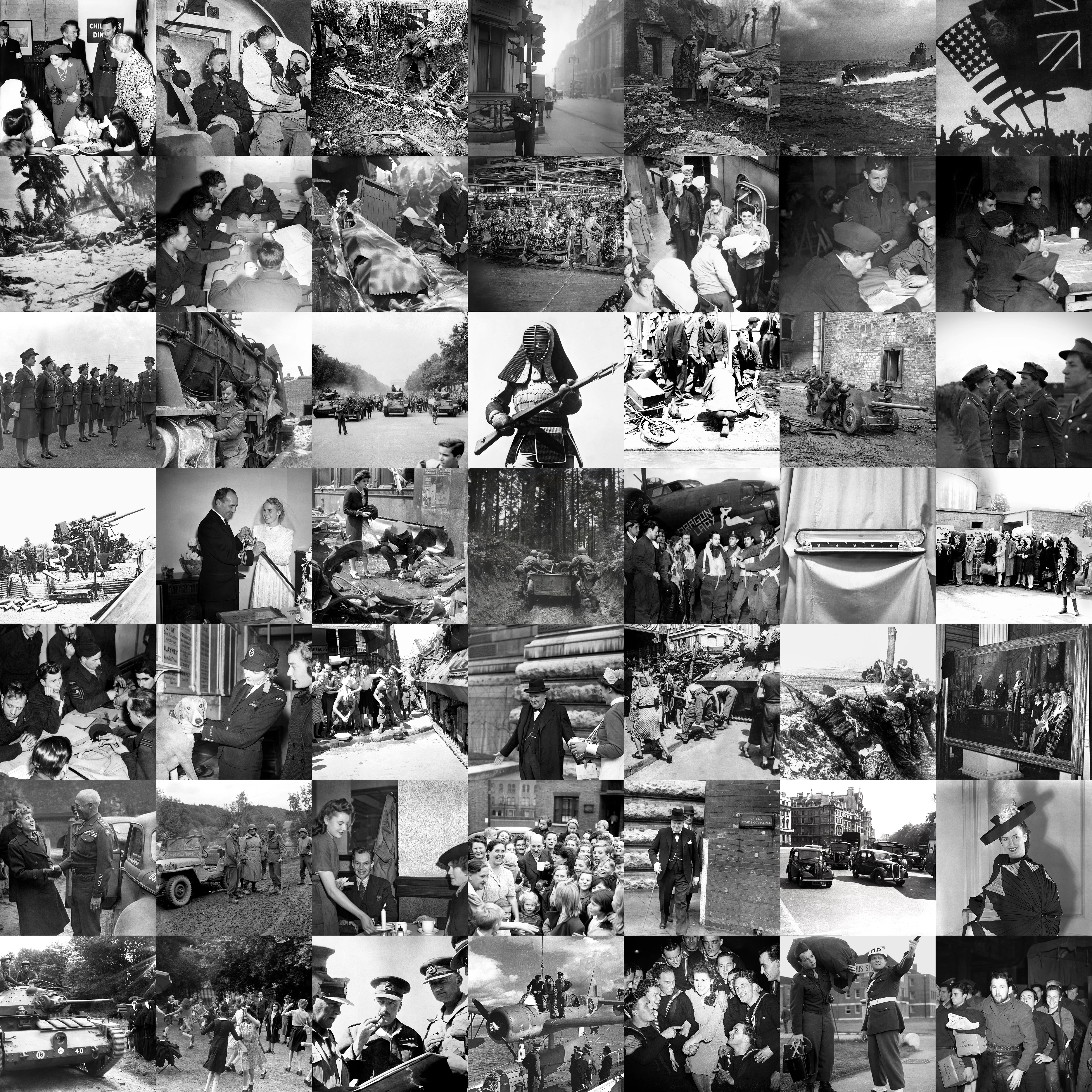
Restoring the Images
The fact that Peter Deleuran returned the photos to their copyright holder was by no means the end of the story. For Peter Deleuran, returning the photos was only the beginning. The fact that the photos were now back wasn’t enough. The history of World War II isn’t kept alive just like that. It took more than that. Through an agreement between Peter Deleuran and Topfoto, he was given the honor of restoring the recovered photos. But his mission went further than that. He also set out to ensure that these photos would tell a story to all of you. And not only that, but the people in the photos, who may have been forgotten, would have their faces restored. And they, too, all had a story to tell. A story that you can now read as well.
It wasn’t a colorful restoration based on speculations about what something might have looked like and what colors might have been possible. Of course, color photographs convey a different feeling and add another dimension. But that is anything but appropriate for a collection like this. It was the right decision by Peter Deleuran to ensure that the photos were restored in a way that would present them as the photographer had intended: in black and white and in great detail. Indeed, if you look closely, even in the book, it’s almost as if you were there yourself.
The discovery was only half the story. Because to truly tell the stories of the people in the photos, in-depth research must, of course, be conducted. That takes a lot of time and effort. Especially when the information you’re supposed to rely on is sometimes simply incorrect. In this case, the primary sources were, in most instances, the photos themselves. Many of the photos and the original press kits had their own typed information attached to them. But this information was often incorrect or misspelled regarding, for example, names, times, and places.
Much of the research has also led to sources, more often than not, stating highly conflicting facts regarding how an incident occurred, or who or what was involved.
Peter Deleuran, Reflections of War (2025), 9
He therefore quite rightly describes it as the “crux of ‘history’”. An author engaged in describing history is often compelled to use the most credible information, chosen from what is sometimes nothing less than a jungle of contradictory sources. Thus, in the book Reflections of War as well, careful and sound choices were made to prefer one fact over another, because that fact has the most credibility behind it.
Difficult and courageous choices.
Why It Matters
It is always important to keep history alive. This is not because we, as historians, like to dwell on the past or are unable to look toward the future. On the contrary. History simply teaches us a great deal, including about the future. And if humanity begins to forget the lessons we should learn from history, a great danger looms. That danger is that history may repeat itself. Not exactly in the same way, of course. But imagine if we all forgot the lessons of World War II and thereby created the conditions for someone like Hitler to seize his opportunity? No, just like any war, World War II is not an event that we, as humanity, should allow to happen again.
And that is also intrinsically linked to the voices we sometimes hear growing louder. Sometimes it seems like just a small thing, such as: why do we even commemorate World War II anymore? Why should we reflect on this war with a Liberation Day, Victory Day, or a Remembrance Day?
If we give in to this kind of rhetoric, we as humanity truly risk forgetting the history of World War II. This is not something reserved for a handful of historians; it is the responsibility of all humanity.
But especially now, in a world that seems to be constantly changing and moving at breakneck speed, we must be on guard against extremism that can suddenly appear out of nowhere. That is why the history of World War II must also be kept alive. There are still so many stories and so many events from that time that we have already almost forgotten. Stories of heroes, ordinary people, and evil.
It is books like Peter Deleuran’s Reflections of War that ensure we never forget the history of World War II. With stories of ordinary people from that era. And the stories of the people behind the photographs. A glimpse of what it was like, transporting you back to that time. A photograph that says more than a thousand words ever could.
It strikes at the heart of the matter.
Who Else Says It Matters?
Of course, from my perspective, it’s easy to explain why this discovery, the restoration, and the book are so important, especially in this day and age. But I’m not the only one who feels that way.
As a career naval officer for over four decades, I have known war throughout my long career. This extraordinary work of photographic literature perfectly illuminates the tragedy and triumph of combat. It illuminates the faces of men and women confronted with their own mortality, fear, and heroism. Above all, the book captures – image by beautifully reconstructed image – the sweep of history in the Second World War. An astonishing work of art.
Admiral James Stavridis, 16th Supreme Allied Commander of NATO and author of The Restless Wave: A Novel of the US Navy in WWII. – Peter Deleuran, Reflections of War (2025).
One of the most important collections of World War II photographs to be found in a generation. Deleuran has restored 150 previously lost photographs and, in so doing, tells a powerful story. These evocative images leave a lasting impression …’
Historian Dr Helen Fry, author of The Walls Have Ears: The Greatest Intelligence Operation of World War II. – Peter Deleuran, Reflections of War (2025).
“The results are incredible…astonishing.” — The Daily Mirror UK.
quoted in Peter Deleuran, “How I Found 300 Lost WWII Negatives — and Turned Them into a Book,” Medium.
But that isn’t even the whole story. Recently, the book Reflections of War was nominated for the National WWII Museum Book Award and the Gilder Lehrman Military History Prize. This alone tells you why this book matters, more than I ever could. This is significant because both awards are reserved exclusively for works that are judged on originality, scholarly quality, and their contribution to historical understanding. To put it another way, the nomination not only shows that his book is compelling, but also that it is taken seriously as a valuable contribution to the history of World War II and military history as a whole.
Most Impressive Images

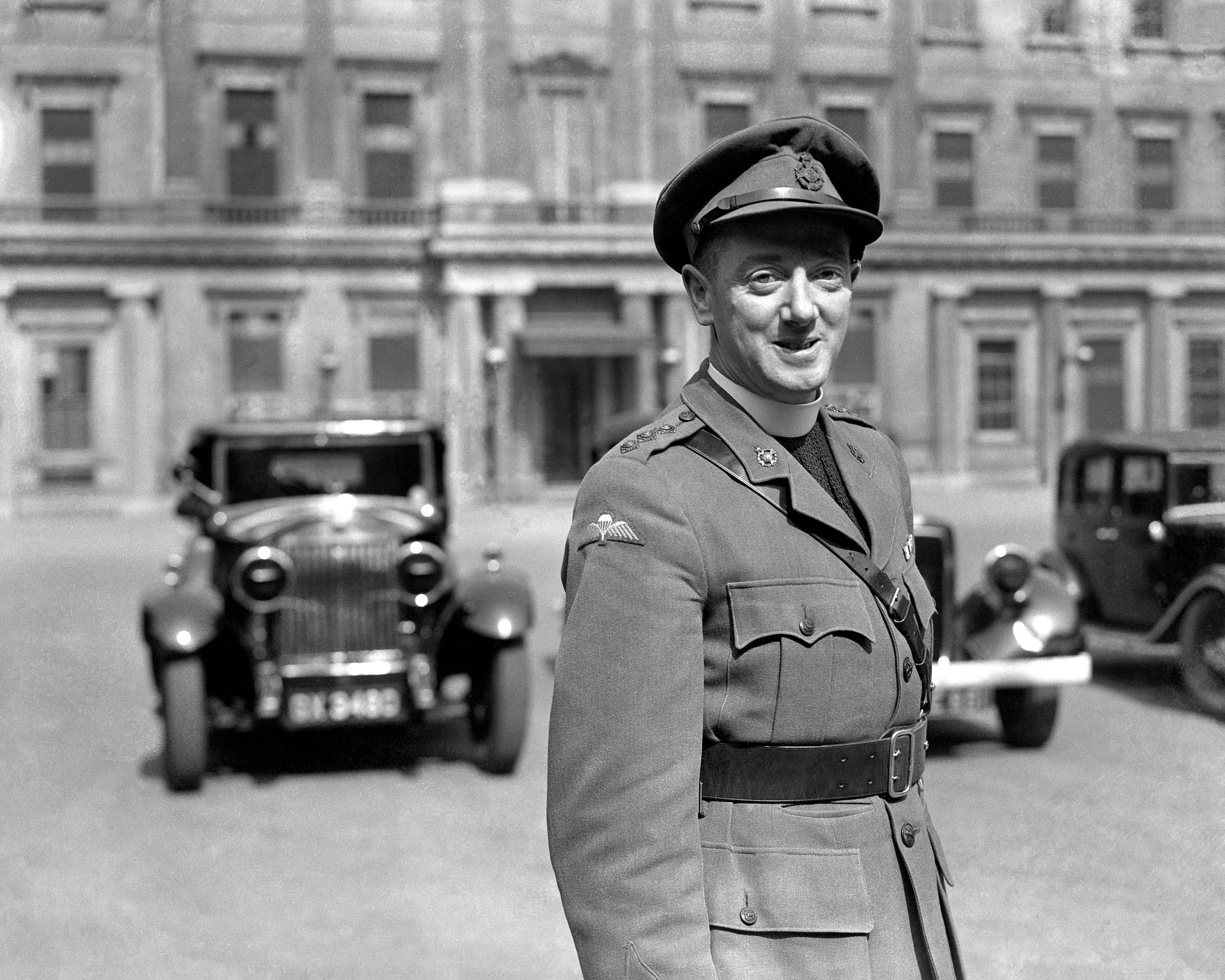
21st April 1944 TOPFOTO CODE: PD3001303 Paratroop sky pilot gets his Military Cross from the King. Photo shows:- The Rev. B.M. Egan, padre of the Paratroop regiment, leaving Buckingham Palace after receiving the Military Cross at a recent investiture. He won his M.C. when he jumped with Paratroopers who invaded Sicily, accompanying them on their mission. Father Egan was games master at Beaumont College, Old Windsor. © Topfoto / Peter Deleuran | Used with exclusive permission.
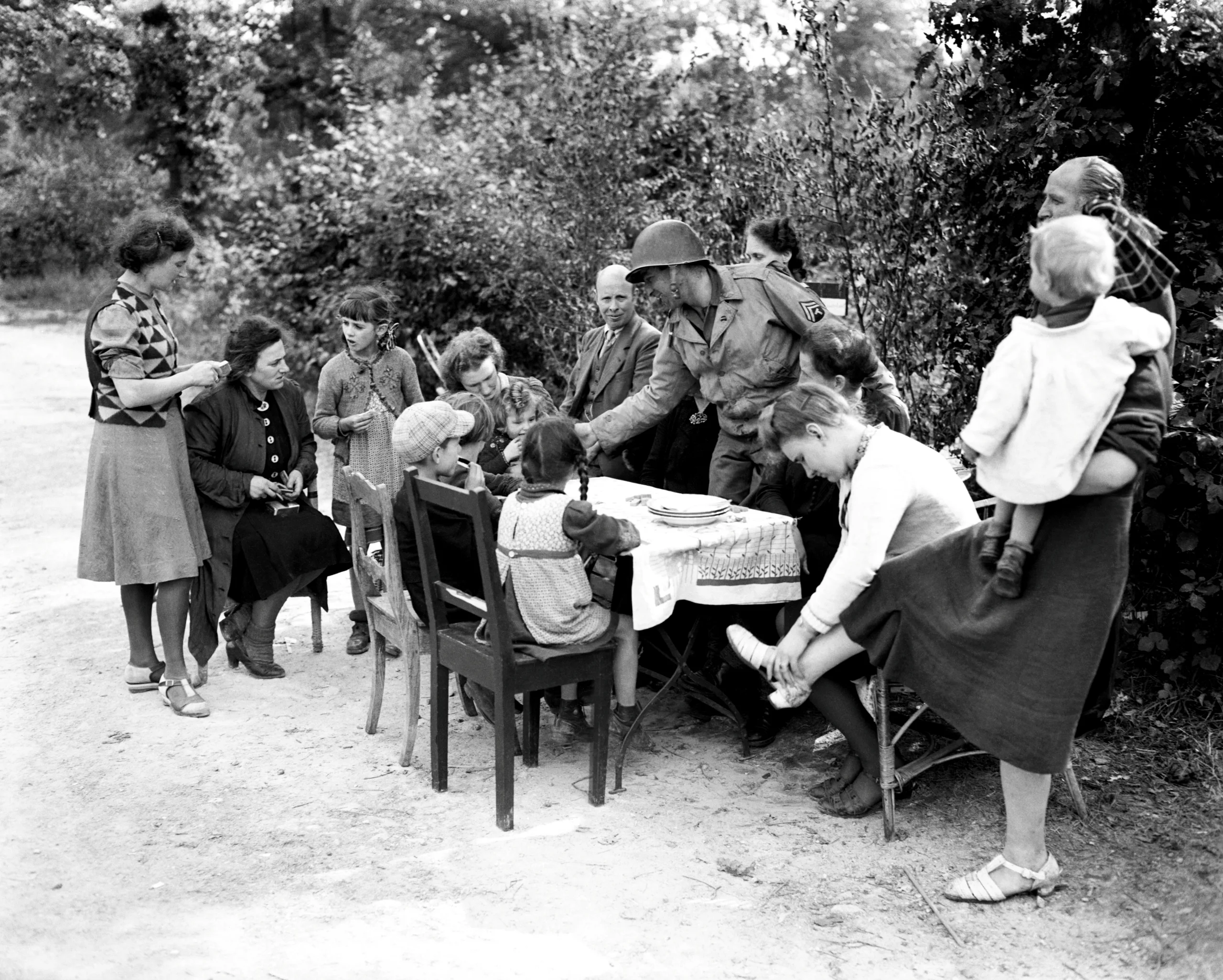
15th September 1944 TOPFOTO CODE: PD3001327 Americans give rations to Germans. In the German town of Herzogenrath, eight miles North of Aachen and only 40 Miles from Cologne, Cpl. Mel White, of Harlan, Iowa, gives American rations to a large German family. © Topfoto / Peter Deleuran | Used with exclusive permission.
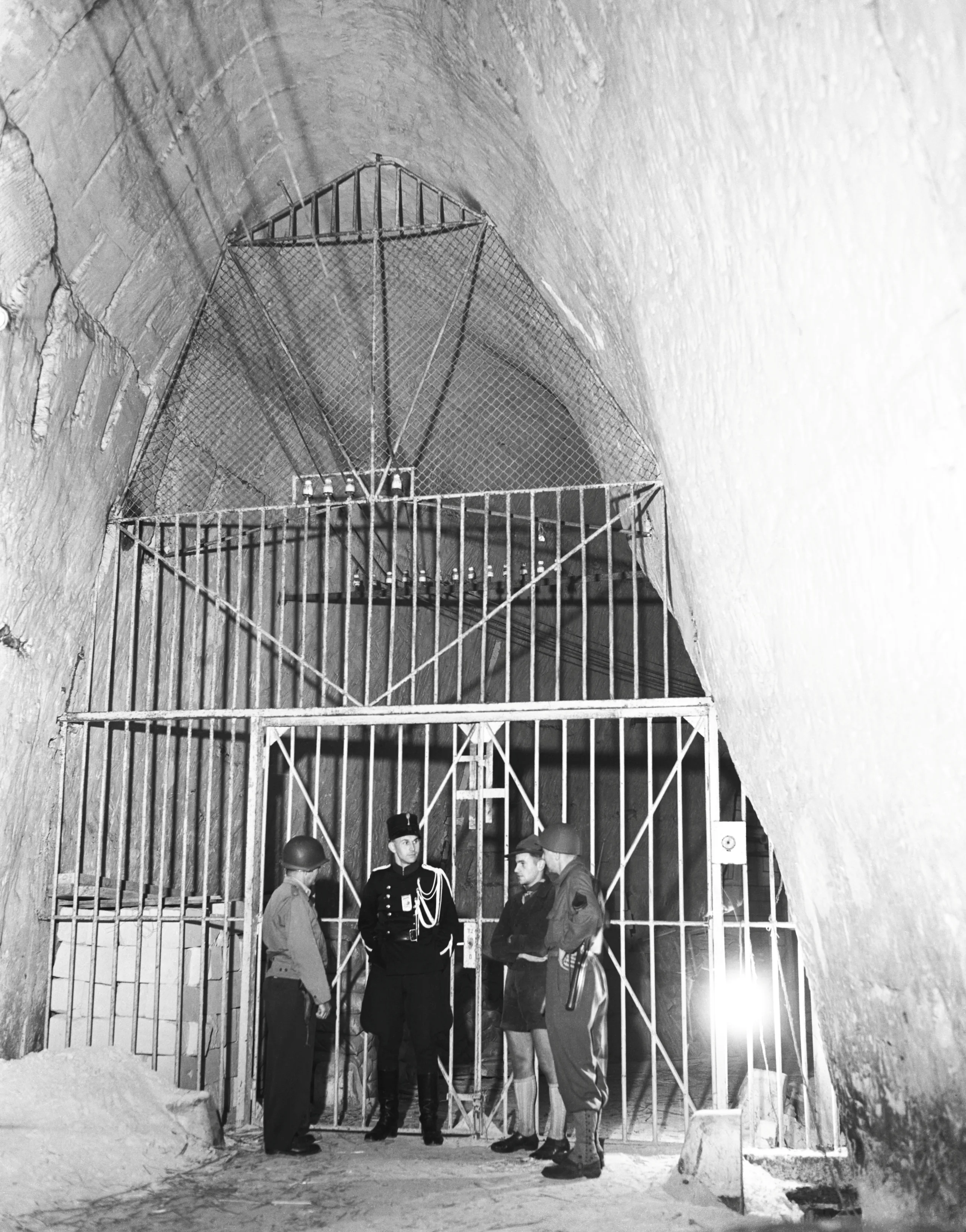
25th September 1944 TOPFOTO CODE: PD3001341 Major Leo Senecao, of Chicopee, Massachusetts: (left) and Sgt. Bernard Sheldon, of New York, N.Y.: Chatting with the Dutch guards at the steel gates of the cave near Maastricht. Here were stored all the priceless art treasures of Holland, safe from bombing and shell fire. The whole treasure house was left intact by the Germans in their hurry to get away. © Topfoto / Peter Deleuran | Used with exclusive permission.
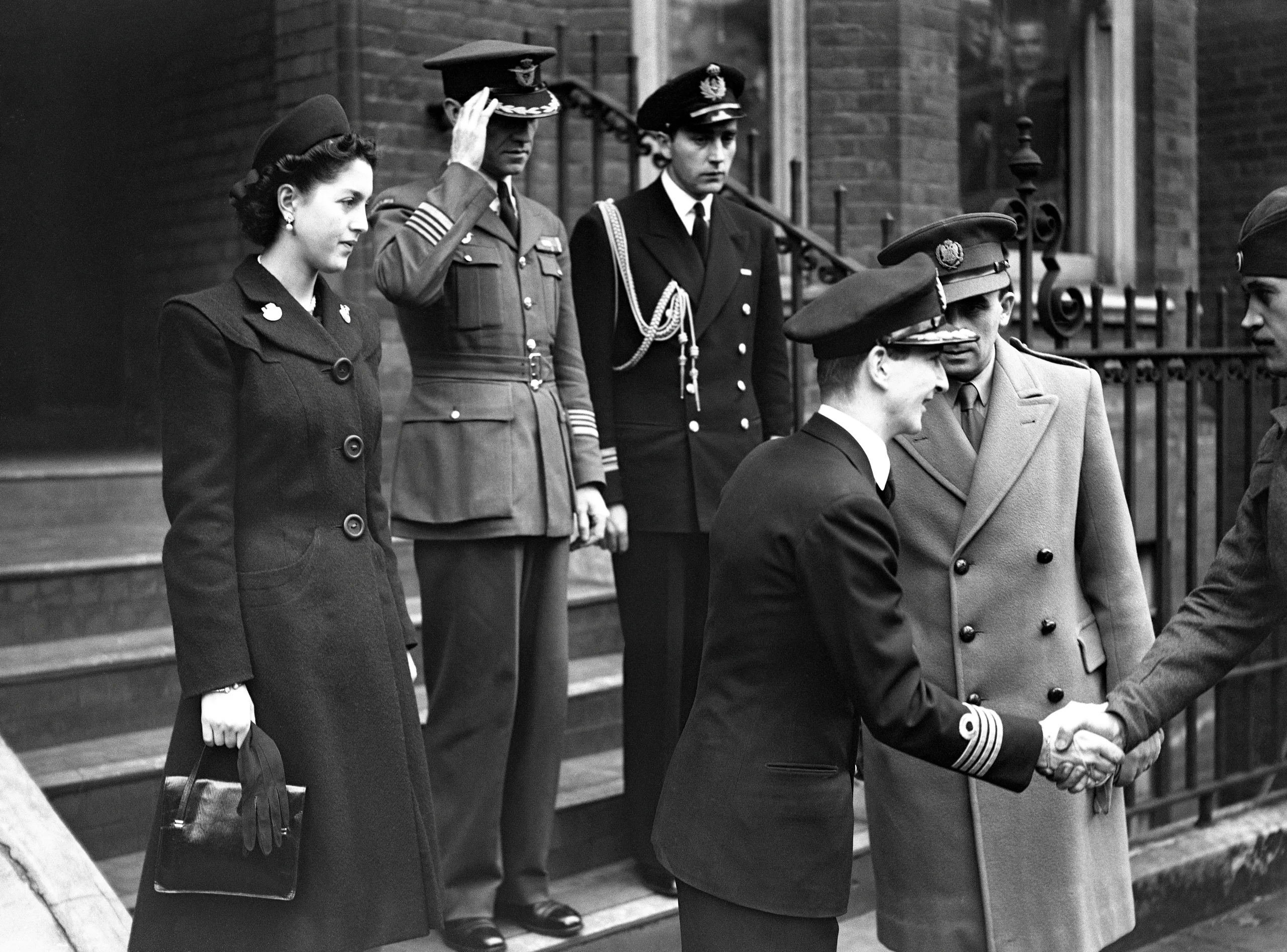
1st December 1944 TOPFOTO CODE: PD7486010 King Peter and Queen Alexandra of Yugoslavia leaving the Serbian Orthodox Church, Lennox Gardens, West London, after attending the Yugoslav National Day service. © Topfoto / Peter Deleuran | Used with exclusive permission.
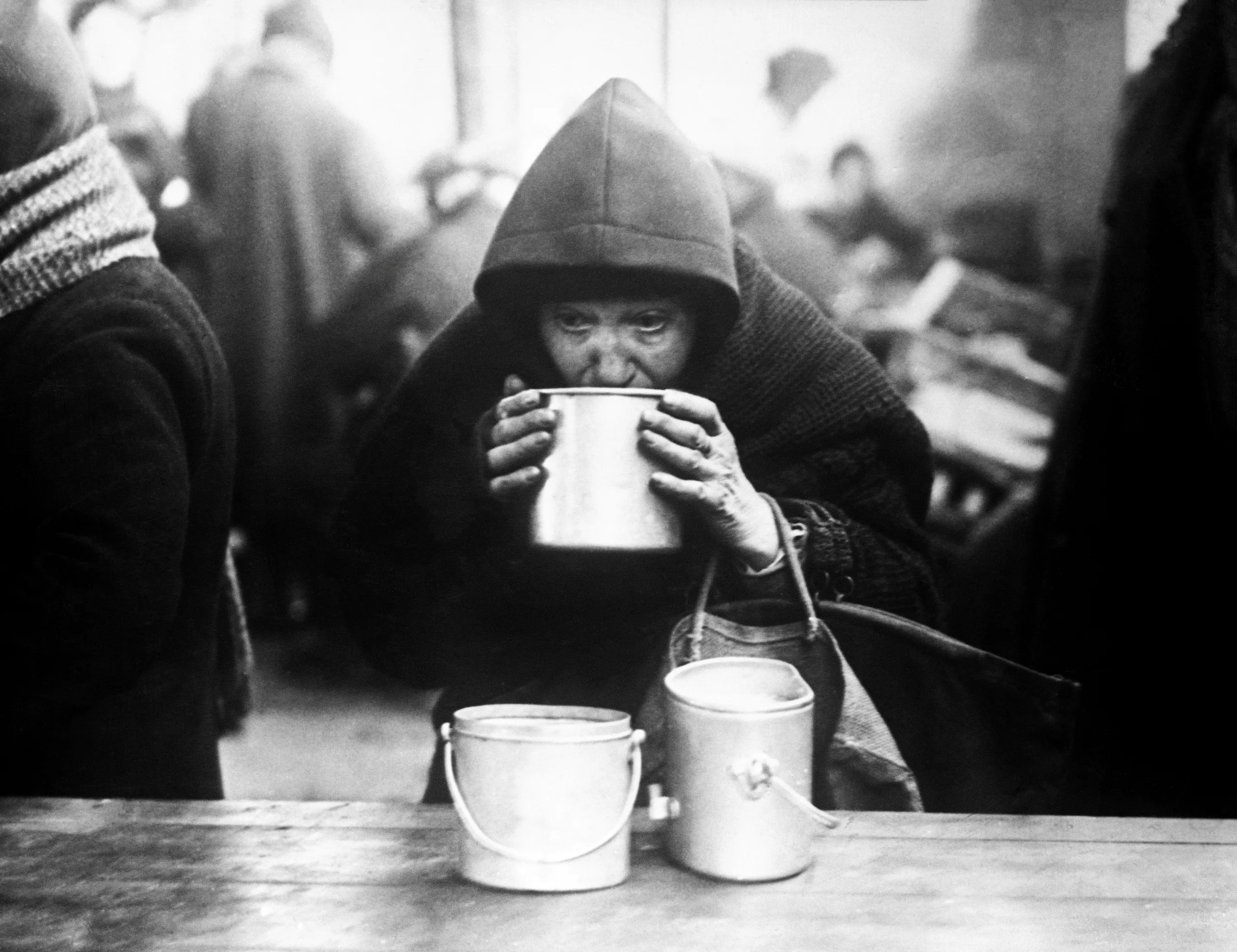
30th January 1945 TOPFOTO CODE: PD3001261 The municipality of Noisy-Le-Sec has instituted special kitchens where 1100 hot meals are served daily to the aged and bombed out. Most of the people have no means of heating at all. Photo shows:- An old woman enjoys a tin of hot soup at the kitchen. © Topfoto / Peter Deleuran | Used with exclusive permission.
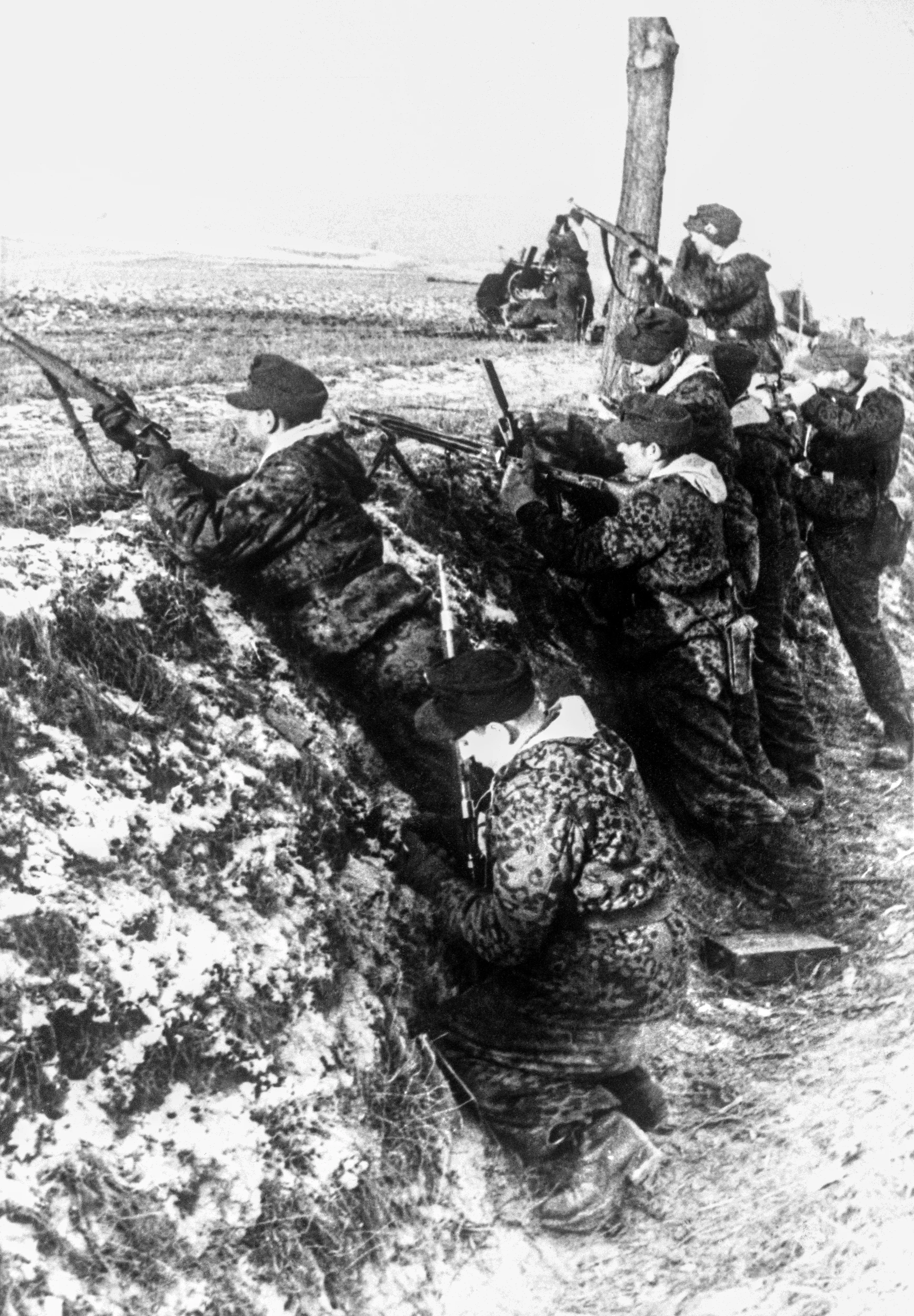
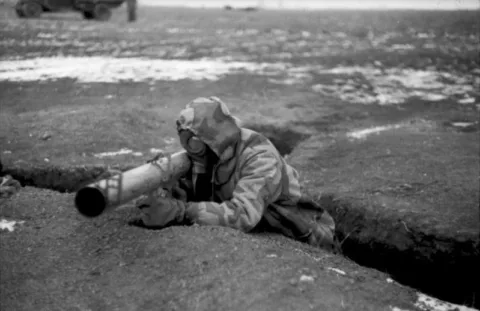
1944 TOPFOTO CODE: PD3001495 German troops in action in Hungary © Topfoto / Peter Deleuran | Used with exclusive permission.
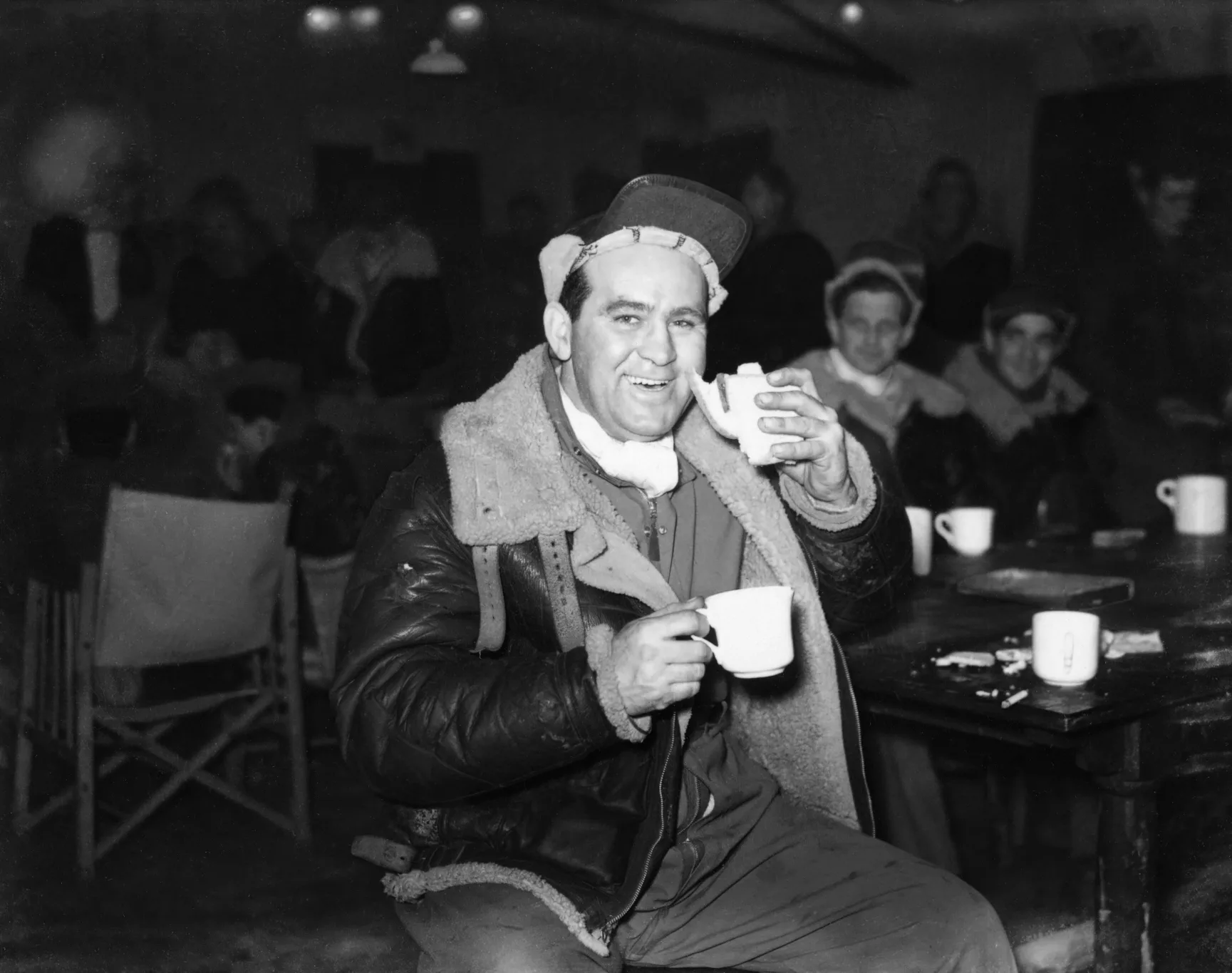
1st January 1944 TOPFOTO CODE: PD3001235 West Wall blitzed by big American Air fleets – Bordeaux, Paris and French coast the targets. American heavy bombers in strong force carried out dawn-to-dusk raids on German targets in France in widespread missions that ranged from attacks on two Paris ball-bearing factories to the Chateau Bernard airfield, near Bordeaux – a round trip of more than 1,200 miles. Chateau Bernard is a base for planes working with U-boats in the sea war. More than 1,000 sorties were made by Allied bombers and fighters, keeping up the blasting of the ‘secret weapon’ coast of Northern France. Only one plane is missing from the day’s operations. PHOTO SHOWS:- One of the crew of ‘We Dood It’, waist gunner S. Sgt. D.W. Dailey, of Youngstown, Ohio, tucks into coffee and sandwiches whilst waiting to be interrogated after the mission. © Topfoto / Peter Deleuran | Used with exclusive permission.
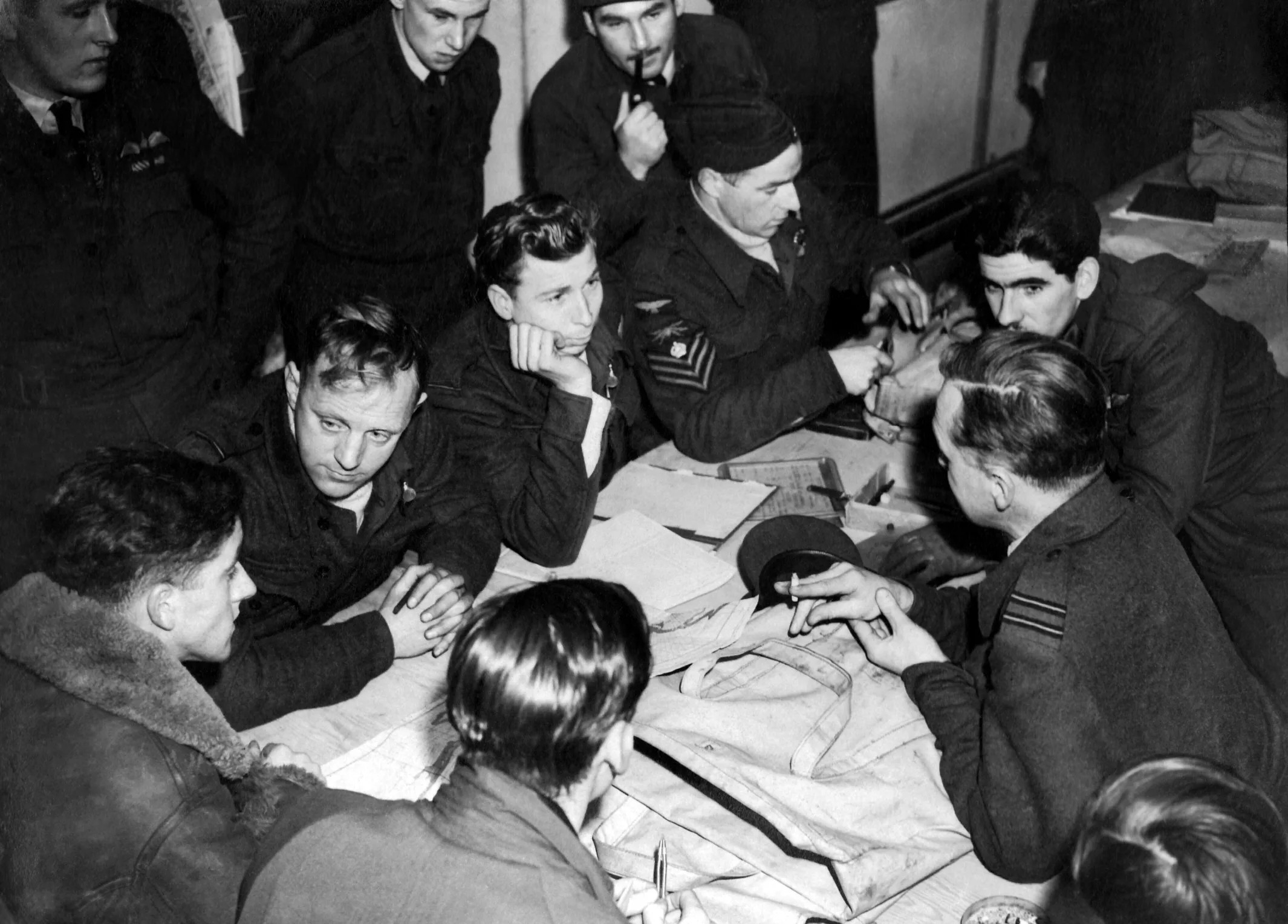
6th December 1944 TOPFOTO CODE: PD3001191 Incessant attacks by Coastal Command forced the Germans to run their North Sea convoys under cover of darkness, and now the Shipfinder Force of Coastal Command has made night almost as hazardous as day for Nazi vessels. Flares of immense candle-power are dropped by Wellington bombers, silhouetting the targets for other Wellingtons or Beaufighter strike forces, which attack in powerful formations. Shipfinder Force has made more than 100 attacks since D-Day, and while the nature of the new tactics makes observation of results difficult, it is known that many direct hits have been scored on enemy shipping. PHOTO SHOWS:- After being briefed for a night attack on German shipping, a Coastal Command Shipfinder Force crew makes final arrangements before setting out in search of the enemy. (Gaiger Planet Dec, 6 1944 PN Censor No. 376622 © Topfoto / Peter Deleuran | Used with exclusive permission.
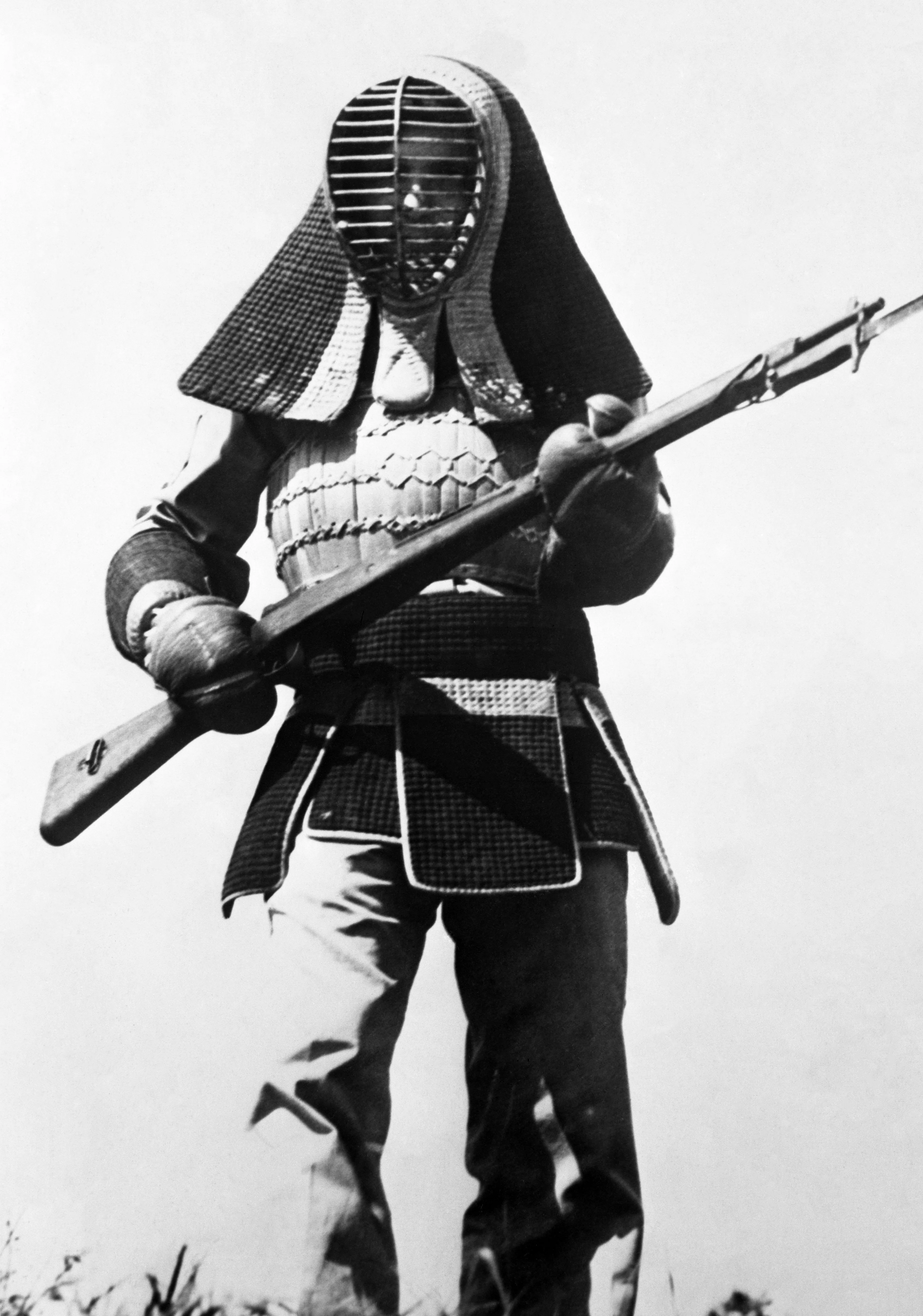
6th May 1944 TOPFOTO CODE: PD3001506 John Jones Jr. of East Springfield, Ohio, USA, demonstrates a Japanese bayonet-fighting suit worn at practice. Looking like medieval armour, it was captured at Kwajalein Island by troops of the U.S. Seventh Division. Sgt. Jones is holding a Japanese .38 Arisaka rifle; for bayonet practice the Japanese use a wooden replica of the same size. © Topfoto / Peter Deleuran | Used with exclusive permission.
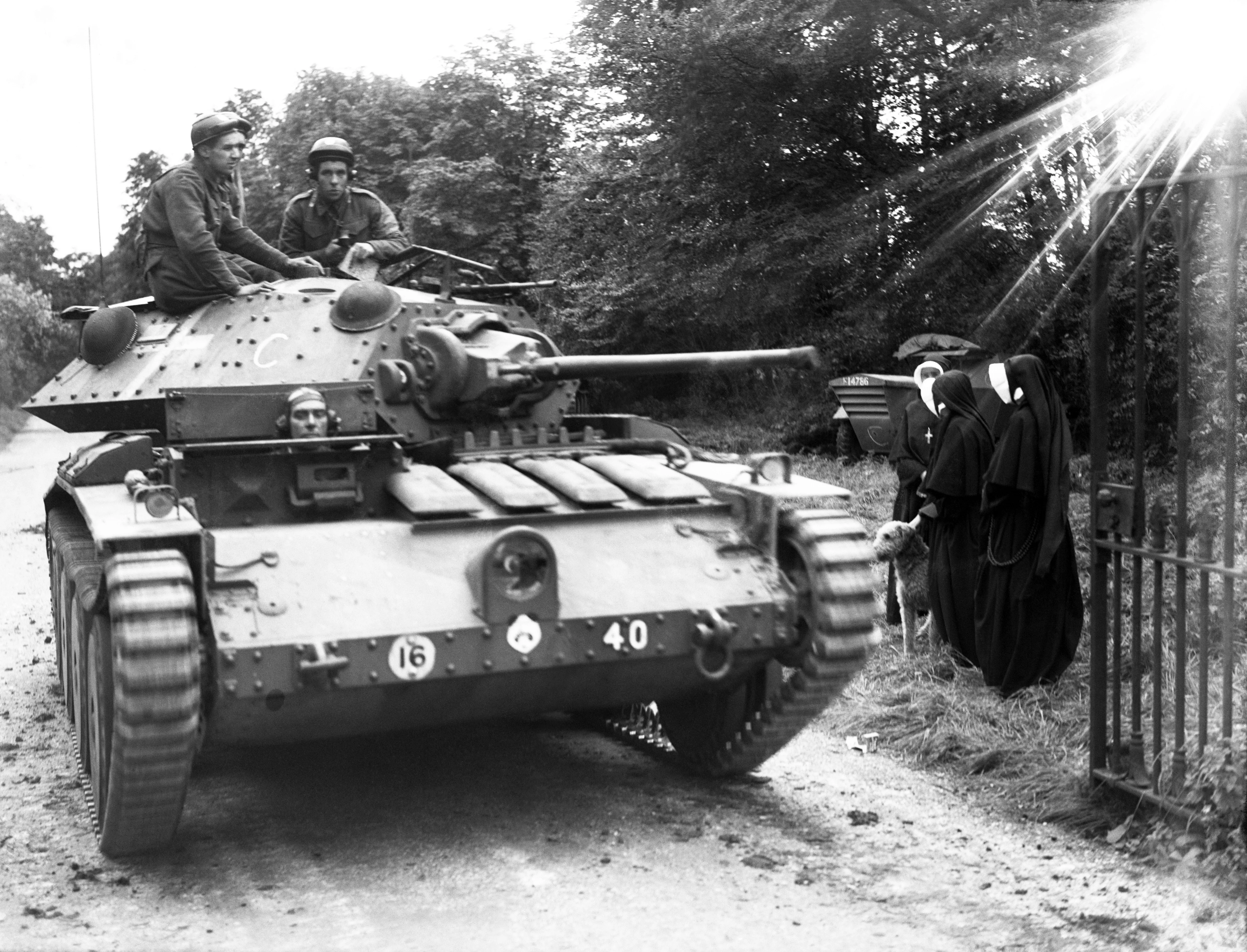
1941 TOPFOTO CODE: PD3001509 A defending tank passes some nuns by the roadside. Members of a tank crew pause on a country road to chat with a group of nuns, out for a walk with their dog, during a break in manoeuvres held in England. © Topfoto / Peter Deleuran | Used with exclusive permission.
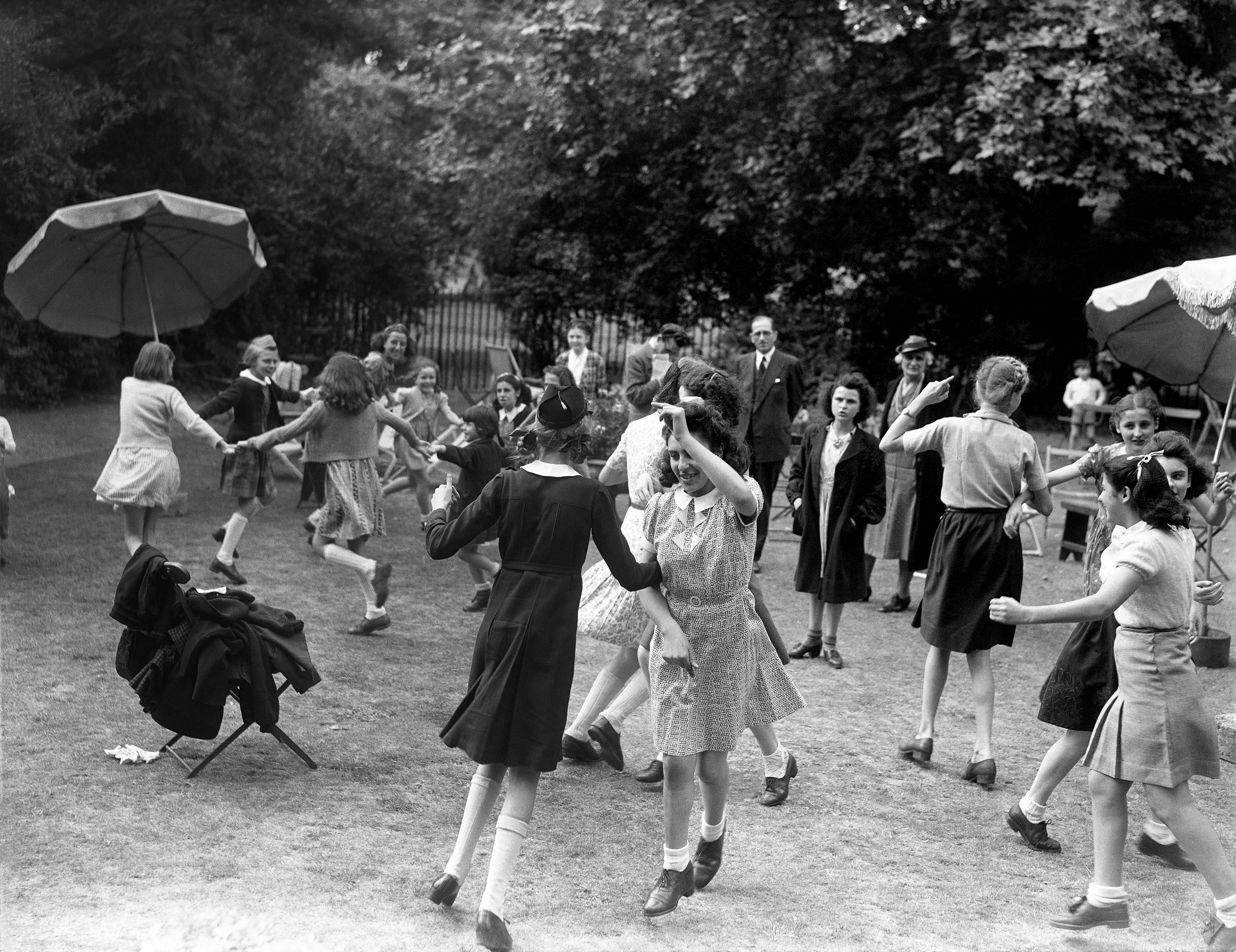
29th July 1945 TOPFOTO CODE: PD3001206 A party of French children have arrived in England for rest and recuperation. Suffering from the various ill effects of the war years, the children are being looked after in the London County Council Rest Centre before being sent to various Hostels and homes in the country. Photo shows: Some of the French children enjoying the delights of the children’s playground in Battersea Rest Centre. © Topfoto / Peter Deleuran | Used with exclusive permission.
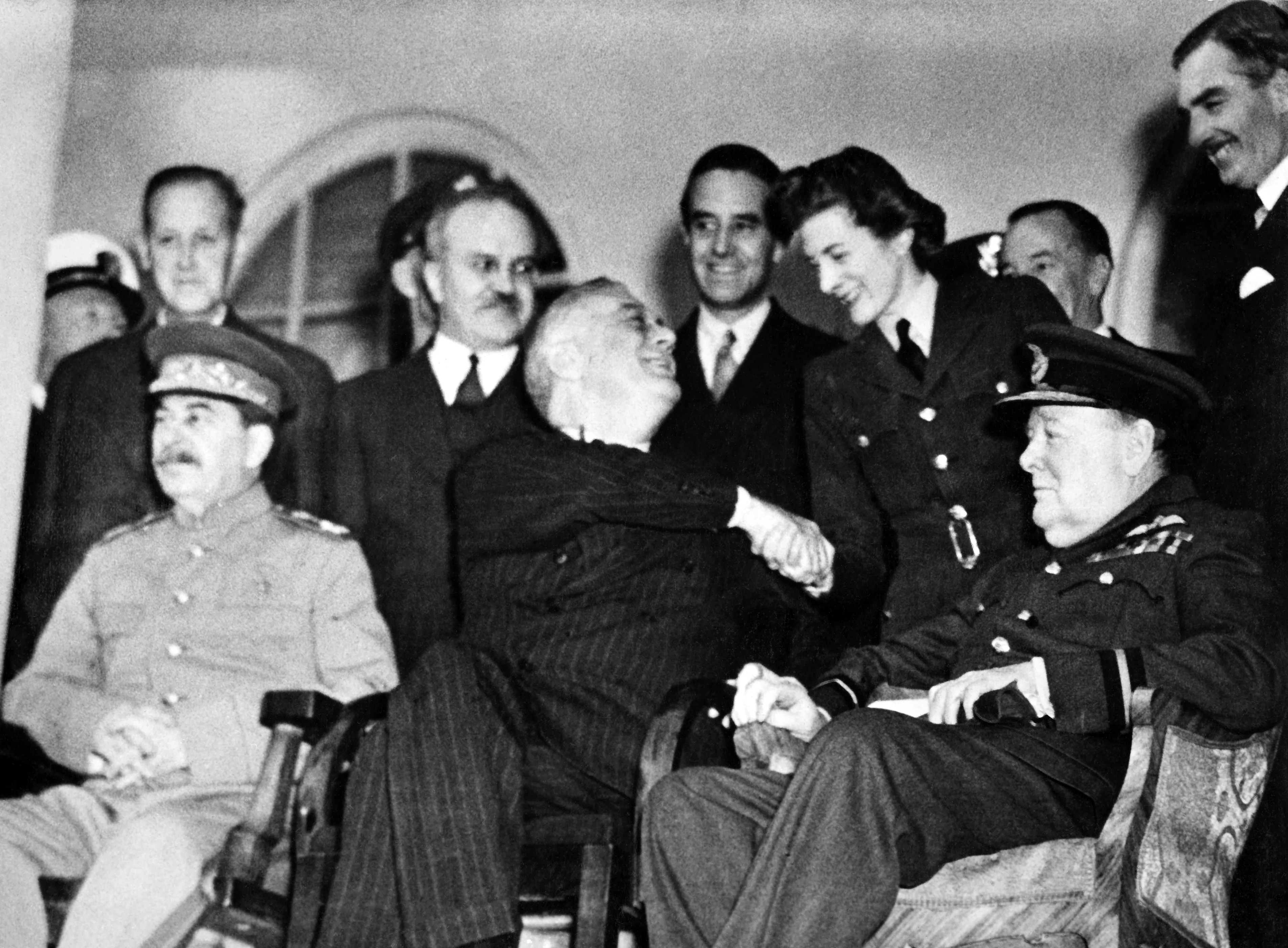
Nov/Dec 1943 TOPFOTO CODE: PD7493834 Allied leaders and members of their staffs at historic Tehran conference. Seated between Marshal Joseph Stalin (left) Russian Premier, and British Prime Minister Winston Churchill, President Franklin D Roosevelt of the U.S. shakes hands with Section Officer Sarah Oliver of the British Women’s Auxiliary Air Force, daughter of Mr. Churchill, outside the Russian Embassy at Tehran, Iran, where historic conferences were held completing plans for the destruction of the German military forces. Behind the Allied leaders are, left to right: Harry L. Hopkins, Special Assistant to President Roosevelt; Vyacheslav M. Molotov, Russian Foreign Commissar; W. Averell Harriman, U.S. Ambassador to Russia, and at the extreme right Anthony Eden, British Foreign Secretary. APPROVED BY APPROPRIATE U.S. AUTHORITY (U.S Office of War Information picture/Library of Congress, Prints & Photographs Division, Farm Security Administration/Office of War Information Black-and-White Negatives) © Topfoto / Peter Deleuran | Used with exclusive permission.
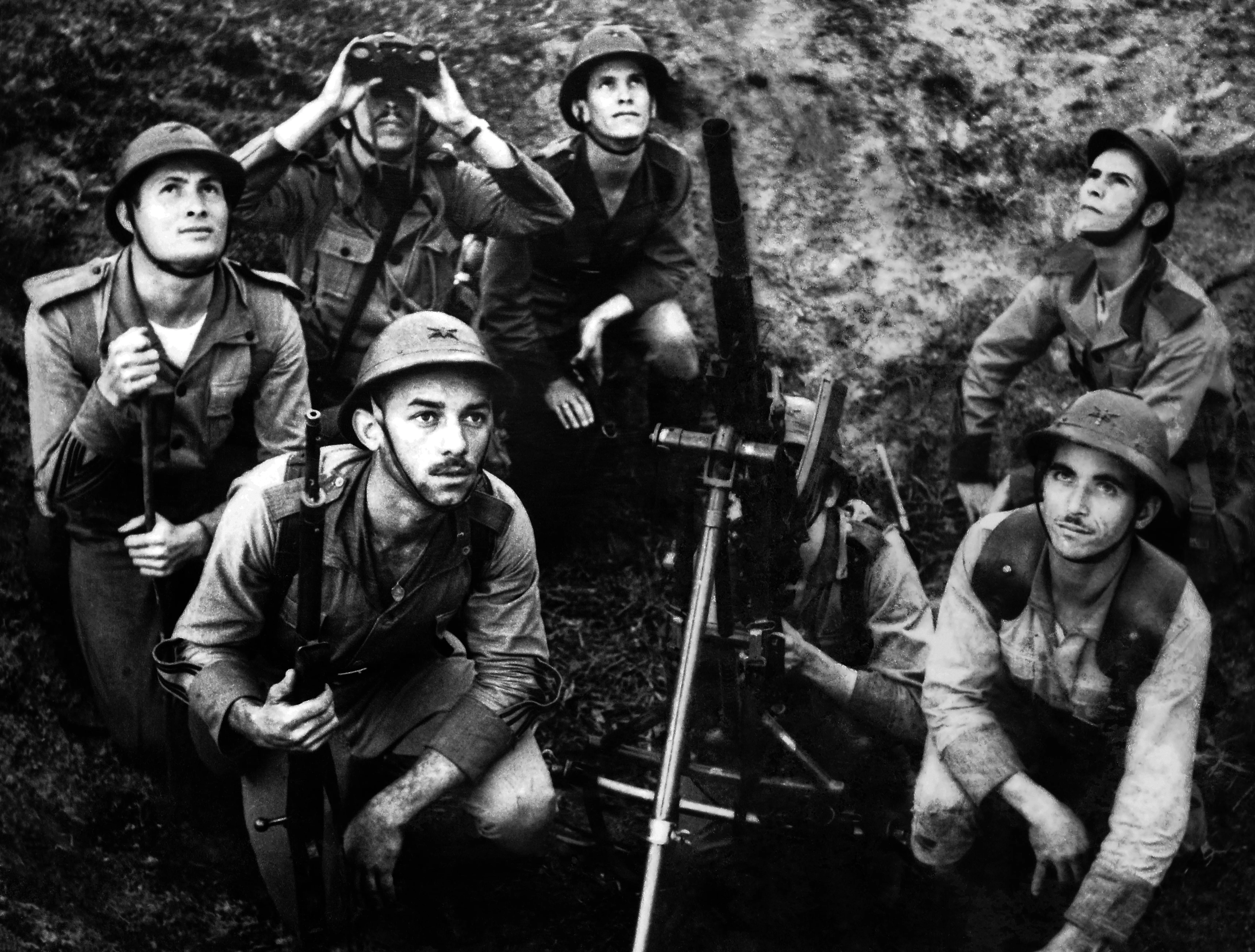
22nd August 1942 TOPFOTO CODE: PD7493833 Members of a Brazilian anti aircraft battery during enemy exercises. K. 2846. (Picture issued August 1942) ISSUED BY THE MINISTRY OF INFORMATION. © Topfoto / Peter Deleuran | Used with exclusive permission.
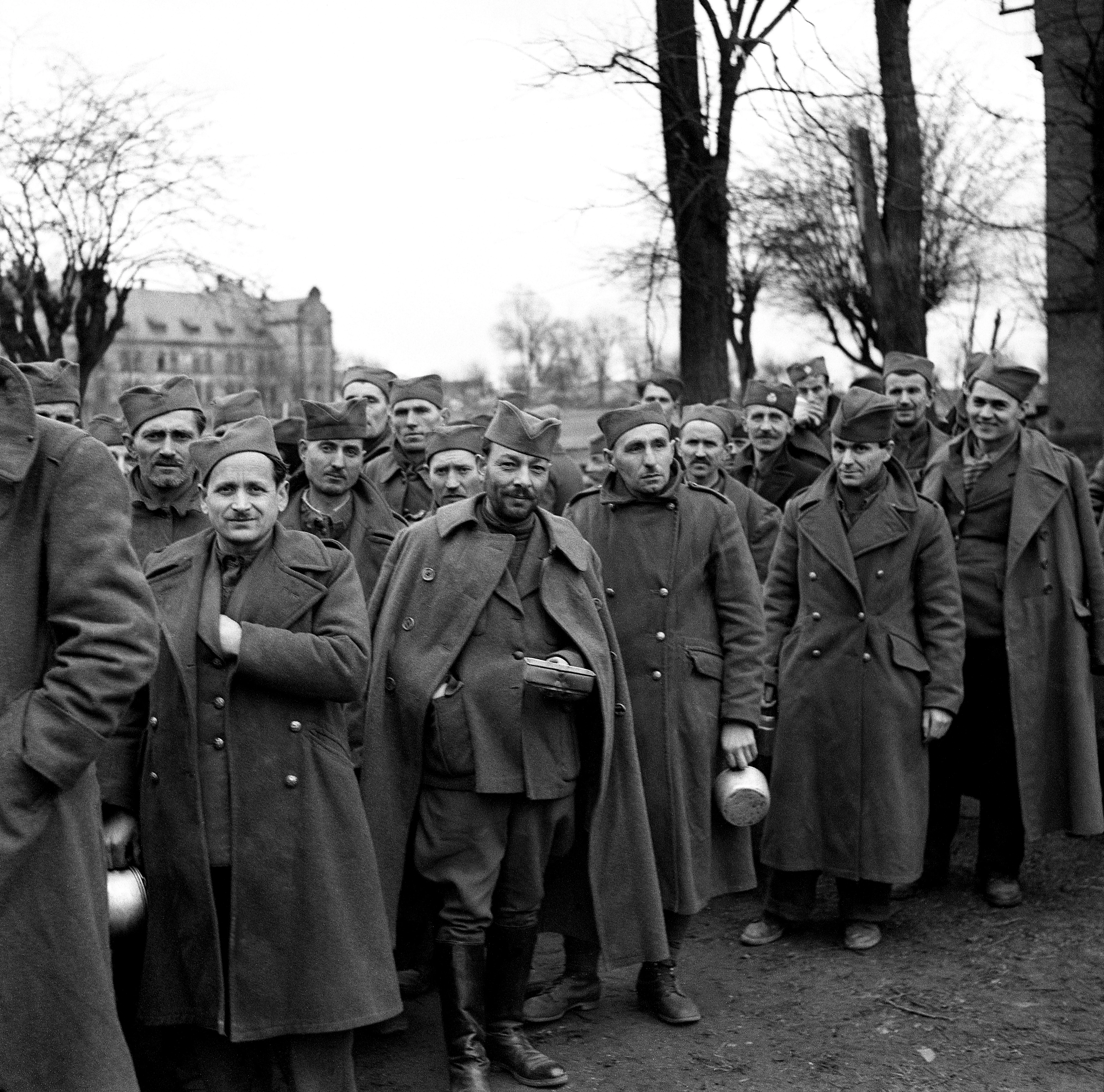
11th March 1945 TOPFOTO CODE: PD3001360 A group of Yugoslavs among the released prisoners; they are queuing for their first hot meal for many months. © Topfoto / Peter Deleuran | Used with exclusive permission.
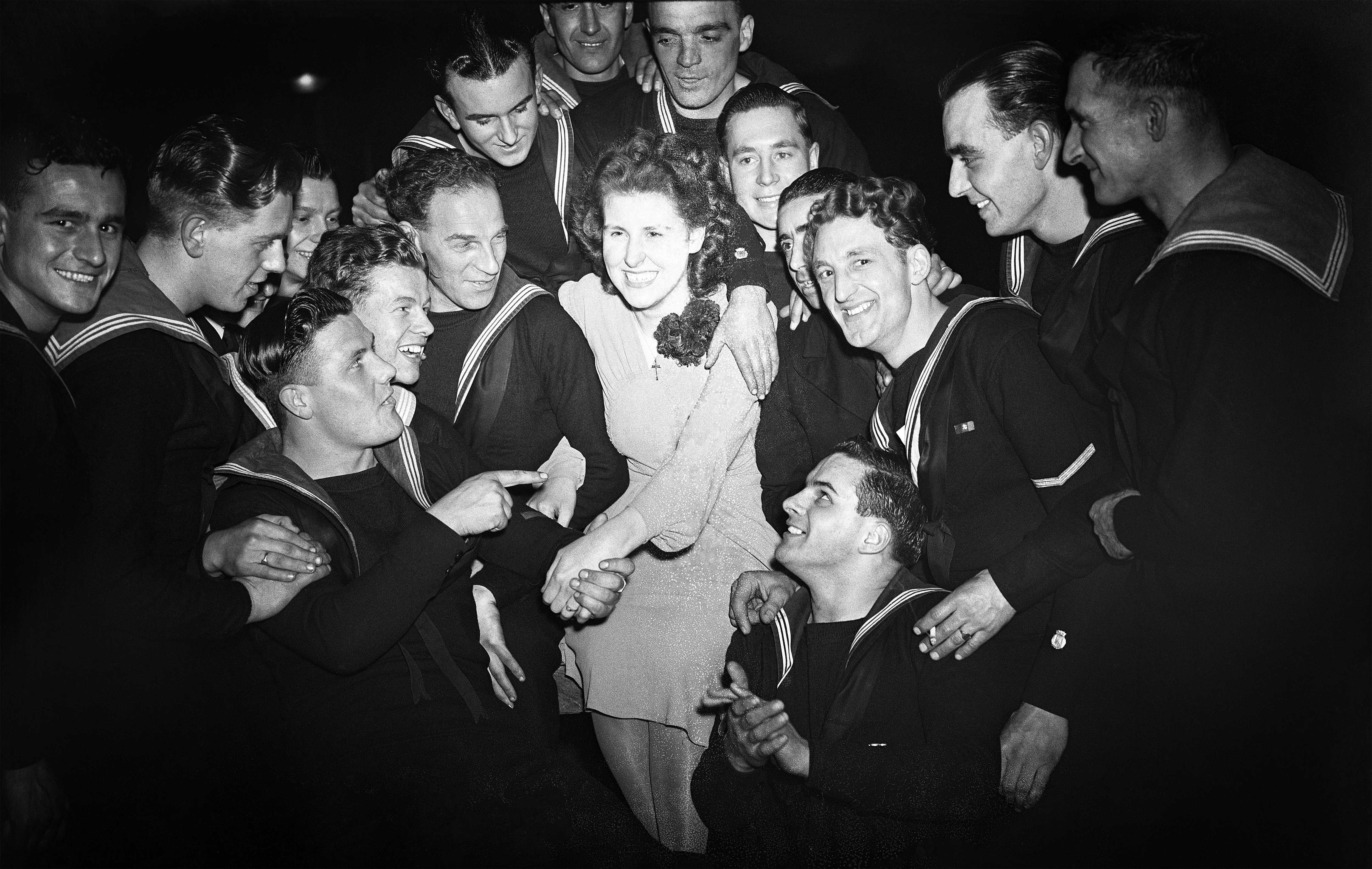
1st March 1945 TOPFOTO CODE: PD3001228 When Walthamstow, north-east London, entertained 150 officers and men of the minesweepers attached to H.M.S. ST. TUDNO, which the people ‘adopted’ three years ago, one of the principal items on the proceedings was the introduction to the ships’ companies of Miss Joan Butfield, from now on their own ‘pin-up girl’. PHOTO SHOWS:- ‘Pin-up girl’ Joan Butfield with some of her nautical admirers. © Topfoto / Peter Deleuran | Used with exclusive permission.
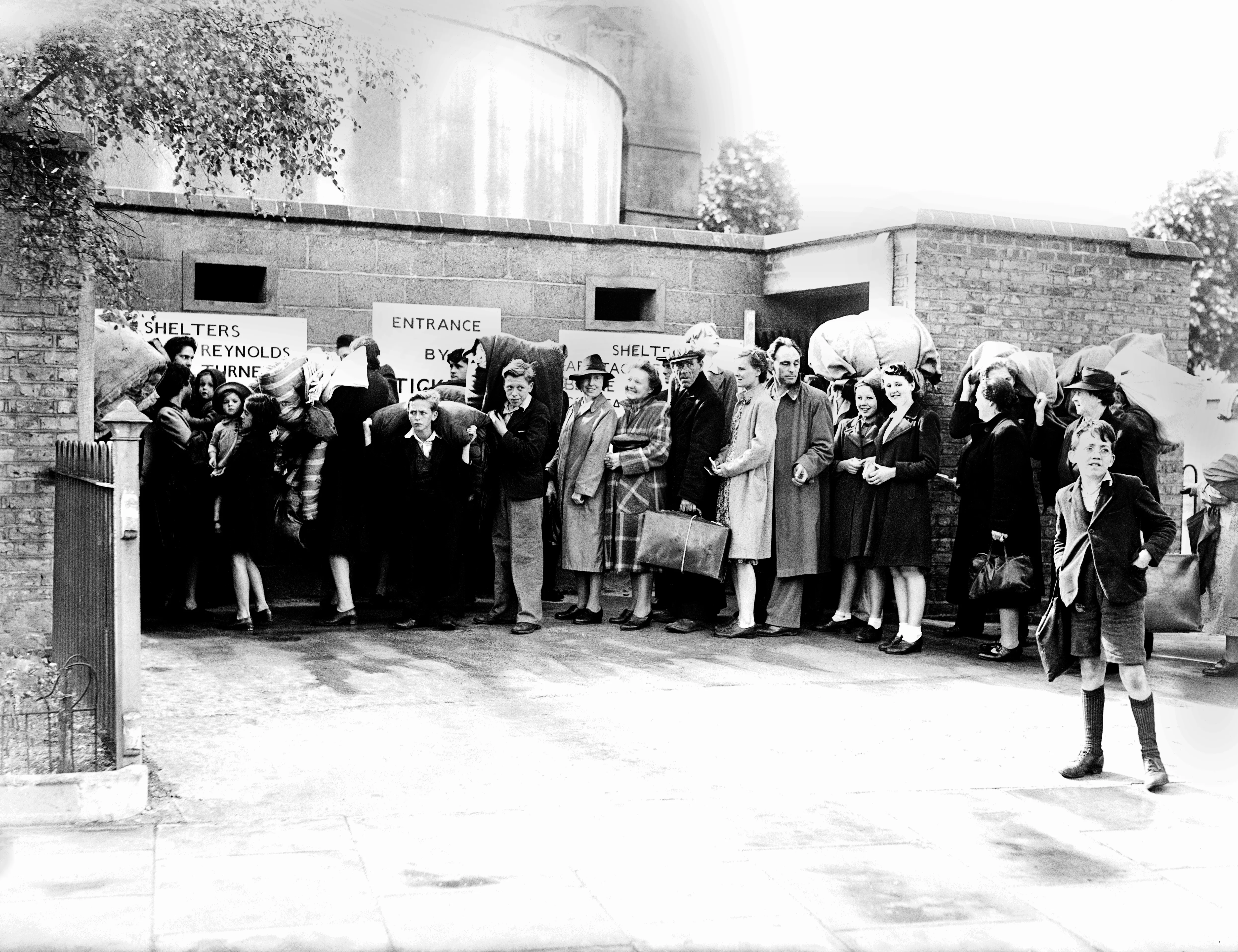
11th July 1944 TOPFOTO CODE: PD3001192 The first of a number of deep shelters under London is being used by the public. Photo shows:- People queueing with their bedding outside the shelter. © Topfoto / Peter Deleuran | Used with exclusive permission.
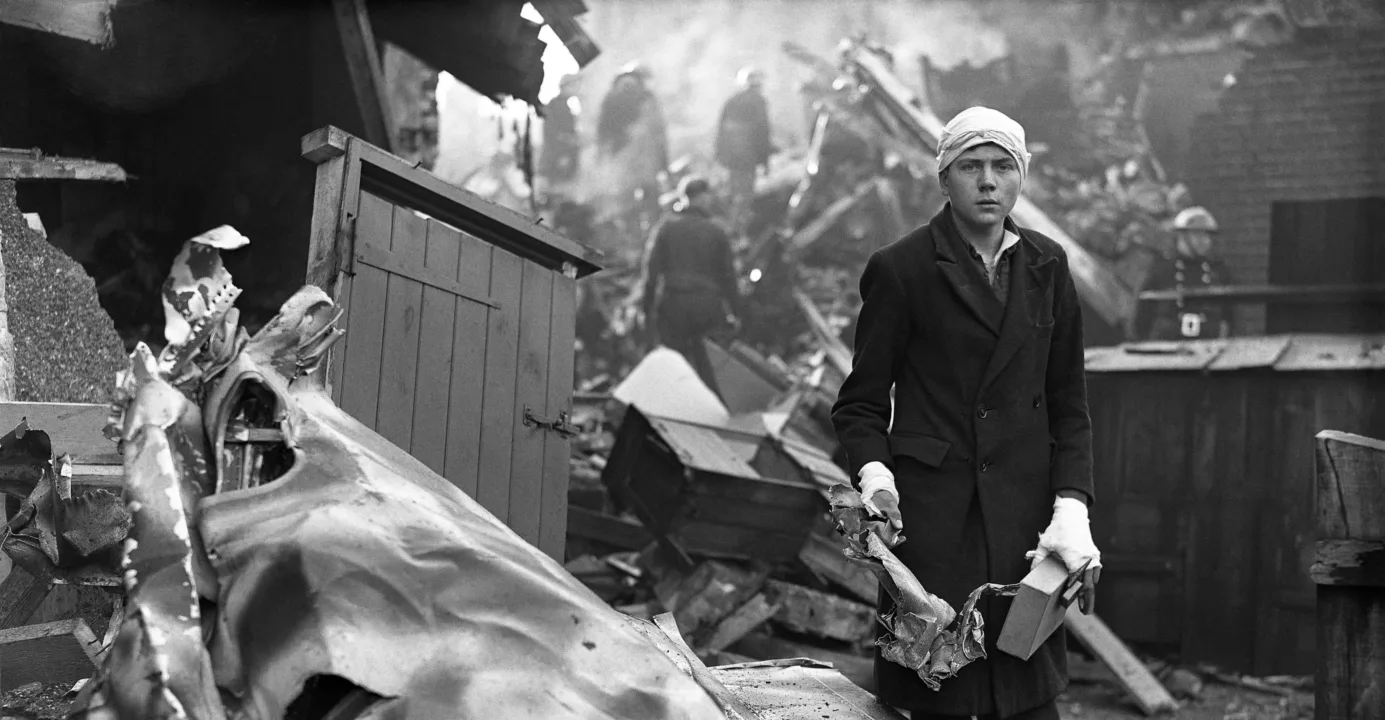
19th April 1944 TOPFOTO CODE: PD7494280 Bombed out – but they got the raider. Fifteen-year old Leslie Davison, one of four children who escaped with their parents when a raider brought down in the London area crashed on their house, which was completely destroyed. In the house adjoining four persons were killed. Leslie is holding parts of the enemy plane in his damaged hands. The rest of the aircraft is in the debris of his home. © Topfoto / Peter Deleuran | Used with exclusive permission.
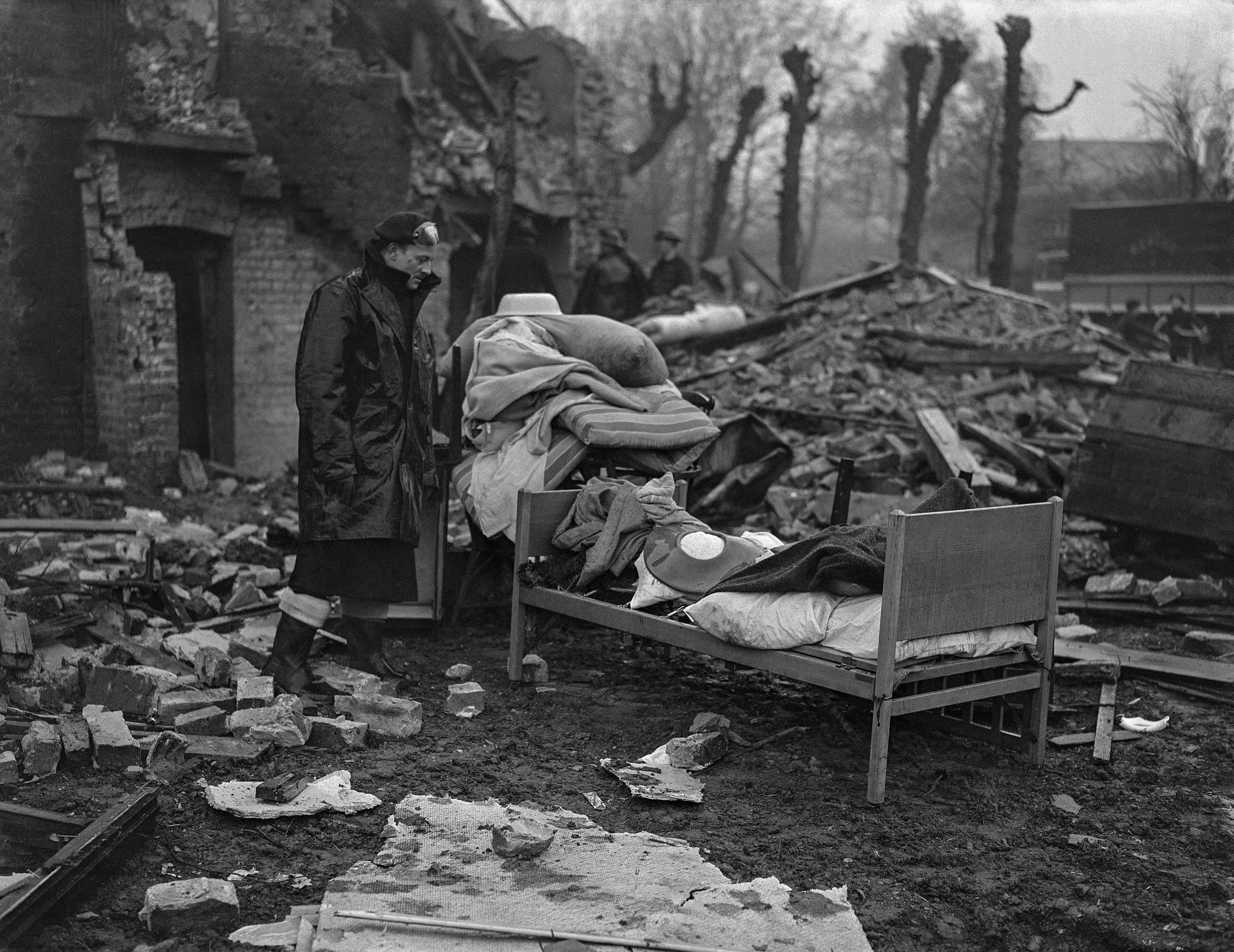
6th November 1943 TOPFOTO CODE: PD3001507 Newly born babies with their mothers were rescued from the debris of a large London nursing home which was bombed during a sharp night raid on the London area. The babies were practically unharmed. Twelve aged invalids were also saved, and rescue workers erected a scaffolding to release two old people trapped in the top floor of the three storey building, which was almost cut in half. Photo shows: Furniture, including a child’s bed, salvaged from the ruins of the nursing home in the London area, damaged during the raid. © Topfoto / Peter Deleuran | Used with exclusive permission.
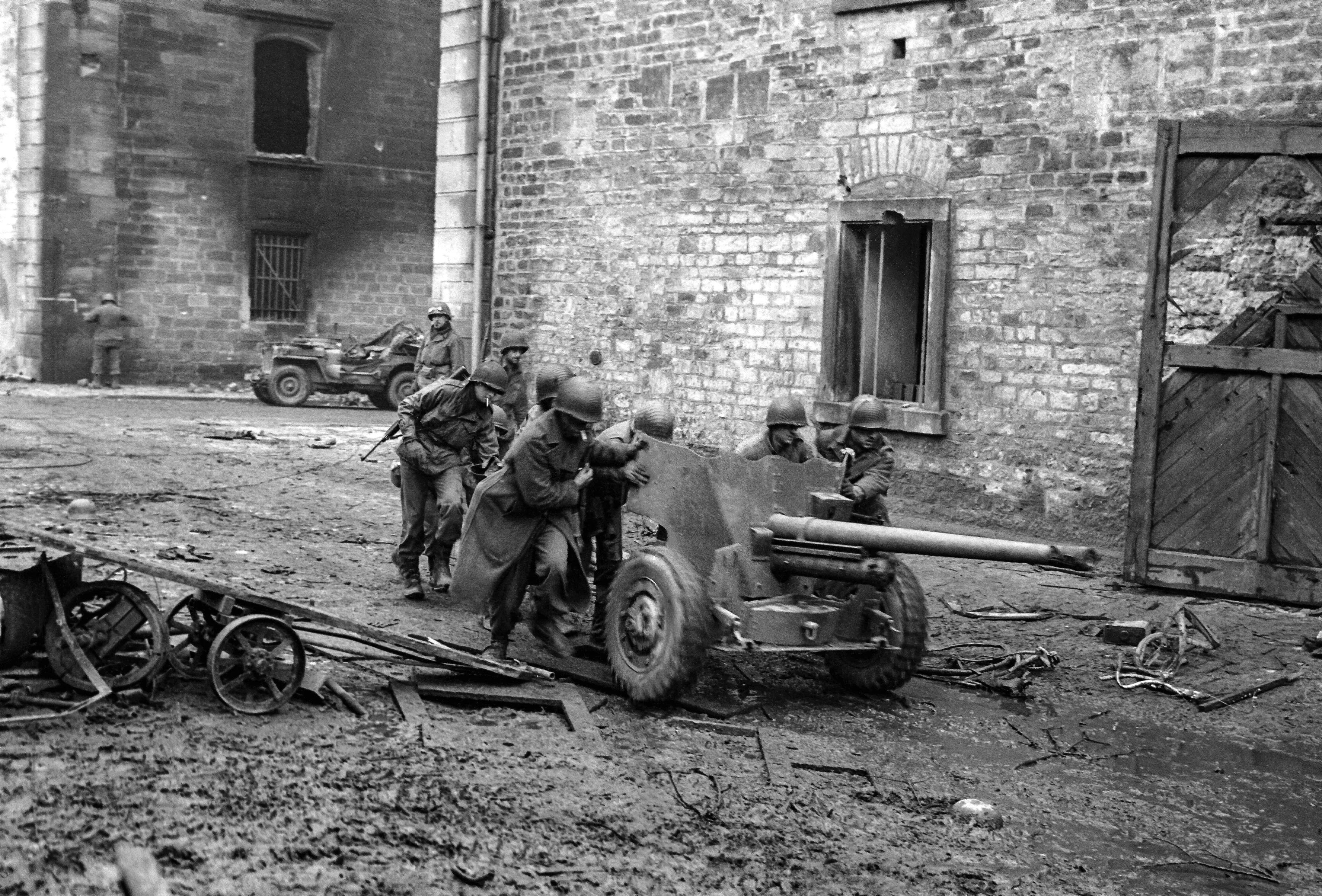
8th December 1944 TOPFOTO CODE: PD7486012 Artillery in street battle Saar Front. American gunners run a 57mm cannon into position down a street on the Saar front, during the advance of General Patton’s men across the Saar River. © Topfoto / Peter Deleuran | Used with exclusive permission.
Find the Book
There is only so much I can say about this discovery and this book. In fact, the book speaks for itself. Both the story behind it and the book itself are truly special and unique. I can therefore only admit that I read this book with immense pleasure and admiration. In essence, it is exactly what we as humanity should be doing. Keeping the history of World War II alive to ensure that such a horrific war never happens again. It is people like Peter Deleuran who have played their part in this.
But whether we as humanity have learned anything from the past is another question entirely.
Find more information about the book on the publisher’s website:
https://thehistorypress.co.uk/publication/reflections-of-war
https://lnk.to/ReflectionsofWar
Reflections of War: Forgotten Photographic Archives of the Second World War.
Author: Peter Deleuran
Publisher: The History Press
ISBN: 978-1-80399-898-5
Publication date: August 14, 2025
Edition: First Edition
Disclaimer and Copyright
As stipulated in our Editorial Policy, this article was also produced independently. It is based on facts, the content of the book Reflections of War: Forgotten Photographic Archives of the Second World War, and the opinions of Nick Ravenshade. WarCommons and Nick Ravenshade have not received any compensation, monetary or otherwise, for the creation of this article.
Images are used with the explicit and written permission of the author and, by extension, the publisher The History Press and the copyright holder of the images, TopFoto.
With special and heartfelt thanks to all those mentioned above.
WarCommons publishes long-form, source-driven World War II analysis without ads or sponsored content. If you found this article valuable, consider supporting independent research by joining Field Command.
By Nick Ravenshade — Founder & Editorial Director, WarCommons
Header image: 19th April 1944
Bombed out – but they got the raider. Fifteen-year old Leslie Davison, one of four children who escaped with their parents when a raider brought down in
the London area crashed on their house, which was completely destroyed. In the house adjoining four persons were killed. Leslie is holding parts of the
enemy plane in his damaged hands. The rest of the aircraft is in the debris of his home.
© Topfoto / Peter Deleuran | Used with exclusive permission. | TOPFOTO CODE: PD7494280