
WARCOMMONS IS NOW ON ANDROID
Explore WWII history and stay connected with the community on the go. GET THE APP →
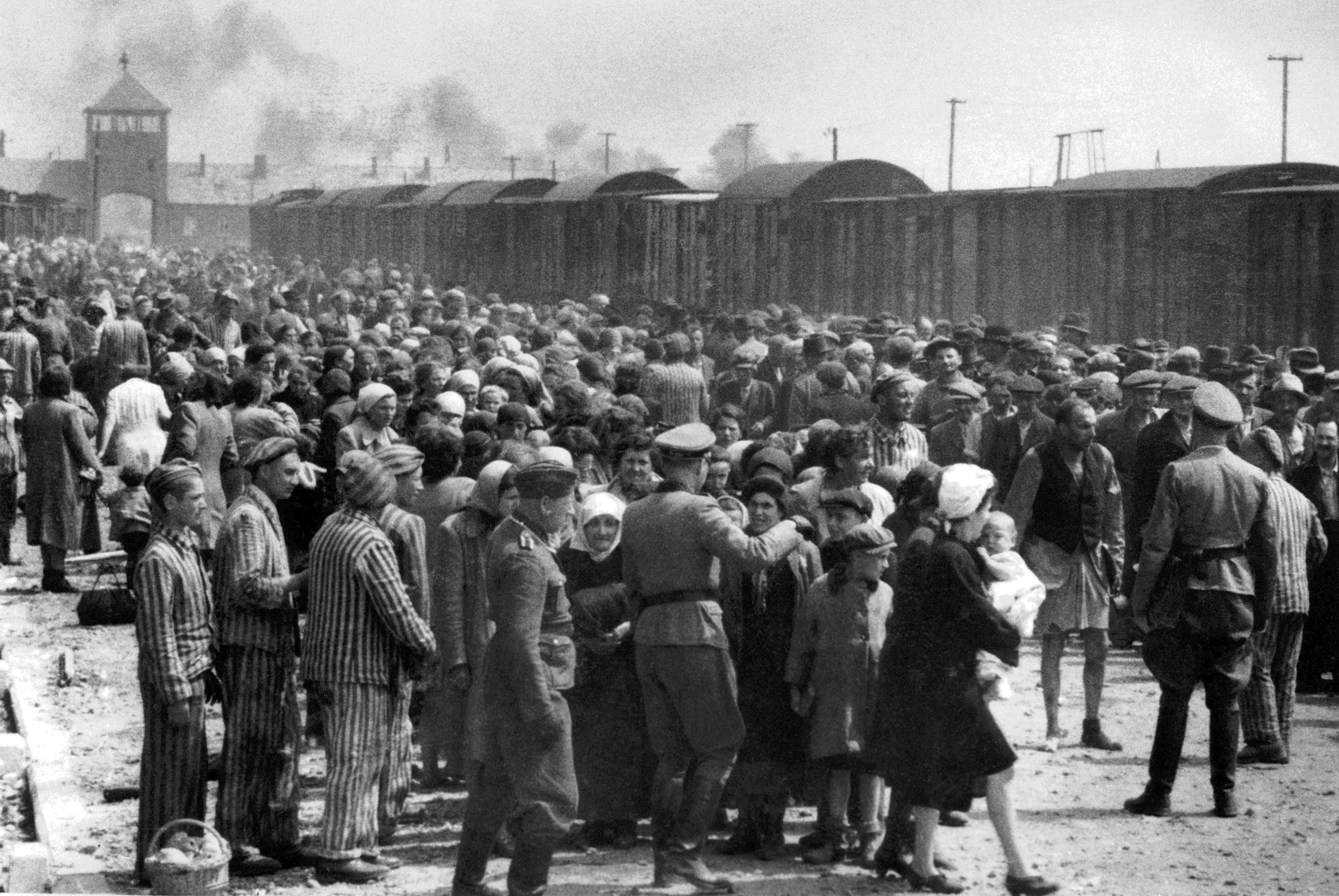

“Wir haben es nicht gewusst”. It’s an iconic and globally recognizable phrase. “We didn’t know.” Iconic, if you’ve ever read anything about the aftermath of World War II. You can hardly avoid it. It was the phrase used by the German people to deny their knowledge of the Holocaust and their complicity in Nazi crimes.
Many Germans used this phrase because they wanted to demonstrate that they were completely unaware of the concentration camps, the extermination of millions of Jews, Roma, Sinti, political and ideological opponents, people with mental and physical disabilities, sexual minorities, Slavic peoples, and others. This goes beyond the term “Holocaust,” which many historians use to refer specifically to the extermination of the Jews, though the broader usage is also common.
But what did the German people really know about the Holocaust and the Nazis’ atrocities, crimes, and genocide?
After the Nazis
After the end of World War II, there was something that could be called a public debate. It mainly revolved around the question of what ordinary Germans actually knew about the crimes and genocide committed by the Nazis and issues such as the Holocaust. Were ordinary Germans aware of the events, or is this something they should have known? Are they themselves perhaps also complicit in the crimes of the Nazis, or should they have been able to protect their fellow human beings?
Let’s just say it plainly and clearly. Even after 81 years, it is all still a subject of debate. In fact, we cannot say for certain either. But it is clear that ordinary Germans must have noticed something. Still, certain things need to be put into perspective. There were simply no modern means of communication as we know them today. Such as the internet and the ability to circumvent censorship and still access factual and neutral news via another country. When the atrocities took place, the Germans had already been subjected to a one-sided hate narrative and the propaganda spread by the Nazis for nearly 10 years. This is, of course, no excuse, but it is a picture that must be painted when discussing this subject.
The fact is that, starting in the 1930s, after Hitler came to power, Jews were already being ostracized from German society. The Nuremberg Race Laws were enacted, stripping Jews of their civil rights. Anti-Semitism effectively became state policy. As a result, discrimination was simply out in the open and did not take place behind the scenes. Everyone could see it, and everyone experienced it. Because when your Jewish colleagues suddenly are no longer your colleagues, you notice it. Just as, for example, your Jewish friends and neighbors seemed to have vanished from public life.
Evacuations and Concentration Camps
Nor could the average German claim, “We didn’t know,” regarding the intentions of the Nazi regime. Hitler spoke publicly, loudly, and clearly about the destruction of the Jewish race in Europe. But whether that actually happened, and, more importantly, how it was supposed to be carried out or even was carried out, was never mentioned. The media, such as newspapers and the radio, never reported on any (mass) exterminations either. Based on strictly controlled state information, Nazi propaganda spoke only in vague terms, such as “evacuations.” These evacuations were, in fact, deportations.
What also tells us something is the location of the concentration camps. These were mainly in Eastern Europe. Although there were certainly a number located in Germany itself, such as Dachau and Buchenwald. There was even a saying about it, which was well known among ordinary Germans: “Lieber Gott, mach mich stumm, daß ich nicht nach Dachau komm”. It means: Dear God, make me mute, so that I do not go to Dachau. A well-known folk saying from which we can infer that everyone in Germany knew that if you criticized the Nazi regime, you would be sent to such a camp and would likely never return alive.
Anyway, knowing that if you criticize your own government, you’ll be sent to a camp from which you may not emerge alive doesn’t necessarily mean you’re aware of the systematic extermination of entire population groups. To understand why, consider a modern parallel. In North Korea today, people also know that if you criticize the regime, you will most likely pay for it with forced labor or death. But North Korea is not also guilty of genocide and the systematic extermination of entire population groups or races. It is easy to draw a connection, especially in hindsight. But whether that can be seen that way at the time is another question entirely.
It is therefore incorrect to accuse an entire people of having known about it and thus being complicit. Or even that they should have known. What is nuanced and realistic is what the German historian Peter Longerich has said. Not the majority, but certainly a large part of the population, was aware of the extermination. However, those who knew about it chose in most cases, whether consciously or not, to bury their heads in the sand.
How Some Germans Knew
Although it is likely that the vast majority of Germans truly had no idea how serious the situation was, there was also a group of people who certainly did know, and knew it in great detail. They often learned about it firsthand.
From letters and stories sent by German troops on the Eastern Front, the soldiers’ family members were sometimes able to read and hear quite a few details. This was especially true if the soldiers had been in the presence of the Einsatzgruppen on the Eastern Front. Given the large numbers of German soldiers on the Eastern Front, there must have been tens of thousands who witnessed Jews being shot and left in mass graves. Some soldiers even took photographs of these events, which can still be seen today. Others wrote about what they had seen and experienced in letters home and in their diaries. When the soldiers were on leave, these stories often came to light.
But it wasn’t just the soldiers who noticed these details. Railway workers also experienced it firsthand. They knew the trains were heading east full of people, but returning empty. And ordinary Germans could sometimes see it with their own eyes. Especially around the concentration camps in Germany itself, such as Dachau and Buchenwald. Those weren’t technically extermination camps, but smoke rose from their chimneys as well. Although people knew that those inside would not come out alive, the leap to full awareness of the Holocaust and the exterminations is still a significant one, if you look closely. Not everyone could know the exact details, but everyone knew that terrible things were happening behind the barbed wire. Sometimes you could even smell the smoke from the crematoria and see the constant stream of people.
Armed resistance of the kind seen in France or the Netherlands was virtually absent in Germany itself. But there was the Weiße Rose. This resistance group distributed leaflets in 1942 and 1943. These leaflets contained messages such as: “Since Poland was conquered, 300,000 Jews have been murdered in this country in the most brutal manner.” Through these leaflets, the words of the Weiße Rose reached thousands of ordinary Germans.
Sometimes it wasn’t even that far from home. The abuse and murders of minorities and Jews also took place in public. And, despite the fact that it was forbidden, there were certainly people who listened to the radio in secret. For instance, some still listened to British radio, which accused the Nazis of committing genocide. Documented cases from 1943 also offer an interesting glimpse into the dynamics, not only regarding knowledge of the Holocaust, but also regarding mutual betrayal among ordinary citizens. A court document from 1943 revealed that a woman had reported her neighbor for listening to foreign radio. A striking detail was that the woman had also reported that during the radio broadcast, the British had stated that the Nazis were gassing Jews.
The Allies’ Knowledge
Incidentally, in 1942 the Allies began receiving credible reports that there were extermination camps where Jews, among others, were being exterminated. They received this information from the Polish resistance and escaped prisoners. In the summer of1942, the topic was even mentioned in a broadcast by Radio Oranje. That was the first time gas chambers were explicitly discussed. What followed in December 1942 was a joint statement by the Allies condemning the mass murders.
But the fact is also that in 1942, the Allies initially did not believe these reports at all. At least, there was great skepticism about the reports. The large-scale, industrial-scale extermination of people was actually considered too horrific to be true. The informants who had provided this information were sometimes even suspected of spreading anti-German propaganda that was not based on truth.
Even the Allies, when confronted with shocking evidence, did not believe it at first. It is therefore reasonable to conclude that a large portion of the ordinary German population was also unaware of it and perhaps could not have known. One could only go by what one person had told you, which another might then contradict. Fact-checking wasn’t that easy. And in a world dominated by propaganda, who could you believe?
The realization that there was a systematic extermination of population groups and races was undoubtedly present among a certain group. And perhaps even among a large group. But probably not among the vast majority of people. Unlike in this day and age, where information can be accessed in a second, yet we still cannot label what we see when cities are completely wiped out today. Given the reality of information access at the time, you could only be 100% certain if you had actually been inside an extermination camp yourself.
Field Command members: the Author’s Note for this article is available in the Field Command area.
WarCommons publishes long-form, source-driven World War II analysis without ads or sponsored content. If you found this article valuable, consider supporting independent research by joining Field Command.
By Nick Ravenshade — Founder & Editorial Director, WarCommons
Header image: “Selection” of Hungarian Jews on the ramp at Auschwitz II-Birkenau. May/June 1944. Source: Wikimedia Commons. Public domain.


_1b.jpg)