WARCOMMONS IS NOW ON ANDROID
Explore WWII history and stay connected with the community on the go. GET THE APP →
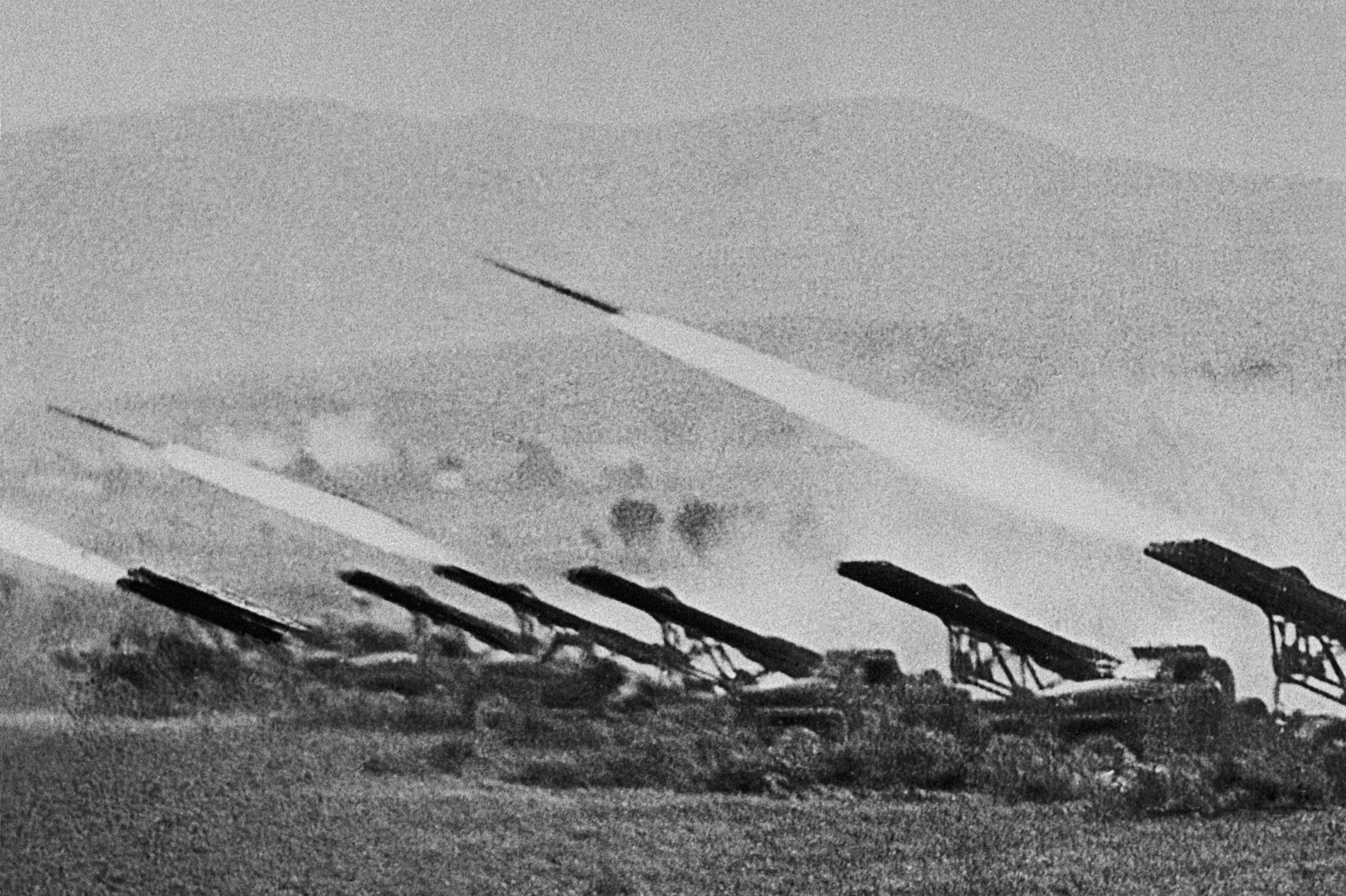

The BM-13 Multiple Rocket Launcher. The what? That’s right, many people have no idea what this is until the name “Katyusha” comes up. It’s the Red Army’s Katyusha rocket launcher. Nicknamed the “Stalin Organ,” it was the worst nightmare for most German troops. The Katyusha earned this nickname because of the sound it made. A deafening sound that can be described as a loud hissing rumble, followed by a piercing, wailing, and screeching sound that tore through the air as the shells flew toward their target in salvos of 8 to 48 shells, depending on Katyusha model. A paralyzing psychological effect. It is easy to see why German troops were terrified of the Katyusha.
The Katyusha Rocket Launcher
The Katyushas were primarily built at a factory in Voronezh. During World War II, it was also mounted on various platforms, such as tanks, armored trains, trucks, and artillery tractors. But also on naval vessels, for example. It was a fairly simple design and was actually quite inaccurate. But for bombardments intended to saturate a specific area, it was exceptionally accurate and well-suited.
The original BM-13 rocket launchers were highly classified. The equipment was stamped with a large Cyrillic “К”. Troops connected the “K” on the side of the trucks to the song “Katyusha” and began using the name as an affectionate moniker for the fearsome weapon.
A group of four Katyushas could collectively fire as much as 1.4 tons of high-explosive shells in 7 to 10 seconds, covering an impact area of approximately 400,000 square meters, or 4,300,000 square feet. This barrage of shells was equivalent to a salvo from approximately 72 conventional artillery howitzers, or approximately 18 batteries. Thanks to the Katyusha’s chassis, this rocket launcher was highly mobile and versatile. After firing a salvo, the Katyusha could drive to a new location almost immediately. This also prevented the enemy from mapping the artillery position and launching a counterattack. By the time German troops had located where the shells were coming from, the Katyusha was already gone.
Katyusha batteries were often deployed in large groups to create the greatest possible shock effect on the enemy. But once the shells had been fired, the Katyusha had a disadvantage that conventional artillery did not have. Conventional artillery can, in principle, maintain a continuous rate of fire, with the artillery being reloaded after each shot. While this results in a lower rate of fire than that of the Katyusha, it could continue nonstop. However, once the Katyusha had fired its shells, it took a long time to reload. This is because each rocket had to be manually loaded into the Katyusha.
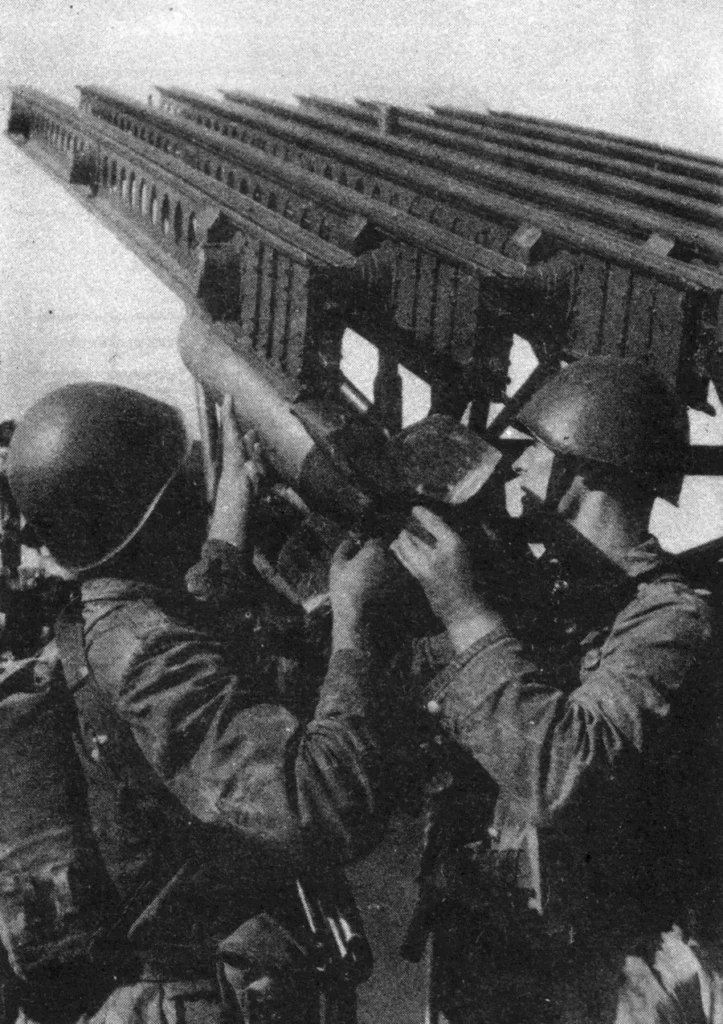
Depending on the specific Katyusha model or platform, it could take anywhere from 10 to 50 minutes for the Katyusha to be fully reloaded and ready to fire again. Meanwhile, firing 24 shells took only 7 to 10 seconds. In comparison, a conventional artillery battery could fire at least 1 to 3 shells per minute. With a howitzer, it was also possible to fire 5 to 6 shells per minute, but this could cause the howitzer’s barrel to overheat and the crew to become exhausted too quickly. In practice, a realistic rate was therefore certainly 1 to 3 shells per minute. And that’s not even mentioning the precision that conventional artillery possessed and the Katyusha lacked. Although conventional artillery also had a psychological effect on the enemy due to the massive impact of the shells, the Katyusha took this to a whole new level because of the terrifying sound it produced.
Katyusha in Combat
On July 14, 1941, while the Katyusha was still in its experimental phase, it was deployed for the first time in actual combat. This particular battle took place near Rudnya in the Smolensk Oblast. Captain Ivan Flyorov was given the honor of commanding a Katyusha for the first time. German forces consisting of tanks, armored vehicles, and trucks were stationed at the market in Rudnya. The Katyushas opened fire, and what followed was a total panic among the German troops. In this chaos, the German army suffered enormous losses, and the troops were forced to retreat from the city.
It was the very first time the Katyusha had been deployed in combat. And it was seen as a huge success. What followed was the immediate deployment of the Katyusha in the war. New Guards Mortar Batteries were established to support the infantry divisions. Each battery was equipped with four Katyushas. The NKVD retained control, as the system was still considered a closely guarded secret. The NKVD remained in charge until German Nebelwerfer rocket launchers became increasingly common later in the war.
In less than a year and a half, by the end of 1942, the Katyusha units had grown to 57 regiments operating within smaller battalions. By comparison, there were approximately 216 batteries. This amounted to about 864 active truck-mounted Katyusha rocket launchers. By the end of the war, there were no fewer than 518 batteries in service, which amounted to approximately 2,072 active launchers at the front.
Why the German Troops Feared It
For the attentive reader, the answer has actually already been given. Not just with a single word, but with a description of what the Katyusha really was. And especially how dangerous the barrages were given the way they were deployed, primarily in large groups. And we haven’t even mentioned the terrifying sound it produced. A comparable example might be the Germans’ Stuka. As soon as one heard this sound, the only feeling one experienced was the fear it instilled.
Why it was so feared depends on more factors than just the sound. When deployed in large groups, as they often were, the Katyusha produced an overwhelming barrage of fire. Dozens of high-explosive shells were fired per Katyusha in less than 10 seconds. This created a grid of explosions, preventing soldiers from taking cover between salvos. As a result, when an attack was timed correctly, the losses were catastrophic for the Germans.
The fact that German troops called it the “Stalin Organ” perhaps says enough in itself. Enemy weapons don’t usually get nicknames unless they make a significant impact. It also shows that the sound of the Katyusha really struck a chord with the troops. The sound was a harbinger of a massive slaughter if the timing was right. And they had no way to defend themselves against it. As soon as the salvos were fired, the Katyushas were already on their way to the next firing position. Unlike conventional artillery, which didn’t just move on after a barrage. It was like a ghost. You heard it, you felt the impact, but you had no idea where it came from.
When we look at everything in context, the main source of fear among the German troops was primarily the psychological effect of the Katyusha and its elusiveness. Out of nowhere, the sound would come and the shells would fall. After an attack, the Katyushas were already on their way to their next firing position.
The words of a Soviet Captain actually tell us more than enough. Captain Ivan Andreyevich Flerov reported: “At 15:15 on 14 July 1941, we struck the fascist trains at the Orsha railway junction. The results were excellent. A continuous sea of fire.”
Field Command members: the Author’s Note for this article is available in the Field Command area.
WarCommons publishes long-form, source-driven World War II analysis without ads or sponsored content. If you found this article valuable, consider supporting independent research by joining Field Command.
By Nick Ravenshade — Founder & Editorial Director, WarCommons
Header image: A battery of Katyusha rocket launchers firing at the enemy, German forces, during the Battle of Stalingrad. October 6, 1942. Source: Wikimedia Commons / RIA Novosti archive, image #303890 / Zelma. CC-BY-SA 3.0