WARCOMMONS IS NOW ON ANDROID
Explore WWII history and stay connected with the community on the go. GET THE APP →
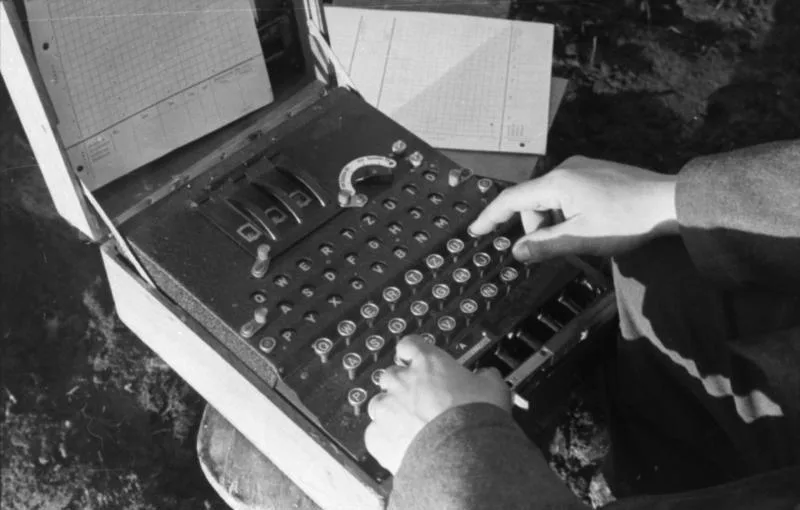

If you say Enigma, then you say Alan Turing. It’s an inseparable link in the history of the Second World War. Alan Turing played an indispensable role in cracking the so-called Enigma code during the Second World War. To achieve this, he developed a machine which could find out the settings of the Enigma-machine. This machine was given the name ‘Bombe’. As early as in January 1940 the first German Enigma message was decrypted by Turing and his team. But, does all the honor and praise belong to Turing and his team? Or, was there a story preceding these events, a story that has for the better part remained largely unknown in the history of the Second World War?
The Polish role in cracking the Enigma
When we’re discussing the Polish role in cracking the Enigma encryption, then there are three mathematicians to whom the British owe the cracking of the Enigma. Their success story begins in December 1932. On that date three young Polish mathematicians succeeded in fully decrypting an encrypted message belonging to the German army. The message was encrypted with the Enigma machine. It was the then 27 year old Marian Rejewski, the 23 year old Jerzy Różycki and the 25 year old Henryk Zygalski. Under the leadership of Rejewski the trio worked for the Polish Cipher Bureau (Biuro Szyfrów).
Perhaps the most remarkable detail about this story is that they reconstructed the secret workings of the Enigma machine without ever having seen a physical example of the military machine. But, this has not been entirely without help.
The breakthrough was made possible by close collaboration between the Polish and French intelligence agencies. French intelligence handed over the secrets of the Enigma machine’s operation to Polish intelligence. The French had gotten this information from Hans-Thilo Schmidt, codenamed Asché or Source D. Hans-Thilo Schmidt was a German spy who sold the secrets of the workings of the Enigma machine to French intelligence around the year 1932.
The discoveries of December 1932
The crucial breakthrough took place seven years before the start of the Second World War, well before the British had even begun cracking the codes at Bletchley Park.
Rejewski made a mathematical reconstruction. Making the mathematical reconstruction proved to be of great essence, because this allowed the internal connections of the rotors to be determined without Rejewski ever needing to physically hold an Enigma machine.
Rejewski also noted an important difference. After all, there was also a commercial Enigma Machine. The German army used a military version of the Enigma machine. This military version had a key difference. The letters on the so-called input disk (the input disk connected the rotors to the keyboard) were alphabetically connected. This meant they were connected in the QWERTZ-order, unlike the nonlinear wiring of the commercial Enigma machine.
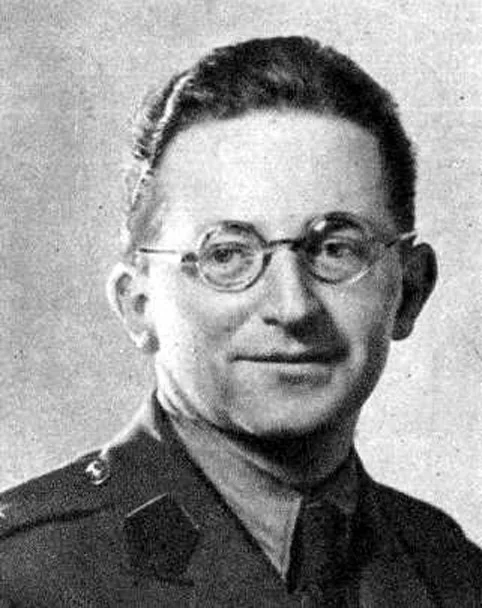
The Enigma machine relied on changing settings that allowed it to create a different encryption at any time. Rejewski discovered the methodology for these settings. Rejewski and his colleagues Różycki and Zygalski discovered how to determine the machine’s daily settings, including the rotor order and initial positions.
These three important discoveries enabled Poland to decipher the first military Enigma messages at the end of 1932. They were also able to reconstruct a working replica of the German Enigma machine, by way of reverse engineering.
However, the whole world remained in the dark about these crucial discoveries for a long time, largely for decades.
The wall of silence and the first glimpse of Polish involvement
The Polish involvement in cracking the Enigma remained unknown until long after the end of the Second World War. Perhaps the most important reason for this is that Winston Churchill, in 1945, had imposed total secrecy on everything related to Bletchley Park; or rather, on all Enigma-related information.
However, this wasn’t the only reason. After the Second World War, the achievements of Rejewski and Biuro Szyfrów were completely forgotten as Poland fell into a deep communist stagnation for almost fifty years. Behind the Iron Curtain, it was virtually impossible for Poland to discuss their discoveries of December 1932.
In the year 1967, if anyone had really been paying attention, the world could have gotten its first glimpse of Polish involvement in cracking the Enigma encryption. Rejewski retired in 1967. At the same time, he secretly handed over his memoirs to the Polish Institute of Military History. That same year, Polish historian Władysław Kozaczuk published a book titled Bitwa o tajemnice (Battle for the Secrets). In this book, Władysław Kozaczuk described how Poland had cracked the German Enigma machine. But it didn’t attract much attention.
It wasn’t until 1973 that any international awareness of the Polish contributions to cracking the Enigma machine began to emerge. The starting point was the book “Enigma ou la plus grande énigme de la guerre 1939-1945” (Enigma, or the Greatest Enigma of the War of 1939-1945). This was the first detailed account of the eleven years of collaboration between Polish and French intelligence agencies in cracking the Enigma machine.
This was reinforced by the book “The Ultra Secret”. This was the first book to be published in English and therefore attracted considerable attention in Western countries. The book also described Polish contributions to cracking the Enigma machine.
In 1974, the final piece of the puzzle fell into place. The total secrecy imposed by Churchill regarding everything related to the Enigma information was lifted. This was the moment for the general public to first discover who Alan Turing was and the impact Bletchley Park had on the Second World War.
But what about the recognition for Poland? And everything they contributed to cracking the Enigma machine? After more than 30 years, muzzled in silence, the secret was finally out. It was Rejewski, it was Zygalski and Ró?ycki, it was Biuro Szyfrów, it was Poland, who had cracked the German military Enigma machine in December 1932, thus paving the way for everything Turing and his team were able to achieve at Bletchley Park.
The handover of 1939
On July 24 and 25, 1939, just before the outbreak of the Second World War, a secret meeting took place. Representatives of British and French intelligence were invited to Pyry Forest, near Warsaw. This was the location of Polish intelligence. The British and French codebreakers were astonished when they learned from the Poles how far they had already progressed. Until then, the British themselves had been primarily concerned with linguistic approaches rather than mathematical ones.
Poland decided to share this information with the British and French, as they knew a German invasion was imminent. On July 24 and 25, 1939 Rejewski, Różycki, and Zygalski had made considerable progress. The British therefore received a great deal of information from Poland. Thanks to the discoveries Poland had already made in December 1932, they succeeded in reverse engineering a German military Enigma machine. During the secret meeting, the British received this reverse engineered Enigma machine.
The Germans worked with a daily key, which meant that the settings changed daily. Poland also handed over the internal wiring of the Enigma rotors to the British. The British didn’t yet have this crucial component, along with the Zygalski sheets. They could now also determine the rotors’ initial positions themselves. During the secret meeting, the British also received the cryptological techniques they needed to determine the Enigma machine’s daily settings.
The most striking aspect of this secret transaction was that Poland also provided blueprints to the British. These weren’t just any blueprints, however. They turned out to be blueprints and the theory behind the Polish Bomba machine. The blueprints show that Bomba was an electromechanical device that automated the search for the Enigma machine’s settings.
All this paved the way for the British and Alan Turing to create the Bombe machine, whose name most likely derives from the original Polish name Bomba. These were the building blocks that enabled the Allies to read Luftwaffe signals in mid-1940 and, in 1941, the crucial Maritime Enigma used by the Kriegsmarine. The latter allowed the Allies to read Kriegsmarine messages used, among other things, to coordinate U-boats.
But from that point on it wasn’t a piece of cake for the British. Polish techniques and information were virtually obsolete by December 15, 1938. On that date, the Germans increased the number of Enigma rotors from three to five. Of these five, three were then chosen as the daily key. The Polish could barely keep up with the increase in possible settings with their Bomba and Zygalski sheets. The final blow to the Polish methods came on January 1, 1939. The Germans then increased the number of contacts on the plugboard of the Enigma machine from 6-10 to 14-20. This caused the Polish Bomba method to lose its effectiveness. In January 1939, the Polish General Staff officially authorized the transfer of Polish Enigma secrets to the French and British intelligence services.
The consensus is that without this information from Poland in July 1939, and their discoveries in December 1932, Bletchley Park would likely have begun cracking Enigma encryption only several years later. It was an indispensable foundation in the world of Enigma secrets. The British also seem to have recognized this. The much-deserved recognition for Poland for their significant contribution to cracking Enigma encryption came in physical, formal, and lasting form in 2002. A plaque commemorating mathematicians Rejewski, Różycki, and Zygalski was unveiled at Bletchley Park in 2002. The inscription recognizes them as the first to break Enigma encryption and also notes that their work greatly benefited the Bletchley Park codebreakers.
WarCommons publishes long-form, source-driven analysis without ads or click incentives. If you found this feature valuable, consider supporting our research by subscribing to help fund future investigations.
By Nick Ravenshade — Author
Image: Enigma, 1943. Source: Wikimedia Commons / Bundesarchiv, Bild 101I-241-2173-09 / Grupp / CC-BY-SA 3.0