WARCOMMONS IS NOW ON ANDROID
Explore WWII history and stay connected with the community on the go. GET THE APP →
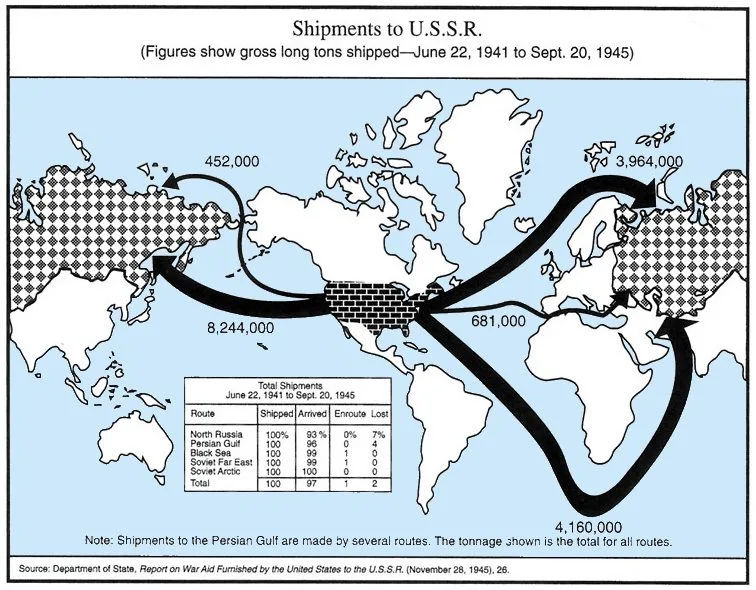

Immediately after Nazi Germany’s invasion of the Soviet Union, Stalin began pressing for aid from the West, primarily from the United States of America. However, Stalin did not have to wait long for the symbolic gesture that followed. June 22, 1941, marked the start of Operation Barbarossa, the German invasion of the Soviet Union. As early as March 1941, President Roosevelt had already signed the so-called Lend-Lease Act, but only for Great Britain. Actual assistance for the Red Army was still a while in coming.
It is not surprising that Stalin pressed the United States (U.S.) for material support after the start of Operation Barbarossa. In July 1941, the Red Army found itself in a precarious and vulnerable position. This was a direct consequence of the massive purges Stalin carried out within the Red Army’s high command in 1937 and 1938. A large portion of the experienced officers had been eliminated. They were replaced by inexperienced and/or timid officers who did not dare to act on their own without orders from above. Add to that the fact that the Red Army was also undergoing a major reorganization focused on the modernization of its equipment, and the chaos was complete.
The only thing in the Red Army’s favor? A massive number of troops.
The American Dilemma and the Lend-Lease Act
Initially, Great Britain was the primary recipient of the supplies provided under the obligations set forth in the Lend-Lease Act. By 1940, Great Britain was financially exhausted and under severe military pressure. A major catalyst for the Lend-Lease Act for Great Britain was the fall of France in mid-1940 and the massive naval blockade by the German Kriegsmarine. The Kriegsmarine’s U-boats had the supply routes across the Atlantic Ocean and the North Sea in a stranglehold. Both military and civilian shipping carrying goods and food could find virtually no way to reach Great Britain. Consequently, Great Britain was forced to draw down its currency and gold reserves. As a result, it was no longer possible for Great Britain to actually purchase large quantities of war materiel from the United States.
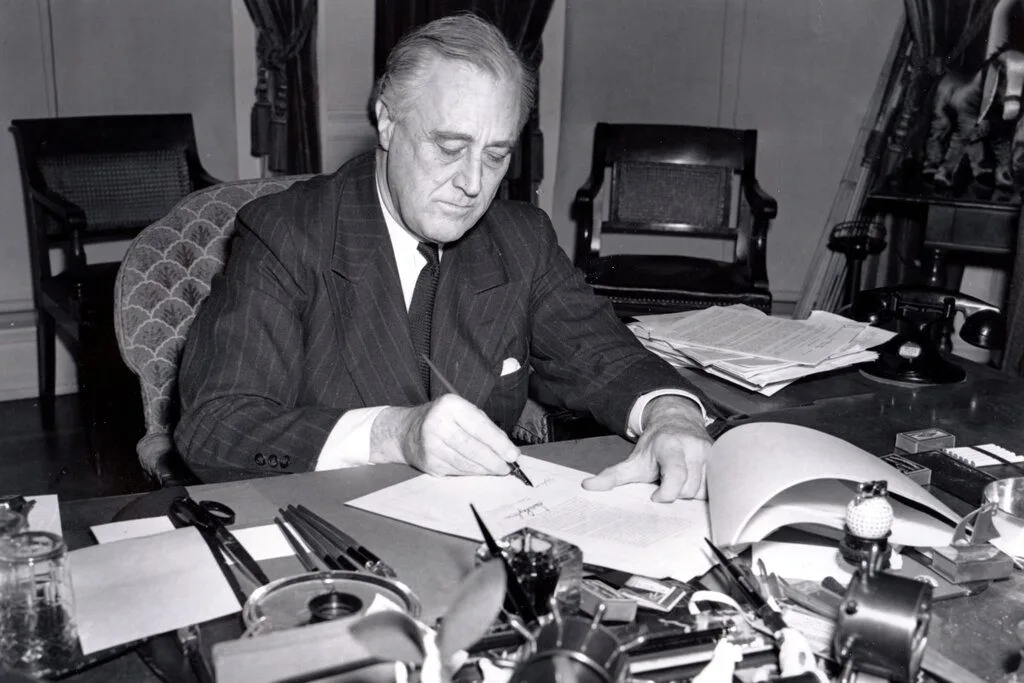
Source: Wikimedia Commons / Library of Congress. Public domain.
At that time, however, the United States was still neutral in the war. It was primarily Britain’s efforts that were supposed to have stopped Nazi Germany. This was especially true after France, another major pillar of Europe at the time, fell and was occupied by Nazi Germany.
From the U.S., both socially and politically, the guiding principle was: we will no longer interfere in foreign affairs. This was prompted by the course of World War I and the consequences the Americans had suffered as a result. An important factor in this was that the U.S. viewed Great Britain as an essential link in the defense of Atlantic interests and as a key partner against Nazi Germany.
All of this led to the enactment of the Lend-Lease Act. It was the United States’ solution for providing military aid to its most important key partner without violating its principle of neutrality.
Stalin’s cry for help
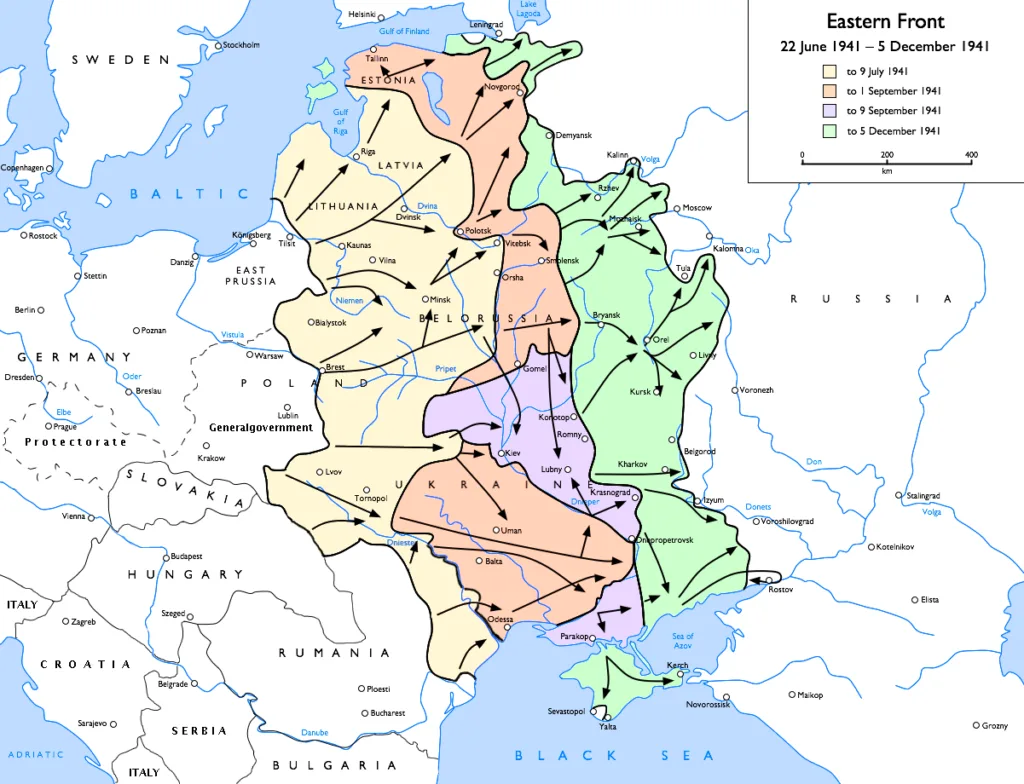
The internal problems Stalin had caused within his Red Army meant that Hitler’s Nazi Germany was able to make enormous gains, advancing several hundred kilometers inland toward Moscow, from the start of Operation Barbarossa until July 1941.
Almost immediately after the start of Operation Barbarossa, Stalin requested assistance from the Americans. This prompted President Roosevelt to send his envoy, Harry Hopkins, to Moscow as early as July 1941. Hopkins recorded the conversations he had with Stalin in his memorandum. During the talks, which took place on July 31, 1941, Stalin outlined the military situation and the scale of the German troop buildup to Hopkins. Hopkins conveyed the gravity and urgency of the Soviet situation to Roosevelt, and to Stalin he conveyed Roosevelt’s willingness to help.
This led to a conference held from September 29 to October 1, 1941. This was known as the First Moscow Conference. The conference brought together American, British, and Soviet representatives to discuss coordination and specific supply routes.
Stalin’s Lend-Lease Act benefits
By the fall of 1941, Stalin’s wait was finally over. Actual shipments to the Soviet Union began. This was later scaled up via Arctic convoys and other routes. During this period, the main focus was on establishing priorities, quantities, and routes. The U.S. was not the only one providing support to Stalin. The United Kingdom and Canada also contributed to the support for Stalin.
The Lend-Lease Act primarily provided for the supply of essential equipment and supplies. One of the most significant shipments, which many might not expect, was the delivery of a large number of trucks, such as Studebaker-type trucks and vehicles. This drastically increased the Red Army’s mobility. For the most part, the Red Army had relied on horses at the start of the war. But it didn’t stop there; the Soviet Union also received trains, aircraft, tanks, and armored vehicles. For its industrial needs, the Soviet Union received industrial raw materials that benefited the war industry, including rubber and aluminum.
But the civilian population also received some aid, in the form of food and clothing to help them get through the winter. The most important source of aid for civilians, and for the military as well, was canned meat products, such as Spam. It was crucial to the food supply of the country and the military.
It is estimated that the total U.S. aid provided under the Lend-Lease Act was worth approximately $49.1 to $50.1 billion in the 1940s. This would have been approximately $1.162 trillion in 2026. What historians do agree on is that a large portion of this aid went to the Soviet Union, about 22%.
The Verdict of History
It is often argued that the substantial aid provided to the Soviet Union under the Lend-Lease Act saved the Soviet Union from collapse. Stalin himself emphasized this during the Tehran Conference in 1943. One of his statements during this conference is often cited, with the wording attributed to W. Averell Harriman’s and Elie Abel’s diplomatic reports.
“The United States is a country of machines. Without the use of these machines through Lend-Lease, we would lose this war.” – Stalin, 1943.
Historians’ analyses concur with this view. Based on these analyses, it has often been concluded that the aid the Soviet Union received under the Lend-Lease Act was a crucial factor in the continuation and expansion of counteroffensives, such as the decisive Operation Bagration.
Despite the fact that Soviet propaganda in later years attempted to downplay the impact of the Lend-Lease Act, focusing primarily on its own sacrifices and industrial efforts, there are also memoirs that offered a different perspective. The memoirs of Nikita Khrushchev offer one such counterpoint, highlighting the machinery that the U.S., among others, had provided to the Soviet Union, such as trucks, locomotives, parts, and aircraft.
Without this support, Khrushchev concluded, the Soviet Union would not have been able to win the war alongside the Allies.
WarCommons publishes long-form, source-driven analysis without ads or click incentives. If you found this feature valuable, consider supporting our research by subscribing to help fund future investigations.
By Nick Ravenshade — Author
Header image: map shows US Lend Lease shipments to USSR in WW2 by route. 1946. Source: Wikimedia Commons / US State Department. Public domain.