
WARCOMMONS IS NOW ON ANDROID
Explore WWII history and stay connected with the community on the go. GET THE APP →
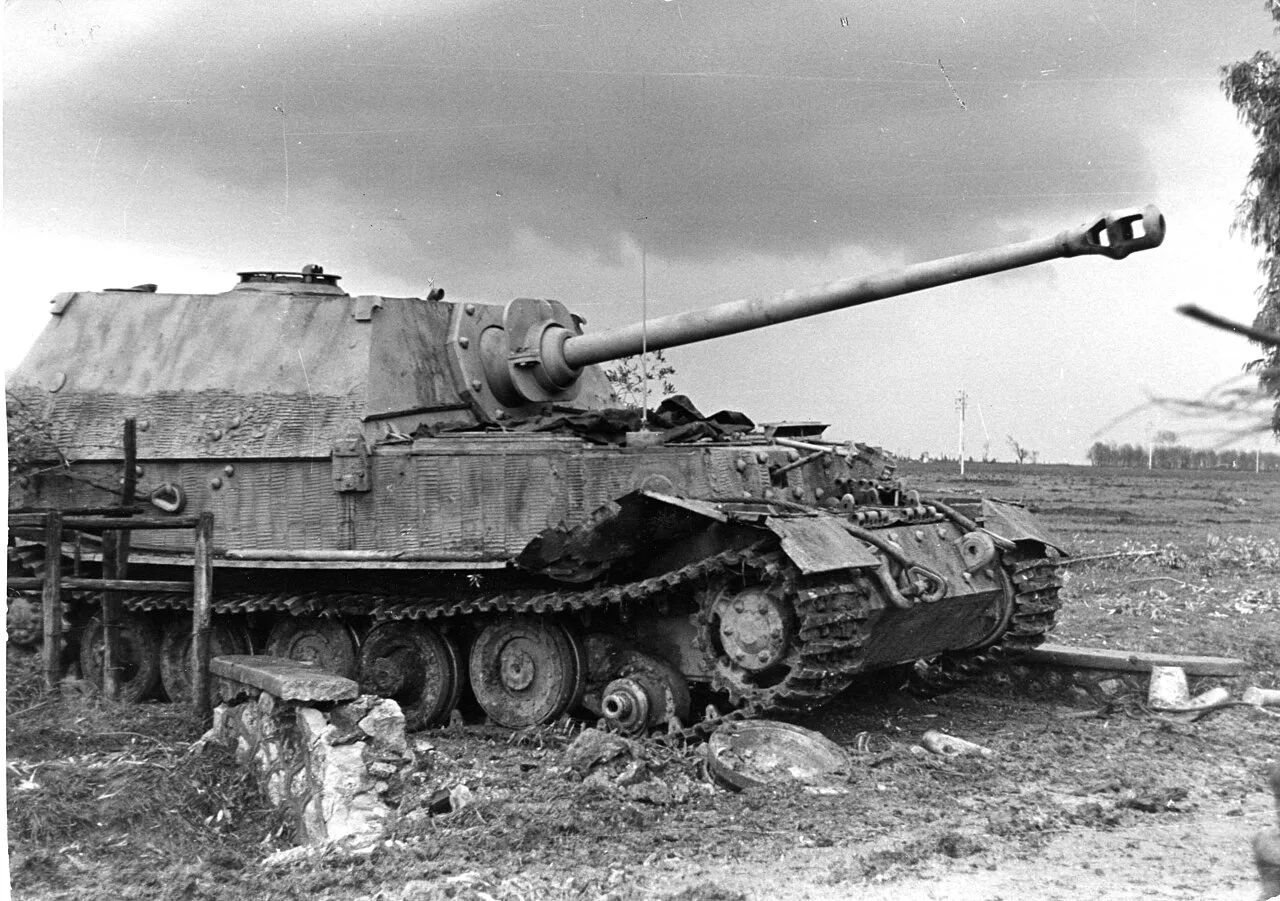

World War II saw many innovations in the field of warfare and military equipment, especially when compared to World War I. This sometimes raises questions that remain under-explored to this day within the context of World War II. Sometimes things don’t seem all that important, or they’ve already become obsolete. But that doesn’t mean we should just forget about them. That’s why certain topics and innovations deserve continued attention. This also applies to Zimmerit.
Because what exactly is it? And why was it used?
Zimmerit
Zimmerit was a coating used by Germany on its armored vehicles during World War II. It is a paste-like coating. Germany developed and began using it from December 1943. They continued to use this substance until September 1944. Applying Zimmerit to the armored vehicles created a hard layer on the vehicle. This hard layer covered the vehicle’s armor, creating a separation between the armor and the Zimmerit. This separation was sufficient to ensure that magnetically attached anti-tank mines would not stick to the vehicles. However, Germany was the only country that used this type of magnetic anti-tank mine in large numbers during the war, not the Allies.
Although it was used until the end of the war, the application of Zimmerit was increasingly omitted toward the end of the war. There was a fear that the Zimmerit might catch fire if the vehicle were hit by enemy fire. This fear, however, was unfounded. This fear was officially disproved, though improperly dried Zimmerit containing residual benzene could technically have been a fire risk. Zimmerit was developed by the German company Chemische Werke Zimmer & Co. from Berlin.
Zimmerit was typically applied in a ribbed pattern to the vehicles to further increase the distance between the magnet and the armor. This also increased the effective thickness of the coating while minimizing its weight. After all, there was no need to apply layer upon layer if the distance created by the grooves was already sufficient. For reference, the Tiger I required 200kg of Zimmerit, a Panzer IV half that.
Zimmerit was comparable to a thick paste or putty. In most cases, it was already applied with grooves in the factories and then dried and hardened with torches. There was also variation in how the material was applied. For example, a waffle-shaped pattern, which is rarely seen in photos, and the more common ribbed pattern. The waffle-shaped pattern was seen almost exclusively on the Sturmgeschütz III assault guns. Vehicles that were already in service were actually never equipped with the coating. This was because it was often applied only in the factory during the vehicle’s construction.
Why Did Germany Invent Zimmerit?
As mentioned, Germany wanted to prevent magnetic anti-tank mines from being used against its tanks. In essence, they feared their own invention being turned against them. The Allies didn’t actually have such magnetic grenades at all. But in 1942, the war on the Eastern Front was in full swing. And, in fact, the tide was already beginning to turn against Germany. It was precisely at that time, in November 1942, that the German army introduced the Hafthohlladung anti-tank weapon.
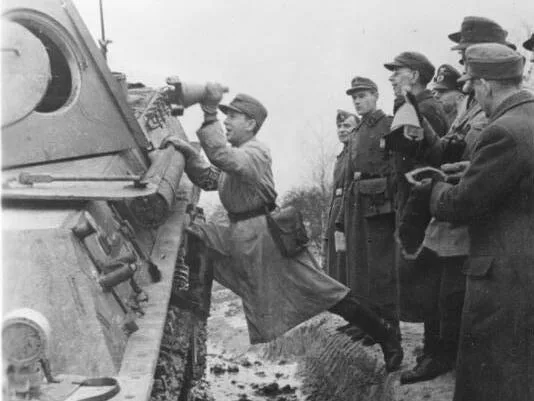
Essentially, this anti-tank weapon was a simple design. The Germans’ main fear, therefore, was that this anti-tank weapon would fall into the hands of the Red Army. The Red Army could then easily copy the Hafthohlladung anti-tank weapon and use it against Germany. Zimmerit was therefore designed, and it proved to be the way to ensure that the Hafthohlladung anti-tank weapon could not be used against them.
But Zimmerit did not have a long life. As early as September 9, 1944, the substance was no longer used in factories for the manufacture of new armored vehicles. And just one month later, on October 7, 1944, the substance was also no longer used in the field. The Germans had become afraid that the substance was flammable and would explode upon impact from an enemy projectile. Although Germany soon learned that this was not true, the order to stop using Zimmerit was never rescinded. It may also have been seen as a good opportunity to phase out Zimmerit, as the application process added days to the production time of an armored vehicle. The substance had to be applied and allowed to dry. This took time, precious time that Germany could not afford to lose, especially as 1944 approached.
It is somewhat ironic that so much effort was put into a product that ultimately made no difference. Since the Allies hardly ever used magnetic anti-tank grenades, Zimmerit was therefore effectively useless. In hindsight, Germany might have been better off focusing more on the armor of the vehicles themselves rather than on a coating designed to combat a virtually nonexistent problem. For instance, they might have come up with sloped armor for their tanks sooner, something that could have benefited the Tiger I, just as the Red Army had done with their legendary T-34 tanks.
Still, Germany wasn’t the only one interested in Zimmerit. Despite the fact that it hadn’t achieved anything noteworthy during World War II and, in principle, hadn’t prevented any losses at all, the Allies were slightly interested after the war. The British also conducted experiments with a similar substance after the war. They named it AMCO 1 and AMCO 2 (Anti-Magnetic Compound). This was applied to the Churchill and Cromwell tanks. Experiments were also carried out in Canada. A material similar to Zimmerit was applied to motorized guns in Canada. They just named it anti-magnetic paste. Yet it was never implemented anywhere. The need for magnetic anti-tank mines was no longer seen after the war, as other innovations were introduced, such as HEAT rockets.
And so, both Zimmerit and the magnetic anti-tank mines faded quietly into history.
Field Command members: the Author’s Note for this article is available in the Field Command area.
WarCommons publishes long-form, source-driven World War II analysis without ads or sponsored content. If you found this article valuable, consider supporting independent research by joining Field Command.
By Nick Ravenshade — Founder & Editorial Director, WarCommons
Header image: Italy – Damaged Tiger (P) “Elefant” tank destroyer (Sd.Kfz. 184) (8.8cm); PK 699. April 1944. Source: Wikimedia Commons / Bundesarchiv, Bild 101I-313-1004-25 / Vack. CC-BY-SA 3.0.


_(cropped).jpg)
